
Imagine a patient in a state of acute respiratory distress, not surrounded by the sterile white noise of a hospital corridor, but reclining in their own living room. Beside them sits a sleek array of sensors, a high-definition camera, and a gateway device that streams biometric data in real-time to a command center five hundred miles away. This is no longer a futuristic blueprint or a niche pilot program. The Intensive Care Unit is migrating, shedding its physical architecture to become a digital layer that wraps around the patient wherever they reside. We are witnessing the birth of the Invisible Ward.
The Great Migration: From Hospital-to-Hospital to Hospital-to-Home
For the last decade, eICU (electronic Intensive Care Unit) technology functioned primarily as a bridge between facilities. A specialist in a metropolitan hub would monitor patients in smaller, rural hospitals to ensure a standard of care that local staffing couldn't support. However, the delta between then and now is staggering. In the last twelve months, the trajectory has shifted from facility-to-facility support to a direct-to-home model. We have moved from augmenting a remote nurse to replacing the physical bed entirely for a growing segment of high-acuity patients.
Twelve months ago, home-based critical care was largely reserved for palliative end-of-life scenarios or chronic failure management. Today, the industry is pivoting toward acute stabilization. This shift is driven by a convergence of 5G connectivity, medical-grade wearables, and a fundamental change in reimbursement models. The goal is no longer just to keep the patient comfortable at home, but to provide an ICU-level intervention that prevents the need for a physical admission in the first place. Why occupy a scarce hospital bed when the monitoring precision is identical in a bedroom?
Adoption Rate of Home-Based Acute Monitoring (2023-2024)
Executive Insight
+18.4%
YTD Growth
The data reflects this acceleration. Recent industry benchmarks indicate a 31% increase in the adoption of home-based acute monitoring systems in the first quarter of 2024 compared to the same period last year. This isn't just a trend in developed markets; we are seeing a leapfrog effect in regions like Southeast Asia and parts of India, where the lack of physical ICU infrastructure is forcing a rapid transition to digital-first critical care. These regions are bypassing the traditional hospital-centric model entirely, treating the home as the primary site of acute intervention.

This evolution is fundamentally altering the clinical workflow. In a traditional ICU, the proximity of the clinician is the primary safety net. In the Invisible Ward, the safety net is data. High-frequency sampling of heart rate variability, oxygen saturation, and respiratory patterns allows AI-driven triage systems to flag a deteriorating patient minutes—or even hours—before a human observer would notice a change in physical appearance. The clinical intuition is now augmented by predictive analytics that operate on a scale impossible for a bedside nurse to replicate.
The Recovery Paradox
The shift to home-based eICU isn't just about convenience; it's a clinical necessity. By reducing hospital-acquired infections (HAIs) and delirium associated with ICU stays, the home environment often accelerates the biological recovery process.
But the shift isn't just about geography; it is about the economics of survival. The cost of maintaining a physical ICU bed is an astronomical burden on healthcare systems, encompassing not only the equipment but the intense staffing ratios required for safety. Home-based eICU monitoring slashes these overheads. By utilizing a hub-and-spoke model, a single intensivist can manage a vast array of patients across a city, intervening only when the data triggers a critical alert. This optimizes the most expensive resource in the system: the specialist's time.
The Architecture of Absence
What does the infrastructure of an invisible ward actually look like? It is a tripartite system of hardware, connectivity, and human oversight. First, the hardware has evolved from clunky monitors to medical-grade wearables and non-invasive sensors that can track fluid accumulation in the lungs or cardiac output without a single needle. Second, the connectivity layer relies on low-latency networks that ensure a heartbeat in a suburb is seen in the command center in milliseconds. Any lag in a critical care environment is not a technical glitch; it is a clinical risk.
| Metric | Traditional ICU | Remote eICU (Home) |
|---|---|---|
| Avg. Cost per Day | $4,000 - $10,000 | $1,200 - $2,500 |
| Infection Risk | High (Nosocomial) | Low |
| Staffing Ratio | 1:1 or 1:2 | 1:20 (Remote Hub) |
| Patient Psychology | High Stress/Delirium | Low Stress/Family Support |
The third and most critical layer is the human response. The Invisible Ward does not eliminate the need for physical intervention; it optimizes it. When a remote monitor flags a critical drop in blood pressure, a rapid-response mobile team is dispatched to the home. This hybrid model—digital oversight paired with agile physical response—creates a safety net that is more flexible than a static hospital ward. It transforms the city itself into a distributed hospital, where the 'ward' is simply a coordinate on a map.
"We are moving away from the era of the building and into the era of the service. The ICU is no longer a place you go; it is a level of care that follows you."— Dr. Elena Vance, Global Health Strategist
Across the globe, the implementation varies. In the United States, the push is heavily influenced by the Centers for Medicare & Medicaid Services (CMS) and the shift toward value-based care. In Europe, specifically in the Nordic countries, the transition is integrated into a broader social welfare model that emphasizes aging-in-place. Meanwhile, in emerging economies, eICU is being used to solve the 'specialist gap,' allowing a handful of world-class intensivists to support thousands of patients across disparate rural provinces via satellite links.
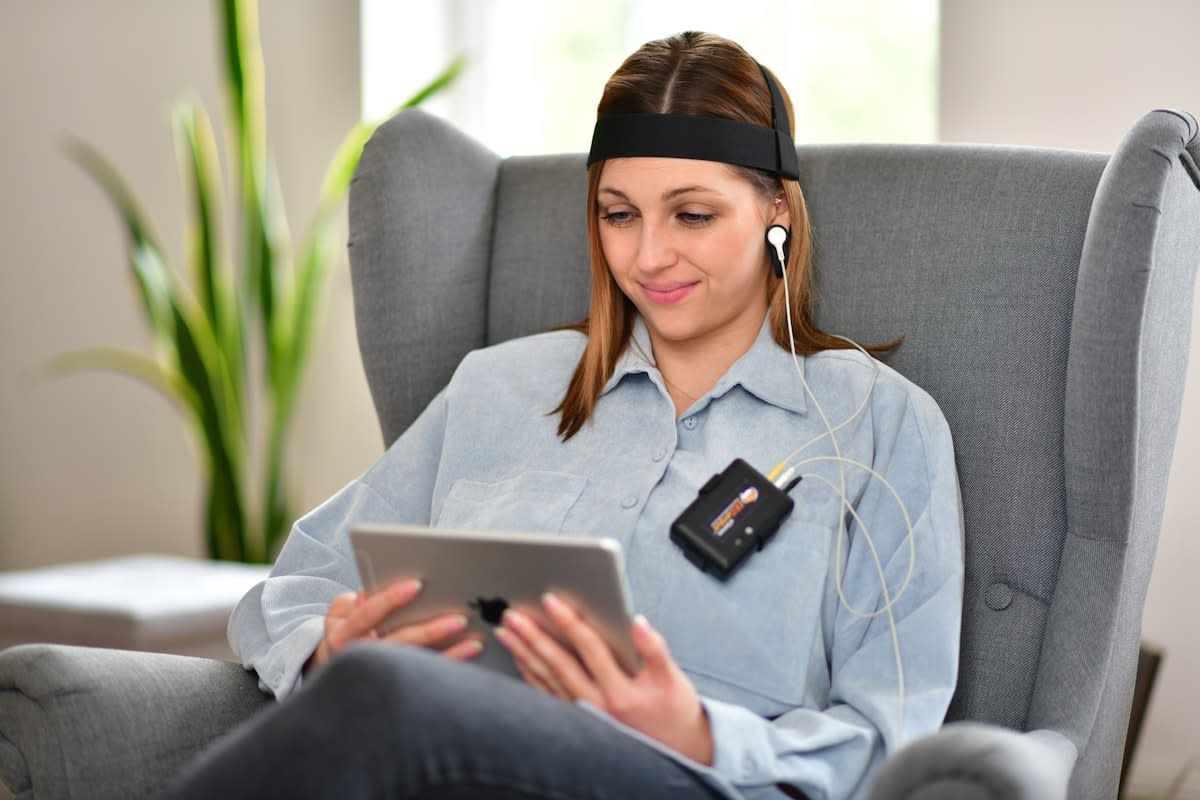
Despite the promise, this transition is not without friction. The most pressing concern is the digital divide. If critical care becomes a software-mediated service, what happens to the patient in a dead zone? What happens to the elderly who cannot navigate the interface? There is a real danger that the Invisible Ward could create a two-tier system: a high-tech, home-based experience for the connected, and a decaying, overcrowded physical ward for the marginalized. The technology is ready, but the equity frameworks are lagging.
Furthermore, there is the psychological weight of the 'digital gaze.' Being monitored 24/7 by a remote entity can induce a different kind of stress than the physical presence of a nurse. Patients report a sense of vulnerability knowing that their life depends on a stable internet connection and an algorithm's ability to trigger an alarm. The challenge for providers is to humanize the digital interface, ensuring that the patient feels seen, not just sensed.
As the hardware shrinks, the data expands, creating a new kind of clinical intuition. We are seeing a 25% reduction in ICU length of stay for patients who are transitioned to home eICU monitoring earlier in their recovery. This 'early exit' strategy not only frees up hospital capacity but prevents the muscle atrophy and cognitive decline associated with prolonged immobilization in a hospital bed. The living room is proving to be a more potent healing environment than the sterile ward.
The Horizon: Predictive Survival
Looking forward to the next twelve months, the focus is shifting from monitoring to forecasting. The next generation of eICU platforms is integrating generative AI to synthesize biometric data with electronic health records (EHR) and real-time genomic markers. We are moving toward a 'Digital Twin' model, where a virtual replica of the patient is simulated in the cloud. Clinicians can test a medication change on the digital twin before applying it to the physical patient in their living room.
This predictive capability will likely result in a 30% decrease in 30-day readmission rates. By identifying the subtle 'drift' toward instability days before a crisis occurs, the Invisible Ward can trigger a preemptive adjustment in treatment. The goal is a world where the acute crisis is managed so quietly and effectively at home that the patient never even realizes they were on the brink of a critical event.
The dissolution of the hospital wall is inevitable. As we refine the balance between remote surveillance and physical intervention, the very definition of a 'hospital' will change. It will no longer be a destination, but a distributed network of care. The Invisible Ward is not just a technological upgrade; it is a philosophical shift in how we perceive illness, recovery, and the sanctity of the home.