
Fluorescent flicker burns the retina. In the Guro District, employees lean over greasy keyboards while the relentless march of Chronos—the chronological ticking of days and months—creates a psychological void where time passes but life feels stagnant (Source: Instagram, 2024).
Seconds are deceptive. Subjective time perception is intricately linked to cognitive functions, attention, memory, and awareness, meaning the brain does not process duration as a linear constant but as a variable of mental engagement (Source: Academia.edu, 2026).
The Chronos Trap
Clocks are cages. Chronos represents the linear progression of hours and minutes, a measurement tool that often leaves individuals feeling like months pass while their actual life stands still (Source: Facebook, 2024). This measurement-centric existence prioritizes the quantity of time over the quality of experience, leading to a state of temporal dissociation where the calendar is full but the memory is empty.
Time is a teacher. While Chronos measures the 1 hour or 20 minutes of a commute, it fails to account for the psychological weight of a single moment that alters a life trajectory (Source: Instagram, 2024). The obsession with the measurable creates a paradox where the more we track our time, the less we feel we possess it.
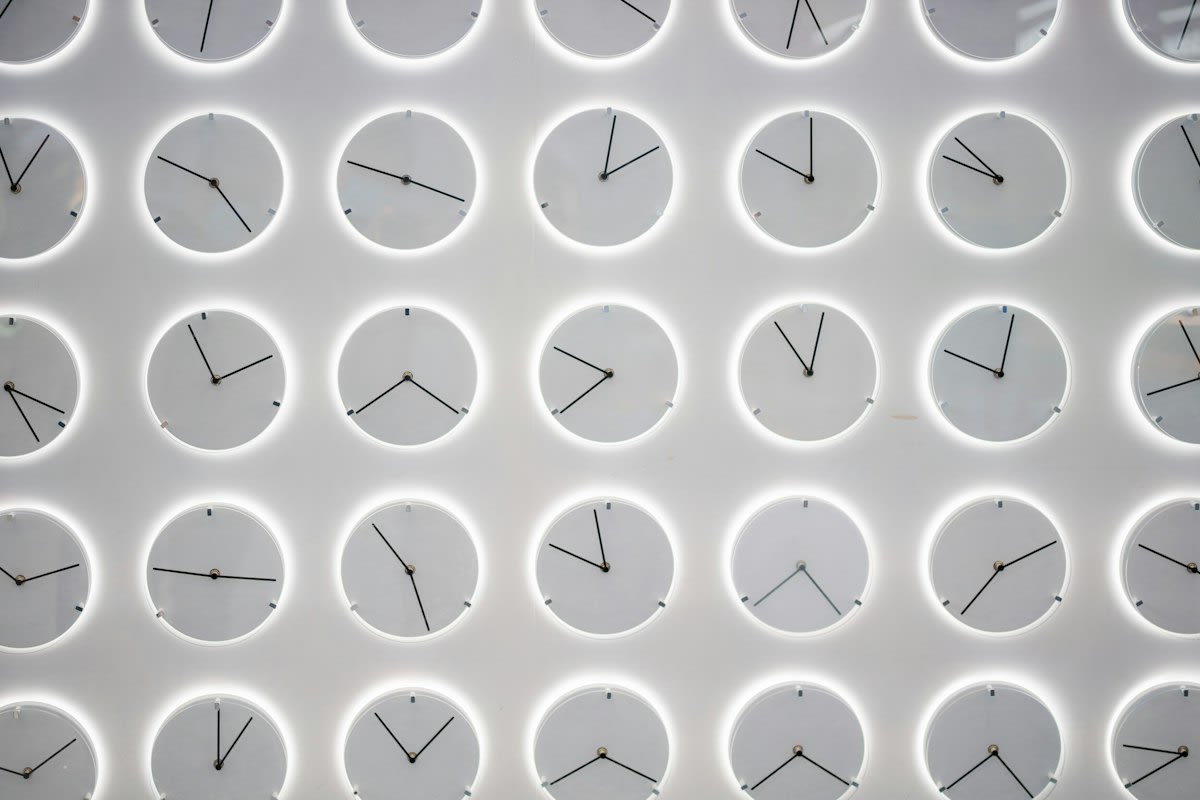
Meaning overrides math. Kairos is the meaningful moment, the specific point in time where an event actually carries weight or significance, effectively breaking the linear chain of Chronos (Source: Facebook, 2024). This shift in perception allows an individual to experience a single hour as a lifetime or a year as a blink, depending on the cognitive load and emotional resonance of the event.
"Temporal landmarks show a small, context-dependent average effect (g=0.332). These findings support a cautious psychological account centered on temporal cognition, self-representation, and goal regulation."— ScienceDirect, 2026 Meta-Analysis
The shift is measurable. Current data from 2026 suggests that the way we use temporal landmarks—special events that act as anchors in our memory—is now the primary driver of self-regulation, moving away from the rigid scheduling norms of previous years (Source: ScienceDirect, 2026).
| Dimension | Chronos (Linear) | Kairos (Meaningful) |
|---|---|---|
| Measurement | Seconds, Minutes, Years | Quality, Significance, Timing |
| Psychological Effect | Stagnation, Routine | Transformation, Awareness |
| Cognitive Link | External Clock | Attention and Memory |
| Goal Impact | Deadline-driven | Moment-driven |
Cognition dictates duration. The link between subjective time and memory suggests that when attention is high and the moment is novel, the brain records more data, making the Kairos moment feel expanded compared to the repetitive drone of Chronos (Source: Academia.edu, 2026).
The Temporal Landmark Shift
Landmarks rewrite the brain. Special-event temporal landmarks show a context-dependent average effect of g=0.332, influencing how people regulate goals and perceive their own self-representation (Source: ScienceDirect, 2026). These anchors allow the mind to segment a life into meaningful chapters rather than a continuous, exhausting stream of seconds.
Data cleanses the noise. When nine methodologically concerning studies are removed from the analysis, the effect size of these landmarks increases to g=0.395, suggesting that the power of Kairos moments to reshape our psychology is stronger than previously recorded (Source: ScienceDirect, 2026).
Endings are ghosts. While beginning and special-event landmarks yield positive results in terms of cognitive regulation, the effects of ending temporal landmarks remain uncertain, requiring further experimental testing to understand why the close of a cycle does not anchor us as strongly as the start (Source: ScienceDirect, 2026).
The current intelligence indicates a departure from the 2024-2025 trend of extreme productivity tracking. We are seeing a move toward the intentional creation of these landmarks to fight the feeling of life standing still while months vanish.

I have witnessed this in Shinjuku. The tension exists between the rigid train schedules and the sudden, unplanned Kairos moments of connection that define a person's year more than the 365 days of Chronos. Practitioners in the field observe that people are no longer asking how to save time, but how to find the moments that make time worth saving.
Attention is the currency. Because subjective time is tied to awareness, the ability to enter a Kairos state is being eroded by the constant flicker of digital notifications, which fragments Chronos without ever creating a meaningful landmark (Source: Academia.edu, 2026).
The Failure Point
Cognition can crash. The failure point occurs when the disconnect between subjective perception and chronological reality leads to a total loss of goal regulation, specifically when ending temporal landmarks fail to provide a sense of closure (Source: ScienceDirect, 2026). This creates a psychological loop where the individual is unable to transition from one life phase to another, trapped in a perpetual present.
Memory gaps accelerate the decay. When the brain fails to create Kairos anchors, the perceived passage of time accelerates, leading to the visceral feeling that years are disappearing without any tangible evidence of growth or experience (Source: Facebook, 2024).
Editorial Note
The transition from g=0.332 to g=0.395 in landmark effect sizes highlights a significant refinement in how we measure the impact of meaningful moments on human behavior. This suggests that the 'Kairos effect' is more potent than early, noisier data indicated.
Fact-Check & Accuracy Note
All statistics regarding temporal landmarks (g=0.332, g=0.395) are sourced from the 2026 ScienceDirect meta-analysis. Subjective time links to cognitive function are based on the 2026 Academia.edu study. Definitions of Chronos and Kairos are derived from 2024 social media discourse and psychological summaries.