
The Biological Imperative of Light
Your brain does not perceive time through a clock on the wall; it perceives time through photons. Deep within the retina, specialized cells containing melanopsin act as the primary sensors for the suprachiasmatic nucleus, the master clock of the human body. When these cells detect specific wavelengths of light, they signal the brain to suppress melatonin and surge cortisol, effectively flipping the switch from sleep to wakefulness. Most modern professionals operate in a state of biological confusion, trapped in dim offices during the day and blasted with high-intensity blue light at midnight. This misalignment does not just cause tiredness; it degrades cognitive function, disrupts metabolic health, and erodes emotional resilience.
Consider the sheer scale of the disruption. Estimates suggest that over 80% of the global population now lives under light-polluted skies, meaning the natural signals our ancestors relied upon have been drowned out by the neon saturation of cities like Tokyo or the sprawling suburbs of North America. We have created an environment that is biologically alien. By ignoring the photonic requirements of the human body, we accept a baseline of brain fog and fragmented sleep as the cost of modernity. But why accept a deficit when the solution is as simple as managing the light that enters your eyes?
The Photon Window
The photon window is the critical period immediately after waking and before sleeping where light exposure has a disproportionate impact on your hormonal cascade.
Prerequisites for the Protocol
Before executing the reset, you must assemble the necessary tools to manipulate your environment. You cannot rely on willpower alone when you are fighting a billion years of evolution. The goal is to create a stark contrast between your waking hours and your recovery hours. If your environment remains a lukewarm blur of medium-intensity light from 7 AM to 11 PM, your brain will never receive a clear signal to shift states. Precision in your tools leads to precision in your energy levels.
- Blue-light blocking glasses (Amber or Red lenses for evening use).
- A 10,000 lux light therapy lamp (Essential for those in Nordic regions or windowless offices).
- Blackout curtains or a high-quality weighted sleep mask.
- Dimmable, warm-spectrum lighting for the bedroom and living area.
- A consistent wake-up time, regardless of the day of the week.
These tools are not luxuries; they are biological interventions. For example, a 10,000 lux lamp mimics the intensity of a bright morning, which is critical for individuals in Oslo or London during the winter months when natural sunlight is insufficient to trigger the cortisol awakening response. Without these tools, you are attempting to tune an instrument without knowing where the notes are. Once the hardware is in place, the protocol becomes a matter of timing and discipline.
Now that the environment is primed, we move from preparation to execution. The following steps are designed to anchor your circadian rhythm to the solar cycle, regardless of your timezone.
The Step-by-Step Reset
- The Morning Photon Spike: View natural sunlight within 30 minutes of waking for 10-30 minutes.
- The Midday Anchor: Maximize light exposure between 11 AM and 2 PM to reinforce the wake signal.
- The Sunset Transition: Dim overhead lights and shift to warm, low-level lighting after 6 PM.
- The Digital Blackout: Eliminate all blue-light emitting screens 90 minutes before bed.
- The Total Dark Phase: Ensure the sleep environment is 100% dark to maximize melatonin synthesis.
The Morning Photon Spike is the most critical lever in the entire protocol. Natural sunlight contains a broad spectrum of light, but the short-wavelength blue light (peaking around 480nm) is what specifically triggers the melanopsin cells. This trigger tells your brain that the day has begun, setting a timer for melatonin production to begin roughly 14 to 16 hours later. If you stay indoors under fluorescent lights, you are receiving a fraction of the necessary lux, leaving your brain in a state of perpetual twilight. Force yourself outside; even on a cloudy day in Seattle or London, the outdoor light intensity far exceeds any indoor lighting.

As you move into the Midday Anchor, the goal is to maintain a high state of alertness. Many people experience a post-lunch dip, which is a natural part of the circadian rhythm, but it is often exacerbated by dim office environments. By stepping outside for a fifteen-minute walk or sitting by a window, you reinforce the wake signal. This prevents the brain from prematurely sliding into a sleep-ready state and ensures that your peak cognitive energy is sustained through the afternoon. It is about creating a high-contrast day: bright when you work, dark when you rest.
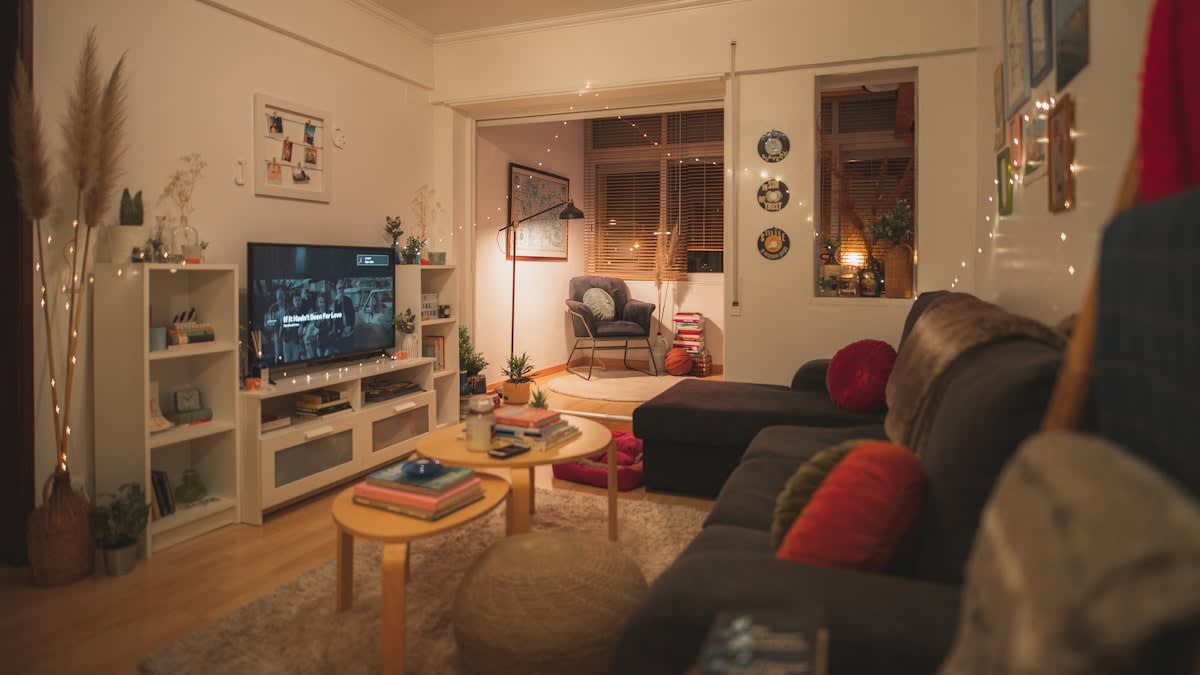
The Sunset Transition marks the shift from performance to recovery. As the sun dips, your body expects a change in the light spectrum. Overhead LED lights mimic the midday sun and trick your brain into thinking the day is continuing. Shift your lighting to floor lamps with warm, amber-hued bulbs. This reduction in intensity and shift in wavelength signals the pineal gland to begin the slow release of melatonin. If you ignore this transition, you are effectively telling your brain to stay in high-gear while your body is trying to park.
Then comes the Digital Blackout, the hardest but most rewarding part of the protocol. Your smartphone is a biological weapon designed to trick your brain into thinking it is high noon in the Sahara. The concentrated blue light from screens can cause a 50% reduction in melatonin production if used immediately before bed. If you must use a device, wear amber-tinted blue-light blockers to filter out the 450-490nm range. However, the best practice is total avoidance. Replace the scroll with a physical book or a conversation, allowing your brain to enter the pre-sleep state without digital interference.
Finally, the Total Dark Phase is where the actual repair happens. Even a small amount of light—a glowing charger or a sliver of streetlamp light through the curtains—can penetrate the eyelids and disrupt sleep architecture. This is why blackout curtains or a weighted mask are non-negotiable. In total darkness, the brain can maximize the depth of REM and slow-wave sleep, which are essential for memory consolidation and metabolic clearance. You are not just sleeping; you are performing a system restore.
| Light Spectrum | Primary Effect | Ideal Time | Biological Trigger |
|---|---|---|---|
| Blue/Bright White | Alertness & Wakefulness | 07:00 - 14:00 | Cortisol Surge / Melatonin Suppression |
| Warm Yellow/Amber | Relaxation | 18:00 - 21:00 | Melatonin Initiation |
| Total Darkness | Deep Recovery | 22:00 - 06:00 | Growth Hormone / Glymphatic Clearance |
This protocol is not a suggestion; it is a biological requirement for those operating at a high level. When we look at the global variance in productivity, we often see a correlation between light management and cognitive endurance. In cultures where outdoor activity remains integrated into the workday, the prevalence of seasonal affective disorder and chronic insomnia tends to be lower than in hyper-urbanized, indoor-centric societies. The difference is not genetic; it is environmental.
"The most powerful drug in the world for regulating mood and energy is not found in a pharmacy; it is the light of the sun hitting the retina at the correct time of day."— Industry Expert in Circadian Biology
Common Pitfalls
The most frequent error is the Weekend Shift. Many practitioners follow the protocol strictly from Monday to Friday, only to sleep in until 11 AM on Saturday and Sunday. This creates a phenomenon known as social jetlag. By shifting your wake time by more than two hours, you effectively fly your brain across three time zones every weekend. When Monday morning arrives, your body is still in a different timezone, leading to the dreaded Monday morning brain fog. Consistency is the only way to lock the rhythm.
Another common mistake is the Filter Fallacy. Many rely on 'Night Shift' or 'Dark Mode' on their phones, believing these software filters are sufficient. While they help, they do not eliminate the psychological stimulation of the content nor the intensity of the light. A software filter is a bandage on a bullet wound. The only real solution is the removal of the stimulus. If you are staring at a screen, your brain is engaged in an active, alert state that is fundamentally incompatible with the wind-down process.
Avoid Social Jetlag
If you wake up at 6 AM on weekdays, do not sleep past 8 AM on weekends. The 2-hour window is the maximum threshold before you trigger social jetlag.
Ultimately, resetting your circadian clock is about reclaiming agency over your biology. In an era of constant connectivity and artificial environments, the ability to control your energy levels through light is a competitive advantage. Stop treating your sleep as an afterthought and start treating your light exposure as a strategic tool. When you align your life with the physics of light, the energy follows naturally.