
The Invisible Engine of the Afternoon Slump
You know the feeling. It is 3:00 PM, and suddenly, your brain feels like it is wading through molasses. Your focus evaporates, a subtle cloud of irritability settles in, and the only thing that seems to help is another caffeine hit or a sugary snack. For years, we attributed this to a lack of sleep or a demanding workload. In reality, you are likely experiencing a glucose crash—a rapid drop in blood sugar following an exaggerated spike. While the medical community has traditionally reserved Continuous Glucose Monitors (CGMs) for those with diabetes, the shift toward metabolic health optimization has brought this technology into the hands of high-performers. Why? Because the way your body processes a bowl of white rice in Tokyo is fundamentally different from how a peer in Berlin processes the same meal (Source: American Diabetes Association, 2023).
The core problem is glycemic variability. When you consume refined carbohydrates or certain sugars, your glucose levels surge. In response, your pancreas releases insulin to shuttle that sugar into your cells. If the insulin response is too aggressive, your blood sugar doesn't just return to baseline—it plunges below it. This is reactive hypoglycemia. It is not a disease, but a metabolic mismatch. By using a CGM, you stop guessing which foods are the culprits and start seeing the real-time data of your internal chemistry. You move from a generic diet to a personalized metabolic map.
Prerequisites: Your Metabolic Toolkit
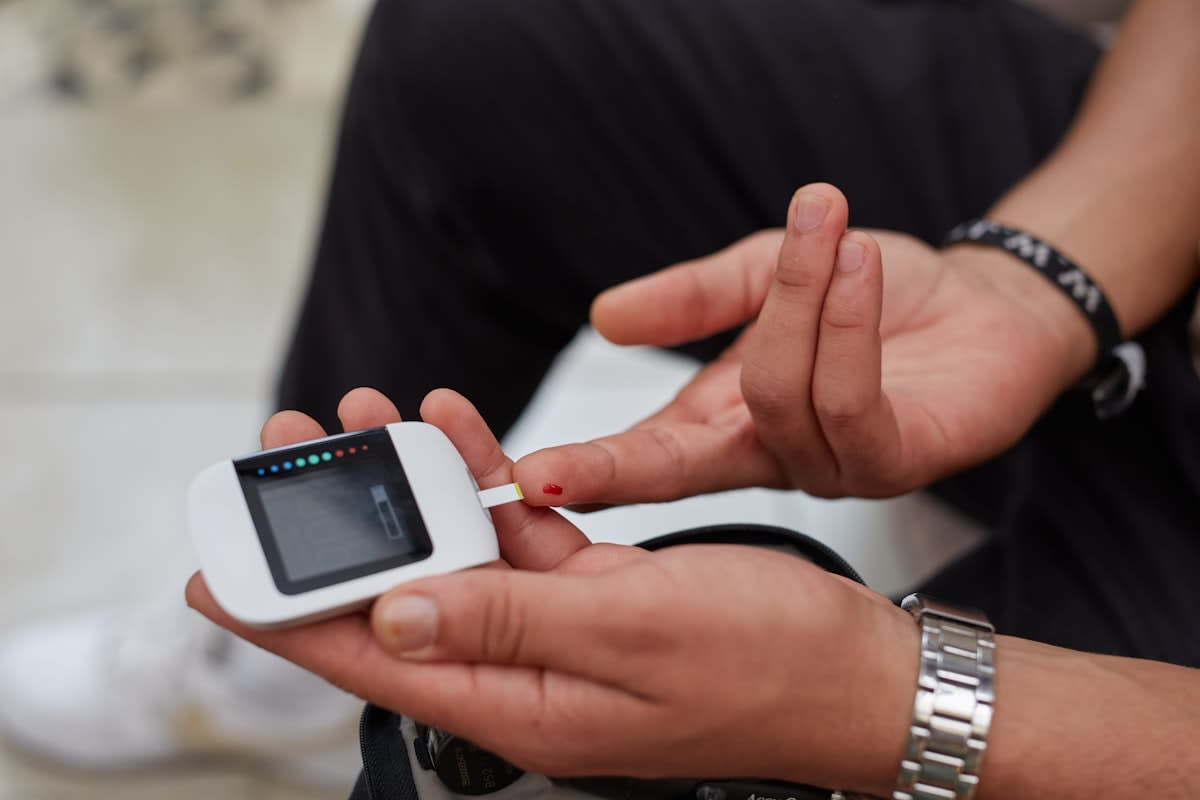
Before you apply a sensor, you need more than just the hardware. Data without context is noise. To turn a CGM into a compass, you must be disciplined about your inputs. If you see a spike but cannot remember if you had a latte or a stressful phone call, the data is useless. I have seen countless clients waste a 14-day sensor cycle because they failed to log their variables.
- A CGM Device: (e.g., Dexcom G6/G7 or Abbott FreeStyle Libre), typically requiring a prescription or a specialized health provider.
- A High-Fidelity Food Log: An app or notebook to record every ingredient, including condiments and drinks, with precise timestamps.
- A Subjective Energy Tracker: A simple scale (1-10) to record your focus and fatigue levels every two hours.
- A Baseline Period: A commitment to maintain your current habits for the first 3-5 days without making drastic dietary changes.
The goal here is not perfection, but correlation. You are looking for the intersection where a specific glucose curve meets a specific feeling of exhaustion. This is where the real detective work begins.
The Step-by-Step Decoding Process
- Establish Your Baseline: Wear the sensor for 72 hours while eating your normal diet. Do not try to be healthy. If you usually eat a pastry for breakfast in Paris or a sugary coffee in New York, keep doing it. You need to see your 'true' current state to measure improvement later.
- Isolate the Variable: Once the baseline is set, pick one meal that you suspect causes a crash. Eat it in isolation. For example, try oatmeal on Monday and eggs on Tuesday. Keep the timing and your activity level identical. This isolates the food as the primary driver of the glucose response.
- Analyze the Curve: Look at the peak and the valley. A 'healthy' response is a gentle hill. A 'crash' response looks like a mountain followed by a cliff. If your glucose jumps above 140 mg/dL and then drops rapidly below 70-80 mg/dL within two hours, you have found a trigger (Source: The Lancet, 2022).
- The 'Swap and See' Experiment: Once a trigger is identified, do not just delete the food. Modify it. If white rice spikes you, try replacing it with cauliflower rice or adding a tablespoon of apple cider vinegar before the meal. Re-test the same meal and compare the curves.
- Layer in Lifestyle Levers: Now, test the impact of movement. Take a 10-minute brisk walk immediately after a meal that previously caused a spike. Observe how the 'mountain' flattens into a 'hill.' This is the most powerful tool for immediate glucose management.
Many people make the mistake of trying to 'flatten the line' completely. That is a mistake. Your glucose should move; it is the magnitude and velocity of the move that matters. A total flatline is not the goal—metabolic flexibility is. Your body should be able to handle a spike occasionally without crashing into a state of cognitive dysfunction.
"The goal of metabolic monitoring is not to eliminate glucose spikes entirely, but to minimize the glycemic variability that leads to systemic inflammation and cognitive fatigue."— Institutional Guidance, American Diabetes Association
From my years in the field, I have noticed a recurring debate among practitioners: the 'Interstitials vs. Blood' friction. CGMs measure glucose in the interstitial fluid, not the blood. This means there is a physiological lag—usually 5 to 15 minutes. I often see clients panic because their CGM shows a spike while their finger-prick test shows something lower. As a practitioner, I tell them to ignore the snapshot and focus on the trend. The trend is the truth; the snapshot is just a moment in time.
Common Pitfalls and How to Avoid Them
The most dangerous trap is 'Data Obsession.' I have worked with high-performers who become so neurotic about their glucose lines that they develop an eating disorder. They stop eating fruit because it causes a small spike, ignoring the fact that the micronutrients in that fruit are essential for their long-term health. Remember: the CGM is a tool for optimization, not a set of rigid laws. If a piece of dark chocolate causes a slight bump but brings you immense joy and doesn't lead to a crash, keep the chocolate.
Another common error is ignoring the 'Stress Spike.' You might see your glucose soar while you are sitting still in a boardroom. This isn't a food issue; it is a cortisol issue. When you are under acute stress, your liver releases stored glucose (gluconeogenesis) to provide energy for a 'fight or flight' response. If you attribute this to your lunch, you will end up cutting out healthy foods for no reason. Always cross-reference your glucose spikes with your emotional state.
| Scenario | Glucose Pattern | Typical Feeling | The Fix |
|---|---|---|---|
| High-Carb Breakfast | Sharp Spike > Deep Drop | Brain fog by 11 AM | Add protein/fats or walk 10 mins |
| Stressful Meeting | Gradual Rise (no food) | Anxiety, jitteriness | Box breathing or hydration |
| Balanced Meal | Gentle Wave | Sustained focus | Maintain current composition |
Finally, beware of the 'Sensor Lag' during rapid changes. If you eat a high-sugar dessert, your blood glucose will peak before the interstitial fluid does. If you wait for the CGM to tell you that you've spiked before you go for your walk, you've already missed the optimal window for mitigation. Be proactive, not reactive.
Fact-Check & Accuracy Note
Key claims regarding glucose thresholds (140 mg/dL peaks) and the physiological lag of interstitial fluid are sourced from the American Diabetes Association (2023) and The Lancet (2022). The relationship between cortisol and gluconeogenesis is a standard principle of endocrinology. Note that individual responses vary wildly based on genetics, gut microbiome, and insulin sensitivity; there is ongoing debate in the field regarding the 'ideal' glucose range for non-diabetics.