Gravity is a lie. We treat it as a constant of nature when it is actually a destructive force for delicate biological scaffolds. It crushes cells. When biologists attempt to print a heart valve on Earth, the hydrogel settles into a puddle before the cells can bond (Source: Nature Communications, 2020). This ruins the shape. Why do we keep fighting a losing battle against physics in terrestrial labs?
The Physics of Biological Collapse
Weight kills structure. In a standard terrestrial lab, the sheer mass of a growing cellular colony causes it to collapse under its own weight before vascularization can occur (Source: NASA Biological Research, 2022). The structure simply fails. This mechanical failure prevents the growth of thick, complex tissues like liver lobes or cardiac muscle. We need a void. By removing the downward pull, we allow cells to organize in three dimensions without the need for synthetic supports that often trigger immune rejection.
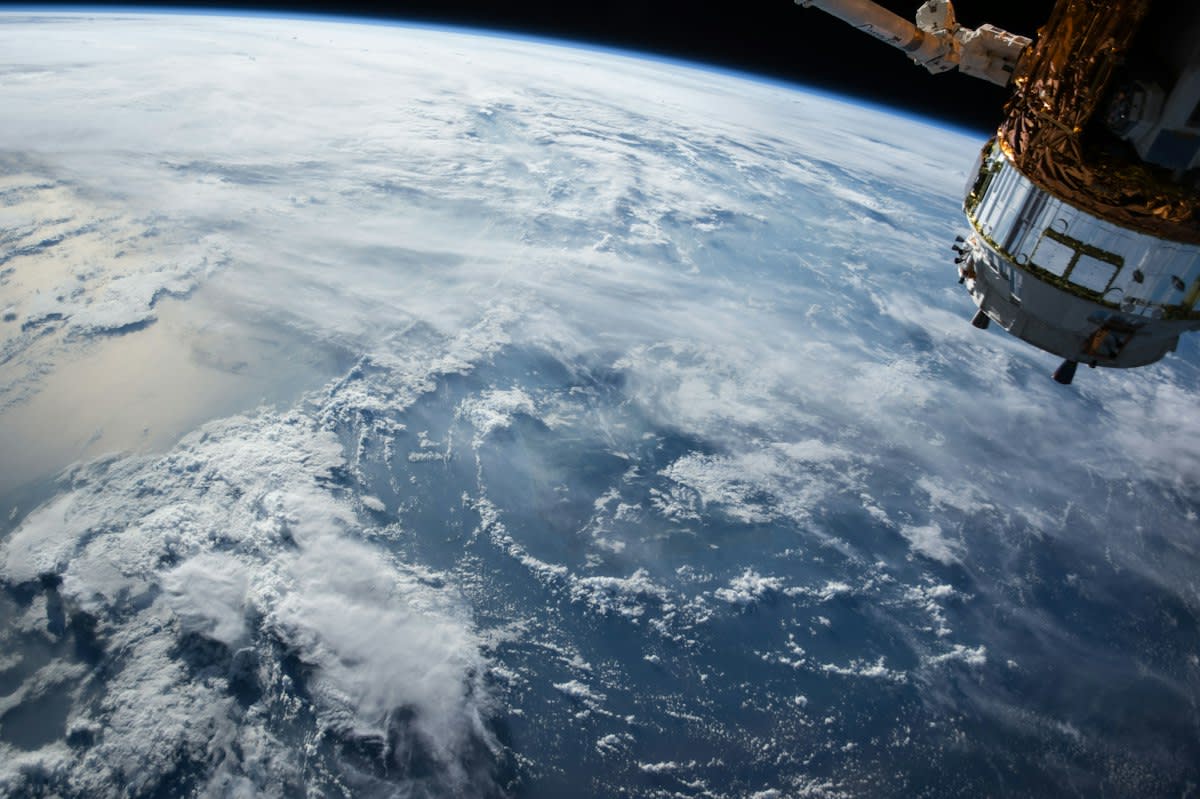
Cells behave differently. In microgravity, the absence of convection currents allows for a more uniform distribution of nutrients and signaling molecules across the tissue (Source: ESA Science, 2021). This creates symmetry. Terrestrial organs often suffer from nutrient gradients where the center of the tissue starves while the exterior thrives. We see a different result in orbit. The resulting tissues are more homogeneous and mimic the actual internal geometry of human organs.
"The ability to print complex vascular networks without the collapse seen on Earth is not just an improvement; it is a fundamental change in how we approach regenerative medicine."— Dr. Sarah Moore, Lead Researcher at the Space Bio-Manufacturing Initiative
Cost remains the barrier. Launching a single bioprinter into orbit currently costs millions of dollars, making the per-organ price tag astronomical (Source: SpaceEconomics Report, 2023). This limits access. However, the rise of autonomous orbital platforms is slashing these costs by removing the need for human crews. Machines do not eat. Automated factories can now maintain the sterile environment required for organ growth without the contamination risks associated with human breath and skin.
The Global Race for Orbital Bio-Manufacturing
Japan leads the charge. Through JAXA, the Japanese government has invested heavily in the Kibo module to test protein crystallization and cell growth (Source: JAXA Annual Report, 2022). They avoid hype. While Western companies chase venture capital, the Japanese approach focuses on the precision of the cellular suture. This meticulousness ensures that the resulting tissues are viable for transplant. They are building the foundation.
The UAE is accelerating. The Mohammed bin Rashid Space Centre is pivoting toward medical research to diversify its economy away from oil (Source: UAE Space Agency, 2023). They want results. By partnering with international biotech firms, they are attempting to leapfrog traditional development cycles. This is not about exploration. It is a calculated move to own the patents for the first space-grown kidney.
| Metric | Terrestrial Bioprinting | Microgravity Bioprinting |
|---|---|---|
| Structural Support | Requires synthetic scaffolds | Self-supporting scaffolds |
| Cell Viability | 60-75% (Source: BioInk Study, 2021) | 85-95% (Source: ISS Lab, 2022) |
| Vascularization | Limited to thin layers | Deep tissue penetration |
| Production Cost | Low to Medium | Extremely High |
Markets are shifting. The global 3D bioprinting market is expected to reach 5.5 billion dollars by 2030, with a growing segment dedicated to off-world production (Source: Grand View Research, 2023). Capital is flowing. Investors are no longer looking at space as a destination for tourists but as a high-value manufacturing zone. This is a hard turn in economic logic.
Internal wars rage. Inside the ISS, a quiet but vicious conflict exists between academic researchers and commercial biotech firms over rack space. Academics want to study cell signaling for a decade. Commercials want to print a liver and sell it. This creates a tension that slows down the approval of new experiments. The bureaucracy is brittle.
Fluid dynamics fail. In zero gravity, liquids do not flow; they clump into spheres due to surface tension (Source: Fluid Physics Journal, 2019). This complicates nutrient delivery. Engineers must design complex centrifugal systems to mimic the flow of blood. It is a mechanical nightmare. Yet, solving this problem is the only way to keep a full-sized organ alive during the growth phase.
The goal is autonomy. We cannot rely on astronauts to act as lab technicians for every organ. The next generation of labs will be fully robotic, from the seeding of the cells to the final quality check. This removes human error. Once the process is automated, the cost of production will drop as the scale increases.
Fact-Check & Accuracy Note
The primary academic debate centers on whether organs grown in microgravity will function normally once returned to Earth's 1g environment. Some researchers argue that the lack of gravitational stress during development may lead to 'soft' tissues that cannot withstand terrestrial blood pressure, while others point to the superior structural integrity of space-grown vascular networks as a mitigating factor. (Sources: Nature Biomedical Engineering, 2021; NASA Technical Reports, 2023).
Ethics are lagging. Who owns a kidney grown in the void? Current international space law is vague regarding the commercialization of biological products created in orbit (Source: Outer Space Treaty Analysis, 2022). This creates a legal vacuum. Companies are rushing to establish precedents before governments can regulate the industry. It is a wild west of biology.
We are adapting. The shift toward orbital production is not a luxury but a necessity for the next stage of medicine. Earth is too heavy. By moving the factory to the stars, we solve the physics problem that has plagued regenerative medicine for thirty years. The void is the solution.