
The End of the Generic Patient
For decades, clinical medicine has operated on the logic of the average. Doctors treated the mean, prescribing dosages and screening schedules based on what worked for the majority of a population. But as of mid-2026, that paradigm is collapsing. We are witnessing a pivot toward multi-omics—the simultaneous analysis of the genome, proteome, metabolome, and beyond—which treats the human body not as a set of averages, but as a unique, fluctuating data stream. Why settle for a snapshot when you can have a high-definition movie of your biological state?
The shift is no longer theoretical. The convergence of high-throughput analysis and artificial intelligence has turned the blood test from a simple diagnostic tool into a gateway for deep molecular interrogation. We are moving past the era where a single biomarker—like glucose or cholesterol—dictated a diagnosis. Instead, the industry is racing toward a model where thousands of faint, complementary signals are synthesized to identify disease long before a physical symptom ever manifests.

The Multi-Billion Dollar Engine
The financial momentum behind this shift is staggering. Recent market projections indicate that the global AI in life science market is on track to reach $69.34 billion by 2031. This isn't a slow incline; it's an aggressive 26.3% compound annual growth rate (CAGR) that reflects a systemic reallocation of capital. Investors and healthcare providers are no longer betting on isolated tools; they are betting on platforms that can manage the entire continuum from target discovery to regulatory submission.
| Market Segment | Key Metric/Share | Primary Driver |
|---|---|---|
| End-to-End Solutions | 37.5% Market Share (2025) | Integration of multi-omics and clinical trial execution |
| AI in Life Sciences | $69.34 Billion (by 2031) | 26.3% CAGR growth |
| Clinical Applications | Dominant Share | Diagnostics and patient monitoring |
What stands out in the 2025 data is the dominance of end-to-end solutions, which captured 37.5% of the market share. This tells us that the industry has realized that fragmented data is useless. The value is not in the sequencing itself, but in the integration. Organizations are now favoring comprehensive platforms that can ingest noisy, unstandardized data from electronic health records (EHRs) and multi-omics platforms, scrubbing it clean, and turning it into a predictive model for patient outcomes.
The Data Friction
Despite the capital influx, a critical bottleneck remains: healthcare data is still largely siloed and noisy. Significant preprocessing is required before any AI model can be trusted with a human life.
This financial surge is creating a divide in the research landscape. While global giants can afford the high upfront capital investments in AI infrastructure and specialized hardware, smaller biotech entities and regional research institutions are struggling to keep pace. The barrier to entry is no longer just scientific knowledge; it is computational power and the ability to attract elite AI talent.
Mass Spectrometry: The Precision Anchor
"Mass spectrometry is increasingly becoming a cornerstone of precision medicine as it converges with genomics, proteomics, metabolomics, and other omics technologies."— Akhilesh Pandey, M.D., Ph.D., Mayo Clinic
If genomics is the blueprint, mass spectrometry is the real-time inspection of the building. As highlighted by Dr. Akhilesh Pandey of the Mayo Clinic, the convergence of mass spectrometry with other omics technologies is transforming how we understand rare diseases and chronic conditions. By analyzing proteins and metabolites, clinicians can see not just what might happen based on a patient's DNA, but what is actually happening in the body at this very second.
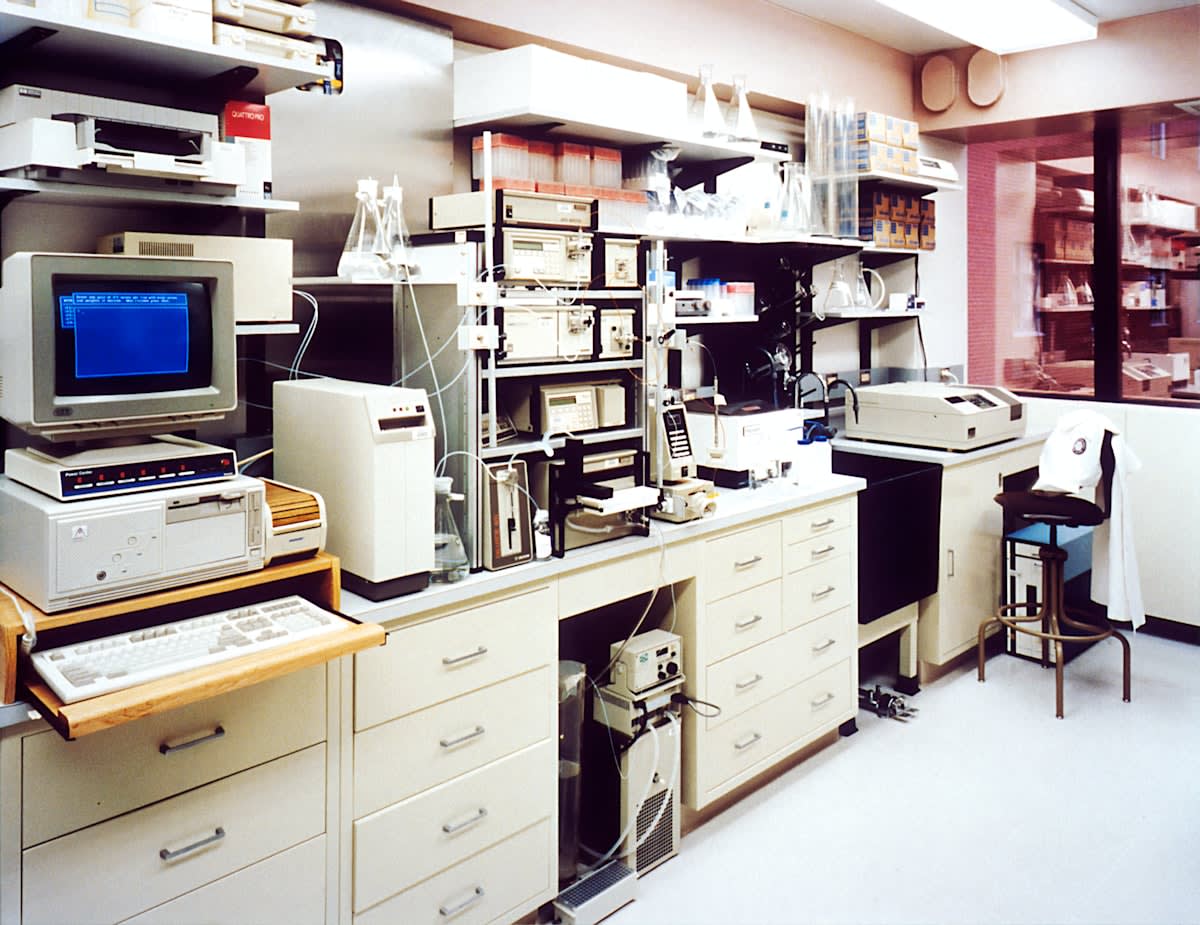
This technical evolution is enabling a new level of analytical chemistry in molecular and spatial biology. We are seeing the emergence of cost-efficient alternatives to traditional sequencing, providing global methylome information without the need for exhaustive bioinformatic analyses. This efficiency is the key to moving multi-omics out of the ivory tower of research and into the high-throughput environment of reference labs.
From Static Screening to Dynamic Intelligence
The most immediate impact of this trend is appearing in cancer diagnostics. For years, the gold standard was a fixed screening schedule—every few years, a specific test for a specific cancer. That is an antiquated model. AI is now enabling multi-cancer screening built from a symphony of faint but complementary signals. Instead of looking for one loud alarm, AI listens for a hundred whispers.
- Biomarker data: cfDNA, ctDNA, TEP-derived RNA, and miRNA
- Molecular signatures: Proteomics and metabolomics
- Cellular debris: Exosomes and extracellular vesicles
- Imaging integration: CT, MRI, endoscopy, and digital pathology
- Contextual data: Demographic factors, lifestyle, and medical history
Compare the state of the art today to just twelve months ago. We have moved from the idea of 'multi-cancer detection' to the implementation of 'personalized and dynamic risk assessment.' The delta is the shift from a static event to a continuous process. Future systems will integrate wearable signals and real-time clinical records to build updated individual risk profiles, providing clinicians with actionable decision support rather than a simple yes/no result.
Does this mean the end of the biopsy? Not necessarily, but it radically changes when and where a biopsy is performed. By utilizing AI to integrate multi-omics data with medical imaging, the system can pinpoint exactly where a lesion is most likely to be malignant, reducing unnecessary procedures and accelerating the time to treatment.
The Friction of Progress
The path to this personalized future is not without friction. The primary obstacle is the 'noise' inherent in biological data. Healthcare data remains stubbornly siloed across different EHR systems and multi-omics platforms. Before an AI can identify a cancer signature, the data must undergo significant preprocessing to remove the artifacts of different lab techniques and regional standards.
Furthermore, the economic divide is widening. The high upfront capital required for AI infrastructure creates a risk where precision medicine becomes a luxury good. If only the wealthiest institutions can afford the hardware and talent to run these multi-omic integrations, we risk creating a two-tier healthcare system: one based on dynamic intelligence and another clinging to the outdated logic of the average.
Yet, the resilience of the industry is evident in the drive toward cost-efficient alternatives. The push for high-throughput analysis in specialized and reference lab settings is beginning to drive down the cost per sample. As these technologies scale, the ability to integrate proteomics and metabolomics will move from rare disease research into primary care.
The Horizon: Medicine as a Real-Time Service
We are entering an era where health is no longer a binary state of 'sick' or 'well,' but a continuous spectrum of risk. The integration of multi-omics, imaging, and wearable data suggests a future where your doctor doesn't wait for you to feel a lump or experience pain. Instead, a shift in your metabolomic signature, flagged by an AI, triggers a preventative intervention months before a disease takes hold.
The end of 'average' medicine is not just a scientific victory; it is a humanitarian one. By acknowledging the biological individuality of every patient, we stop wasting time on treatments that only work for the mean and start deploying therapies that work for the person. The transition is complex, expensive, and data-heavy, but the alternative—continuing to treat the world as a set of averages—is no longer an option.