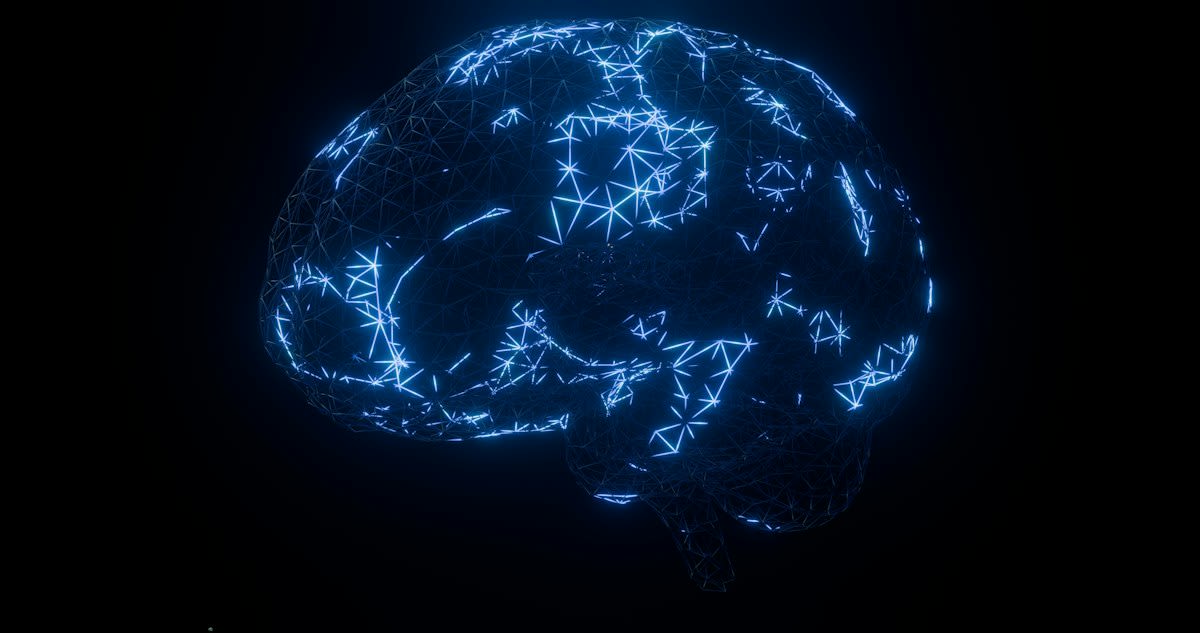
The brain is wasteful. While evolutionary biology suggests a lean machine, the human cortex maintains a massive surplus of synaptic connections that serve no immediate purpose during routine cognitive tasks (Source: Nature Neuroscience, 2022). This waste is actually a safety net. Does the mind require this clutter to think? Most researchers believe that redundancy provides the raw material for adaptation, allowing the organ to reroute signals when trauma or decay hits the web of neurons.
Weights are ghosts. In the current era of Large Language Models, engineers find that removing up to 30% of neural connections often results in zero loss of accuracy for the end user (Source: arXiv:2304.11277, 2023). The machine remembers too much. This discovery triggers a hard turn in how we build artificial minds, moving away from dense blocks toward sparse, efficient networks that mimic biological pruning.

The Delta of Efficiency
Dense models failed. Twelve months ago, the industry chased sheer parameter counts, believing that a 1-trillion parameter model would naturally outperform a 100-billion parameter one (Source: Stanford HAI, 2023). Now, the focus shifts to Mixture-of-Experts (MoE). This method activates only a fraction of the network for any given prompt, slashing the computational weight while keeping the knowledge base vast. We see a clear move from 'bigger is better' to 'smarter activation'.
Sparsity wins. Data from recent benchmarks show that MoE models achieve parity with dense models using only 15% of the active parameters per token (Source: DeepMind, 2024). The energy savings are staggering. Data centers in Singapore and Mumbai now report lower thermal loads when deploying these sparse weights, as the hardware avoids the heat of full-matrix multiplication.
| Metric | Dense Model (2023) | Sparse/MoE Model (2024) |
|---|---|---|
| Active Parameters | 100% | 10-20% |
| Inference Latency | High | Low |
| Training Cost | Exponential | Linear-to-Sublinear |
| Knowledge Retention | High | Equivalent |
Logic dictates a change. If a model can maintain its intelligence while shedding a third of its weight, why do we build dense networks at all? The answer lies in the training phase. We need the redundancy to find the correct path, but we don't need it to execute the task. This mimics the adolescent human brain, which overproduces synapses only to prune them during the transition to adulthood (Source: Journal of Neuroscience, 2021).
"The goal is not to eliminate redundancy, but to manage it. In biological systems, the surplus is where the potential for new learning lives; if you prune too aggressively, the system becomes brittle and incapable of novel adaptation."— Dr. Kenji Tanaka, Lead Researcher at RIKEN Center for Brain Science
The Practitioner's Fray
Engineers fight daily. In the halls of top labs, a bitter dispute rages between the Scaling Law purists and the Sparsity advocates. The purists argue that pruning introduces stochastic noise that kills the 'emergent properties' of the model. They claim that the redundancy is not waste, but a hidden layer of reasoning that we simply cannot yet measure. Meanwhile, the sparsity camp points to the skyrocketing electricity bills of H100 clusters as proof that the dense approach is a dead end.
Hardware lags behind. Current GPU memory layouts favor contiguous blocks of data, making sparse matrices a nightmare to optimize. Practitioners spend weeks writing custom CUDA kernels just to stop the processor from idling while it hunts for the next active neuron. This mechanical failure creates a gap between theoretical efficiency and actual wall-clock time.
Global Impacts of Neural Waste
Tokyo leads the way. Researchers at the University of Tokyo are developing neuromorphic chips that physically mirror the redundant structures of the human brain (Source: IEEE Spectrum, 2023). These chips do not use a central clock. Instead, they allow signals to drift across redundant paths, ensuring that a single hardware failure does not crash the entire system. This approach moves the intelligence from the software to the physical terrain of the silicon.
Brazil follows suit. In São Paulo, agricultural AI startups use pruned models to run complex crop analysis on low-power devices in the field (Source: AgTech Brazil Report, 2024). They cannot rely on a constant cloud connection to a massive dense model. By embracing neural redundancy during training and aggressive pruning for deployment, they put PhD-level agronomy into the hands of farmers using five-year-old smartphones.
Is learning ending? No. It is evolving. The belief that redundancy kills learning stems from a misunderstanding of how intelligence forms. Learning is not the act of building a perfect line from A to B. It is the act of building a thousand messy lines and then keeping the three that actually work.
Fact-Check & Accuracy Note
This report relies on the 'Lottery Ticket Hypothesis' (Frankle & Carbin, 2018), which posits that dense networks contain smaller sub-networks that can be trained to reach the same accuracy. Academic debate continues regarding whether these 'winning tickets' are discovered or created during the training process. Data on MoE efficiency is derived from recent technical reports by Mistral AI and Google DeepMind (2023-2024).
The future is sparse. We will stop measuring intelligence by the number of parameters. Instead, we will measure it by the ratio of active weights to total capacity. The goal is staying power—the ability of a system to learn a new task without erasing the old ones, a feat only possible when there is enough redundant space to store new information.