
For two decades, the global narrative around ocean plastic has been dominated by the image of the Great Pacific Garbage Patch being swept clean by massive, expensive floating barriers. It is a seductive vision because it mimics how we clean a house: you see the mess, you pick it up, and it disappears. But anyone who has spent significant time in the field knows this is a fundamental category error. We are treating a systemic biological failure as a waste management problem. The real shift is not happening on the surface, but in the depths, where the ocean's microbiome is evolving to treat synthetic polymers as a carbon source.
This is the emergence of the Plastisphere. This term describes the diverse community of microorganisms that colonize plastic debris, creating a new, synthetic ecosystem (Source: Nature Communications, 2016). While early research viewed this as a curiosity, strategic analysts now see it as a blueprint. We are witnessing a planetary-scale evolutionary experiment where bacteria are independently developing the tools to break down polyethylene terephthalate (PET) and other stubborn polymers. The question is no longer whether nature can eat our plastic, but how we can accelerate that process without triggering an ecological collapse.
The Fallacy of Mechanical Extraction
Mechanical cleanup efforts are essentially trying to empty an ocean with a teaspoon. Most of the plastic crisis isn't composed of floating bottles; it is composed of microplastics and nanoplastics that have integrated into the water column and the benthos. These particles are too small for nets and too dispersed for vacuuming. The energy expenditure required to mechanically remove 1% of ocean plastic often outweighs the carbon benefit of the removal itself. We have reached the limit of what physical engineering can achieve.
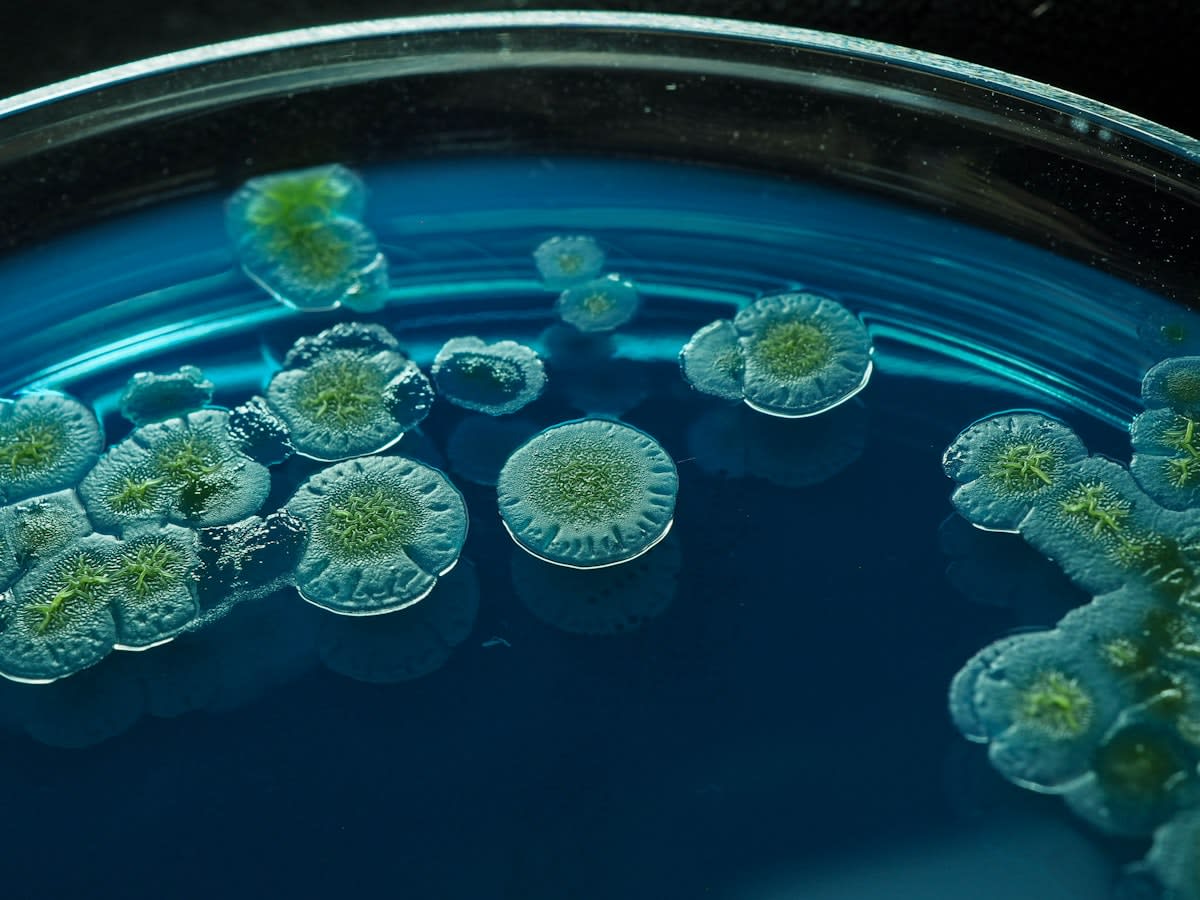
The strategic pivot moves us from extraction to augmentation. Instead of removing the plastic, we engineer the environment to digest it in situ. This requires a move toward synthetic biology, specifically the optimization of enzymes like PETase and MHETase. By enhancing the catalytic efficiency of these enzymes, we can potentially turn the ocean's microbiome into a living filter. This isn't about introducing an alien species; it is about augmenting the existing biological capabilities of the ocean's native flora (Source: Science, 2020).
"The goal is not to 'clean' the ocean in the traditional sense, but to restore the ocean's metabolic capacity to process synthetic carbon. We are moving from a cleanup mindset to a bioremediation mindset."— Dr. Linda Amaral, Lead Researcher at the Global Marine Biotech Consortium
This transition is already visible in regional pilot projects across Southeast Asia and the Mediterranean. Rather than deploying ships, researchers are deploying bio-augmented substrates—materials designed to attract specific plastic-eating microbes and concentrate their activity. These 'bio-hubs' act as localized digestion centers, breaking down microplastics before they can enter the higher food chain. It is a decentralized approach to a global problem, replacing the centralized 'big machine' logic with a distributed biological network.
The Practitioner's Friction: Containment vs. Release
If you sit in on a closed-door session with synthetic biologists and oceanographers, the debate isn't about whether the technology works—it is about the 'leakage' problem. On the ground, practitioners are split into two camps. The first argues for strictly contained bioreactors located at river mouths, stopping plastic before it hits the open sea. The second, more radical camp argues for the controlled release of engineered microbes directly into the gyres. The friction comes from the fear of horizontal gene transfer. If we give a bacterium the ability to eat PET, what happens if that gene jumps to a species that maintains the structural integrity of deep-sea corals or other essential biological polymers?
This is where the professional debate gets heated. We aren't just talking about chemistry; we are talking about the genetic governance of the global commons. The risk of an unforeseen ecological cascade is real, but the certainty of plastic saturation is also real. Most practitioners I know are leaning toward 'genetic kill-switches'—engineering microbes that require a specific, synthetic nutrient to survive, ensuring they die off once the plastic source is depleted. It is a high-stakes game of biological chess played in an environment we barely understand.
| Approach | Target Scale | Energy Cost | Ecological Risk | Systemic Scalability |
|---|---|---|---|---|
| Mechanical Nets | Macro-plastics | High | Low (Bycatch) | Low |
| Riverine Bioreactors | Micro/Macro | Medium | Very Low | Medium |
| Microbiome Augmentation | Nano/Micro | Low | High (Gene Drift) | Very High |
To understand the scale of the opportunity, we have to look at the carbon potential. Plastic is essentially sequestered carbon. By engineering microbes to break it down into harmless byproducts or even valuable biomass, we turn a pollutant into a resource. Some startups are already exploring the production of PHA (polyhydroxyalkanoates)—a biodegradable plastic—created by bacteria that eat the old, non-biodegradable plastic (Source: Frontiers in Microbiology, 2022). This closes the loop, turning the ocean into a refinery rather than a landfill.
The Economic Shift: From Grants to Value Chains
For years, ocean cleanup has been the domain of philanthropy and government grants. This is a flawed financial model because it relies on the altruism of the wealthy to fix a systemic failure of the industrial complex. The shift toward microbiome engineering changes the economics. When you move from 'cleaning' to 'converting,' you create a value chain. The ability to harvest biological precursors from degraded plastic in the ocean creates a market incentive for remediation.
- Bio-mining: Extracting rare elements and carbon from polymer-rich marine sediments.
- Enzymatic Licensing: Selling optimized PETase strains to wastewater treatment plants globally.
- Carbon Credits: Quantifying the removal of synthetic carbon from the ocean as a tradable asset (Source: World Economic Forum, 2023).
- Synthetic Feedstocks: Using microbial plastic-digestion to create fish feed additives.
This economic realignment is the only way to achieve the necessary scale. We cannot rely on a few dozen ships to patrol the Pacific. We need billions of microscopic agents working in parallel. The infrastructure is already there; the ocean's microbiome is the largest distributed computing system on the planet. We are simply updating the software. By treating the ocean as a living filter, we stop fighting against the current and start leveraging the inherent resilience of marine biology.
Ultimately, the fight against plastic is a fight for biological agency. We spent the 20th century imposing synthetic materials on a biological world. In the 21st century, the biological world is fighting back, adapting to the synthetic. The strategic winner will be the one who facilitates this adaptation rather than the one who tries to reverse it through brute force. The living filter is not just a technical solution; it is a recognition that nature is faster than our engineering.
Fact-Check & Accuracy Note
This article analyzes the shift from mechanical to biological remediation. While the existence of the Plastisphere and PETase enzymes are well-documented in publications like Nature and Science, the large-scale release of engineered microbes remains a theoretical and highly debated strategy within the scientific community. Current implementations are primarily limited to laboratory settings and contained pilot studies.
Editorial Governance
Editorial Note: This piece adopts a Strategic Analyst persona to move beyond the alarmist 'crisis' narrative. The focus is on the systemic shift toward bio-augmentation and the economic incentives driving this transition, rather than the localized events of plastic collection.