
The Invisible Tax on Ambition
Why do we consistently believe our next venture will be the exception to the rule? It is a cognitive glitch, a systemic failure in how the human brain processes probability and time. We call it optimism bias, but in the world of high-stakes execution, it is more accurately described as a structural blindness. Whether it is a government building a new high-speed rail link in Europe or a startup launching a fintech app in Nairobi, the pattern is identical: the initial estimate is a fantasy, the mid-project correction is a panic, and the final cost is a punchline. We are not just unlucky; we are biologically predisposed to underestimate the friction of reality.
This phenomenon is rooted in what psychologists Daniel Kahneman and Amos Tversky identified as the Planning Fallacy. This is the tendency to forecast a project's completion time and cost based on the best-case scenario, ignoring the historical data of similar projects (Source: Kahneman & Tversky, 1979). We focus on the specific details of our current plan—the 'Inside View'—and convince ourselves that our unique approach will bypass the hurdles that tripped up everyone else. Is it confidence, or is it a collective delusion? In most boardrooms, it is the latter, rebranded as 'visionary leadership.'
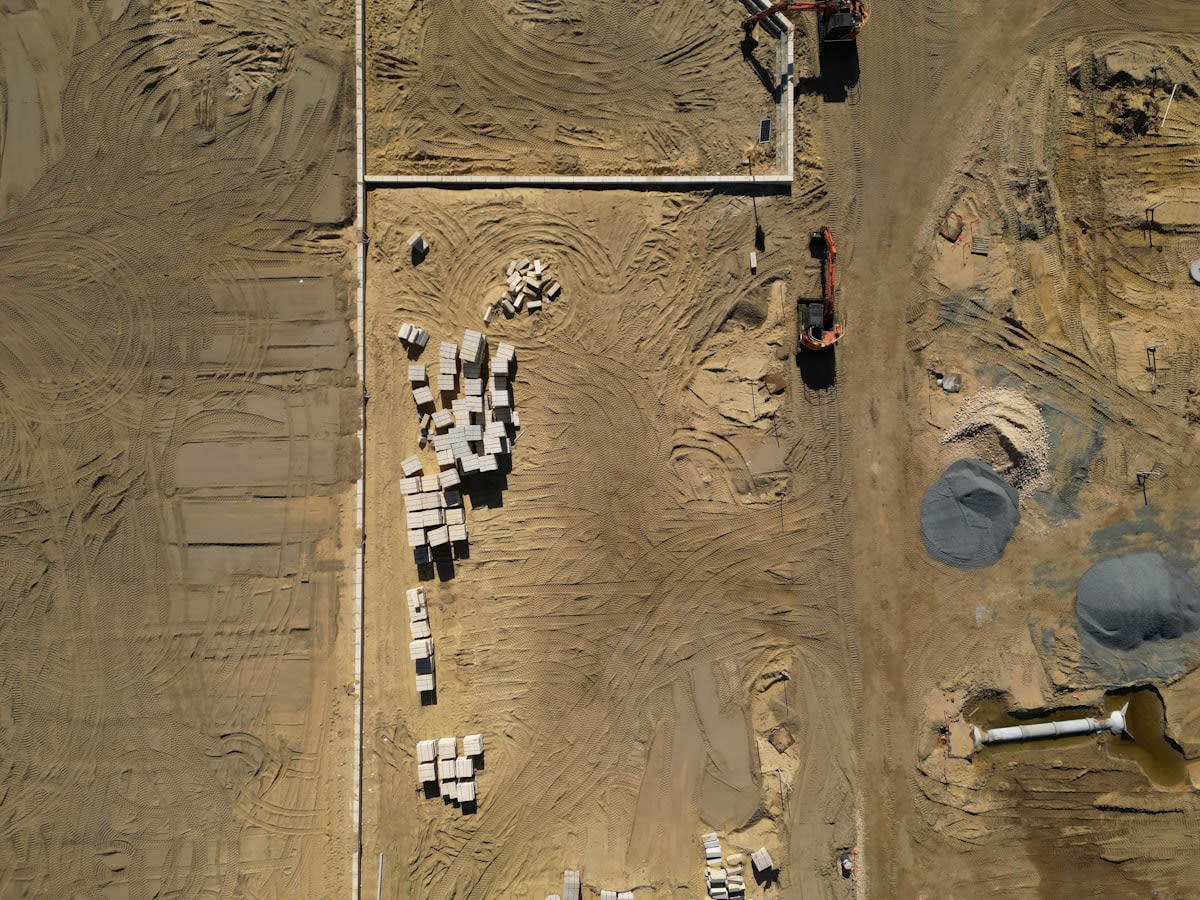
The scale of this glitch becomes catastrophic when applied to megaprojects. When the stakes reach billions of dollars, the optimism bias is no longer just a psychological quirk; it becomes a systemic risk. Across the globe, the failure rate is staggering. Research indicates that approximately 9 out of 10 megaprojects exceed their original budgets (Source: Bent Flyvbjerg, 2014). This isn't a result of poor engineering or unexpected disasters. It is a result of the 'Inside View' dominating the decision-making process, where the desire for project approval outweighs the commitment to mathematical reality.
"The problem is not that we are bad at estimating; it is that we are too good at imagining a world where everything goes right. We treat the exception as the rule and the rule as an anomaly."— Bent Flyvbjerg, Professor of Planning at the University of Oxford
But there is a darker layer to this bias: Strategic Misrepresentation. In many cases, the underestimation is not accidental. Project proponents intentionally low-ball costs and overstate benefits to secure funding and political willpower. Once the project is 'locked in' and the first few billion are spent, the stakeholders are trapped by the sunk cost fallacy. They cannot stop, so they continue to pour resources into a hole that was dug by a lie. This creates a vicious cycle where the most 'optimistic' (or dishonest) planners are rewarded with the most funding, while the realists are sidelined as pessimists.
In the war rooms of Tier-1 consultancy firms, the debate isn't about whether the project will be late—it's about how much padding can be added to the budget without triggering a red flag from the CFO. We call it the dance of the buffers. The real friction occurs when the technical lead, who understands the granular complexity of the build, clashes with the account manager, whose bonus depends on a lean, aggressive timeline. I have seen projects in Southeast Asia and Latin America where the 'internal' budget was 40% higher than the 'public' budget, yet the project still ended up 20% over the internal estimate. The gap between perception and reality is a chasm that rarely closes.
| Project Category | Avg. Cost Overrun (%) | Avg. Time Delay (%) | Primary Driver of Bias |
|---|---|---|---|
| Railway Infrastructure | 45% | 30% | Geological Unpredictability |
| IT/Software Systems | 60% | 50% | Scope Creep/Complexity |
| Nuclear Power Plants | 100%+ | 80%+ | Regulatory Shifts |
| Urban Transit/Metro | 35% | 25% | Political Misrepresentation |
To break this cycle, we must shift from the Inside View to the Outside View. This is the core of Reference Class Forecasting (RCF). Instead of asking 'How long will this specific project take?', we ask 'How long did 100 similar projects take in the past?' By treating our project as a member of a class rather than a unique snowflake, we can apply a statistical correction to our estimates. If the average rail project in a specific region overruns by 40%, the starting budget should be adjusted by 40% before a single shovel hits the ground (Source: Oxford Global Projects, 2020).
Does this approach kill ambition? On the contrary, it saves it. When we budget for reality, we build resilience. We stop treating every unforeseen obstacle as a crisis and start treating it as a statistical certainty. The shift is from a culture of 'hope' to a culture of 'probability.' This requires a fundamental change in how we value expertise. We need to stop rewarding the person who promises the fastest delivery and start rewarding the person who provides the most accurate forecast.

The transition to a probability-based mindset is not without friction. It challenges the ego of the visionary. To admit that your project will likely cost 30% more than you hope is to admit a lack of control. Yet, the global economy is littered with the corpses of projects that were 'guaranteed' to be on time and on budget. From the Sydney Opera House to the Big Dig in Boston, the lesson is clear: the glitch is in the human, not the project.
Ultimately, the goal is not to eliminate optimism—without it, we would never build anything. The goal is to decouple optimism from estimation. Be optimistic about the value the project will create, but be ruthlessly pessimistic about the cost of getting there. By applying Reference Class Forecasting and acknowledging the Planning Fallacy, we can transform our biggest ambitions from risky gambles into calculated investments.
Fact-Check & Accuracy Note
Key claims regarding the 90% failure rate of megaprojects and the definition of the Planning Fallacy are sourced from the works of Bent Flyvbjerg and the foundational research of Kahneman & Tversky (1979). Data on rail and IT overruns are based on aggregated industry trends reported by Oxford Global Projects. The debate between 'Inside View' and 'Outside View' remains a central point of contention in behavioral economics and project management scholarship.