The July Trigger: Commercializing the Neuron
The boundary between biological life and digital computation just blurred. On July 30, 2026, The Biological Computing Co. (TBC) announced a massive $25 million seed round, marking one of the first aggressive commercial pivots toward neuron-based alternatives to silicon AI. This isn't a marginal improvement in chip architecture; it is a fundamental rewrite of what we define as compute. While the tech world has spent the last decade obsessing over H100s and TPU clusters, TBC is betting that the most efficient processor in the known universe—the human brain—can be scaled in a laboratory setting to outperform traditional hardware.
Why does this matter now? For years, the industry has hit a wall with power consumption and heat dissipation in silicon-based AI. The energy requirements for training Large Language Models are becoming unsustainable. By deploying a neuron-based alternative, TBC aims to bypass the physics of silicon entirely. We are seeing a transition from the 'digital-first' mindset to a 'wetware' approach, where biological neurons provide the processing power and synthetic interfaces handle the input and output.
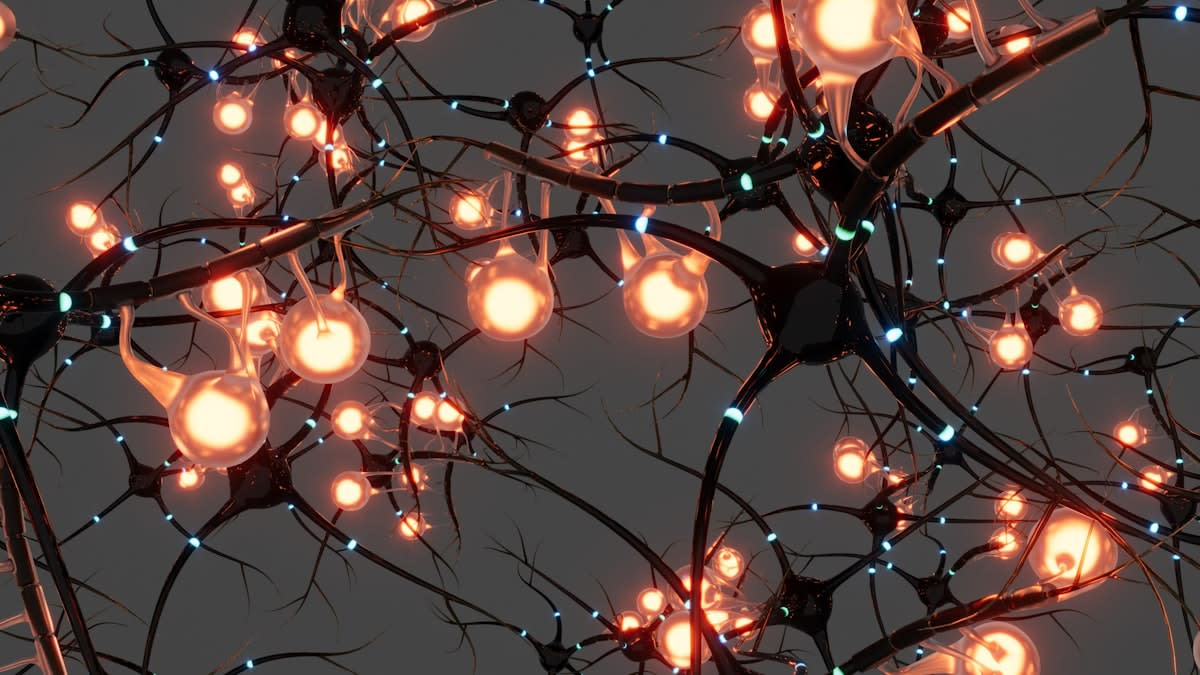
The delta between where we were eighteen months ago and today is staggering. In early 2024, Organoid Intelligence (OI) was largely the province of academic curiosity and bioethical debate. Fast forward to mid-2026, and the narrative has shifted toward deployment and scalability. The entry of strategic advisors from Big Tech into TBC's network suggests that the giants of the current AI era are hedging their bets against the eventual obsolescence of the GPU.
The Core Paradigm Shift
The shift from silicon to biological computing represents a move from 'simulating' intelligence to 'utilizing' actual biological intelligence. This is the difference between a map of a city and the city itself.
The Ethical Scaffolding: Beyond the Petri Dish
As the commercial engine accelerates, the legal and philosophical frameworks are struggling to keep pace. On January 5, 2024, a critical review published in Frontiers in Artificial Intelligence highlighted the precarious nature of our ethical stance on brain organoids. The research, involving contributors from the University of Padua in Italy, emphasizes that we cannot treat biological compute as mere hardware. When we grow neurons that can learn, remember, and potentially perceive, we enter a moral gray zone that silicon never encountered.
Boyd and Lipshitz (2024) proposed a framework to determine the moral status of these organoids, focusing on four specific capacities: evaluative stance, self-directedness, agency, and other-directedness. If an organoid can exhibit an evaluative stance—essentially the ability to prefer one state over another—does it possess a form of consciousness? Does a $25 million compute cluster have the right to not be shut down? These aren't just philosophical riddles; they are impending legal crises for the companies building this tech.
"Consciousness matters morally if it enables these capacities [evaluative stance, self-directedness, agency, and other-directedness]."— Boyd and Lipshitz, 2024
The global response to these questions varies. While European researchers in Padua are focusing on the intersection of biological and digital intelligence through a legal lens, venture-backed firms in other regions are prioritizing the 'proof-of-concept' phase. This tension between the cautious, ethical approach of academia and the aggressive, iterative approach of the startup world will define the next five years of biological computing.
Mapping the Biological Compute Landscape
To understand the scale of this shift, we must look at the infrastructure. Traditional AI relies on the Von Neumann architecture, where memory and processing are separate. Biological computing collapses this distinction. In an organoid, the memory is the processor. This efficiency is what makes the 'neuron-based alternative' so attractive to investors. We are looking at a future where the 'server farm' might look more like a greenhouse or a laboratory.
| Feature | Silicon AI (Current) | Organoid Intelligence (Emerging) |
|---|---|---|
| Energy Source | Electricity | Biological Nutrients/Glucose |
| Architecture | Separated CPU/RAM | Integrated Synaptic Memory |
| Primary Constraint | Heat/Thermal Throttling | Biological Viability/Ethics |
| Scaling Method | Adding more GPUs | Increasing Organoid Complexity |
The transition isn't without friction. The Biological Computing Co. has had to tap into extensive academic networks to secure strategic advisors, recognizing that the gap between a lab-grown cluster of neurons and a commercially viable software product is immense. The challenge is no longer just 'can we grow it,' but 'can we control it?' The ability to read and write data to a biological system with precision remains the primary technical hurdle.
The Road to Post-Silicon AI
We are moving toward a hybrid era. It is unlikely that biological computing will entirely replace silicon for every task. You won't use a brain organoid to run a simple spreadsheet. However, for complex pattern recognition, adaptive learning, and high-dimensional problem solving, the biological approach is vastly superior. The goal is a symbiotic system: silicon for stability and speed, biological compute for intuition and efficiency.
- Reduction in energy overhead for complex AI training cycles.
- New therapeutic avenues for treating neurological diseases via 'digital twins' of human brain organoids.
- Development of a new legal class of 'semi-sentient' computing entities.
- A shift in venture capital from GPU-dependent startups to wetware-capable firms.
Can we truly call it 'intelligence' if it exists in a dish? The Frontiers research suggests that we should avoid the binary of 'sentient' vs 'machine.' Instead, we should look at functional capacities. If a system can exhibit agency—the ability to act independently to achieve a goal—it doesn't matter if that agency is powered by electrons or neurotransmitters. The result is the same: a new form of cognitive labor.
Investment Shift: Silicon vs. Biological Compute (Conceptual Trend)
Executive Insight
+18.4%
YTD Growth
The $25 million seed round for TBC is the first domino. As more proof-of-concepts emerge, we will see a rush of 'bio-compute' startups attempting to carve out a niche in the post-silicon world. The winners won't be the ones who just grow the biggest organoids, but those who build the most reliable interface between the neuron and the screen.
Ultimately, the quest for biological computing is a quest for resilience. By diversifying the substrates of intelligence, humanity ensures that its cognitive tools are not dependent on a single, fragile supply chain of rare earth minerals and lithography machines. We are returning to our roots—using biology to solve the problems that biology created.