India made chips at a Mohali plant in 1980s. A fire destroyed its production lines
Source Entity
Latest News: Todays Latest News Headlines from India & World | Hindustan Times
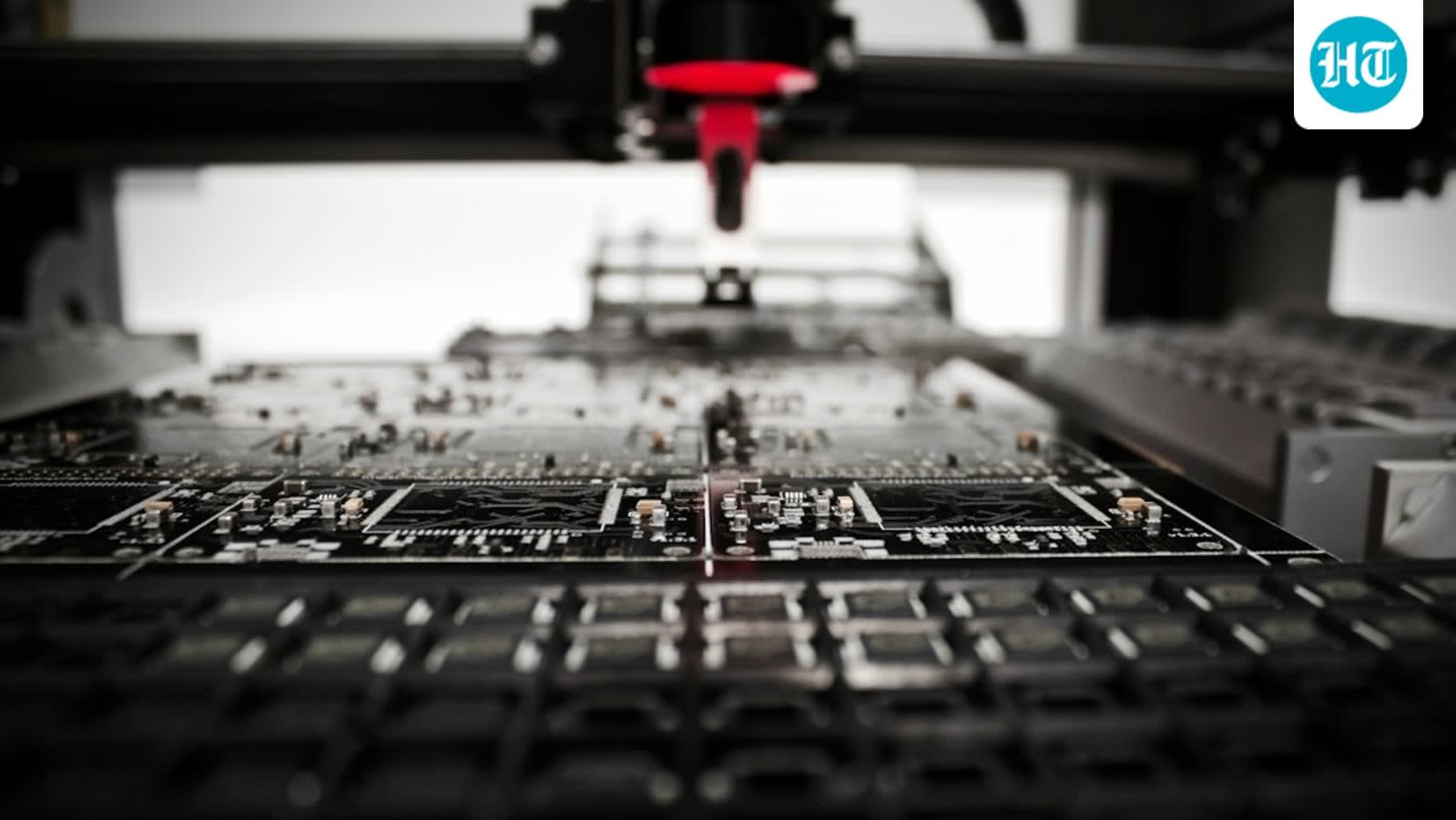
India's Semiconductor Complex Limited (SCL), established in 1976, was once at the forefront of global chip production until a devastating fire in the 1980s. This historical context highlights India's early ambition in semiconductor manufacturing and the challenges that hindered its long-term industrial scaling.
The Lost Legacy of India’s Semiconductor Ambitions
A Pioneer in Silicon Fabrication
Long before the current global focus on semiconductor self-reliance, India established the Semiconductor Complex Limited (SCL) in 1976. Operating under the Department of Electronics, the Mohali-based public sector undertaking was designed to spearhead the nation's entry into the high-stakes world of large-scale integration (LSI) and very-large-scale integration (VLSI) technology. By 1983, SCL had successfully commenced fabrication, utilizing technology acquired from American Microsystems Inc. This period marked a significant milestone, as India was, by many accounts, technologically at par with global industry standards of the era.
The Vision and Technical Prowess
SCL was not merely an assembly plant; it was a hub of indigenous innovation. The organization was tasked with the end-to-end design, development, and manufacturing of integrated circuits. By packing thousands, and eventually hundreds of thousands, of electronic components onto a single sliver of silicon, SCL demonstrated that India possessed the foundational engineering talent to compete in the burgeoning global electronics market. Alongside contemporaries like Bharat Electronics (BEL) and Indian Telephone Industries in Bengaluru, SCL represented the backbone of India's early digital industrial strategy.
The Turning Point: A Devastating Setback
Despite its promising trajectory, the momentum of India’s semiconductor journey was abruptly halted by a catastrophic fire that destroyed SCL’s production lines in the late 1980s. This event served as a critical inflection point, not only damaging physical infrastructure but also disrupting the continuity of research and development. In the years that followed, the lack of immediate, large-scale reinvestment and the rapid evolution of global chip fabrication technology meant that India struggled to regain its previous competitive standing.
Contextualizing the Modern Semiconductor Push
External Affairs Minister Jaishankar’s recent remarks at HTLS 2026 serve as a poignant reminder that the current push for semiconductor manufacturing in India is not a new desire, but a revival of an interrupted legacy. The historical context of SCL provides a lens through which to view current government policies. By acknowledging that India was once 'at par with the world,' policymakers are highlighting that the country’s current aspirations are rooted in a proven, albeit historically stalled, capability rather than a nascent, untested venture.
Future Implications and Strategic Recovery
As India seeks to re-establish itself as a global hub for semiconductor manufacturing, the lessons from the SCL era are invaluable. The transition from designing and manufacturing simple integrated circuits in the 1980s to the complex, nanometer-scale fabrication required today is immense. However, the foundational knowledge gained through early public sector experiments provides a cultural and technical blueprint. The future of India’s semiconductor industry will likely depend on its ability to integrate this historical expertise with modern international partnerships and high-speed capital investment to avoid the vulnerabilities that plagued early efforts.
Verification Required?