Amazon Loses 40 Satellites As Rocket Launch Fails Within 10 Minutes
Source Entity
NDTV News Search Records Found 1000
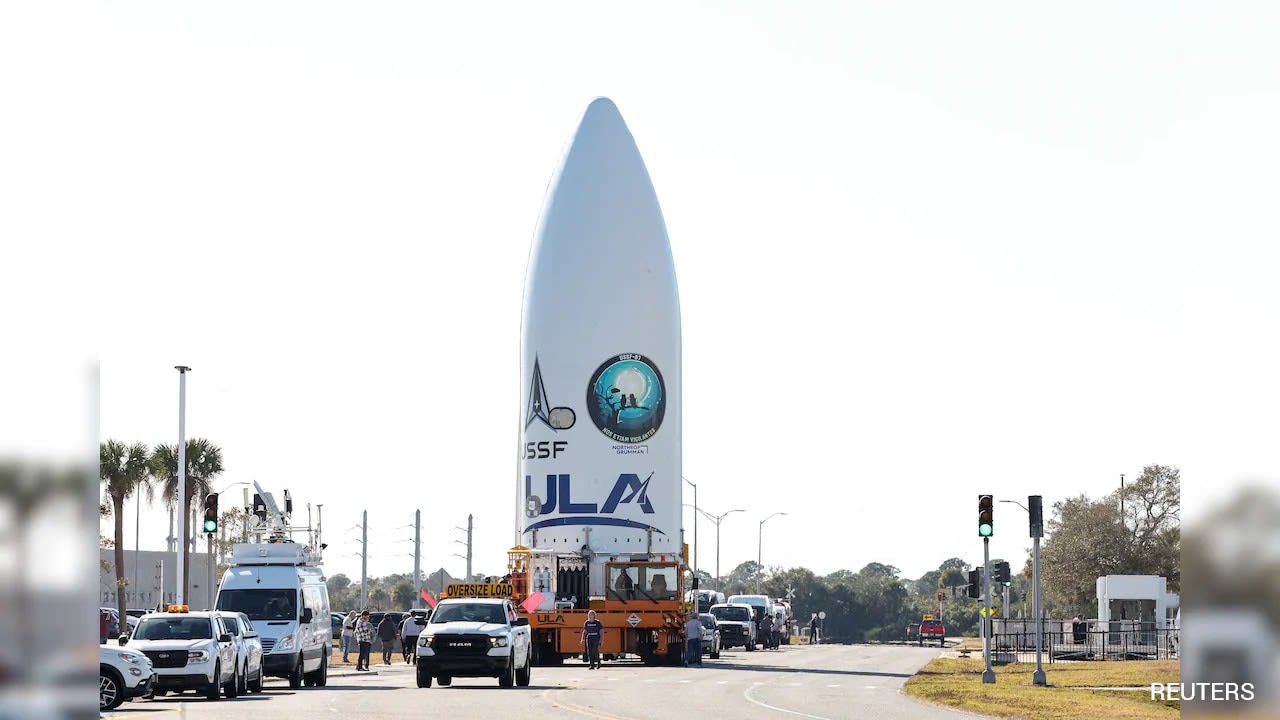
United Launch Alliance suffered its first mission failure in 20 years after a Vulcan rocket carrying 40 Amazon Project Kuiper satellites crashed minutes after launch. This incident, which will ground the Vulcan fleet indefinitely, represents a significant setback for Amazon's efforts to compete with SpaceX's Starlink.
A Historic Setback for ULA and Amazon
In a significant development for the aerospace industry, the United Launch Alliance (ULA) experienced the first total mission failure in its 20-year operational history. A Vulcan rocket, tasked with deploying 40 satellites for Amazon’s Project Kuiper (often referred to as Leo), suffered a catastrophic anomaly within 10 minutes of liftoff on Sunday. The loss of both the launch vehicle and the cargo marks a pivotal moment that will likely necessitate a comprehensive investigation into the rocket's engineering and safety protocols.
The Impact on Project Kuiper
Amazon’s initiative to build a low-Earth orbit (LEO) broadband constellation is a direct response to the dominance of SpaceX’s Starlink. Since April 2025, Amazon has successfully launched approximately 400 satellites, yet the loss of these 40 units serves as a stark reminder of the volatility inherent in orbital insertion. With Amazon having purchased 38 flights from ULA, this failure threatens to stall the deployment schedule of a network that is already struggling to achieve the critical mass required to challenge Starlink’s established market share.
ULA’s Reliability Under Scrutiny
For two decades, ULA has maintained a sterling reputation for reliability, making this failure particularly jarring for the US space sector. The Vulcan rocket has previously navigated technical hurdles, including issues with strap-on solid rocket boosters during two of its four prior missions. While the vehicle managed to compensate for those earlier difficulties, the total loss of the current mission suggests a more profound systemic failure that will inevitably lead to an indefinite grounding of the Vulcan fleet.
National Security and Industry Ripple Effects
Beyond the commercial implications for Amazon, the grounding of the Vulcan rocket carries heavy weight for the United States government. The Vulcan platform is contracted to carry roughly half of the nation's military and national security payloads over the coming years. A prolonged grounding could create a significant bottleneck for intelligence and defense missions, forcing the Department of Defense to reconsider its launch cadence and potentially seek alternatives to meet its time-sensitive orbital requirements.
Future Outlook for Orbital Access
As the industry moves forward, the focus will shift toward the official investigation and the subsequent identification of the root cause of the Vulcan failure. The space industry operates on tight margins where the loss of a single vehicle can delay roadmaps by months or even years. For Amazon, the path forward requires not only recovering from this specific loss but also ensuring that its broader strategy—which relies heavily on ULA's success—remains viable in an increasingly competitive and high-stakes market.
Verification Required?