
The Certainty Trap
Why do we insist on a yes or no when the universe speaks almost exclusively in percentages? Most leaders operate under the delusion that more data eventually leads to certainty. They hoard spreadsheets and commission endless reports, hoping to find a magical tipping point where the risk vanishes. This is a fallacy. In high-stakes environments, certainty is not a destination; it is a mirage that leads to paralysis. When you wait for 100% confidence, you have already lost the competitive edge to the person who was comfortable acting on 70%.
The cost of this hesitation is staggering. Consider a logistics firm in São Paulo attempting to pivot its fleet to electric vehicles. If the CEO waits for a guaranteed projection of battery longevity and grid stability over the next decade, the window for government subsidies and early-market dominance slams shut. The goal is not to eliminate risk, but to price it correctly. High-stakes decision-making is not about being right every time; it is about ensuring that your wins are larger than your losses over a long enough sequence of bets.
"The biggest mistake you can make is to confuse a good outcome with a good process. A bad decision can still yield a positive result through sheer luck, but that luck will eventually run out."— Decision Theory Principle
Prerequisites for the Probabilistic Mindset
Before you can apply the mechanics of probability, you must dismantle your biological craving for binary answers. Your brain is wired to categorize things as safe or dangerous, true or false. To move beyond this, you need a fundamental shift in vocabulary. Stop asking 'Will this work?' and start asking 'What is the probability that this works, and what is the magnitude of the payoff if it does?' This shift transforms a stressful gamble into a calculated investment.
- Acceptance of the 'Gray Zone': The ability to hold two opposing possibilities in your mind simultaneously.
- Emotional Decoupling: Separating your ego from the outcome of a decision.
- Base Rate Awareness: The habit of looking at how often a similar event has happened in the past before looking at the specific case.
- Risk Tolerance Mapping: A clear understanding of your 'ruin point'—the loss that would take you out of the game entirely.
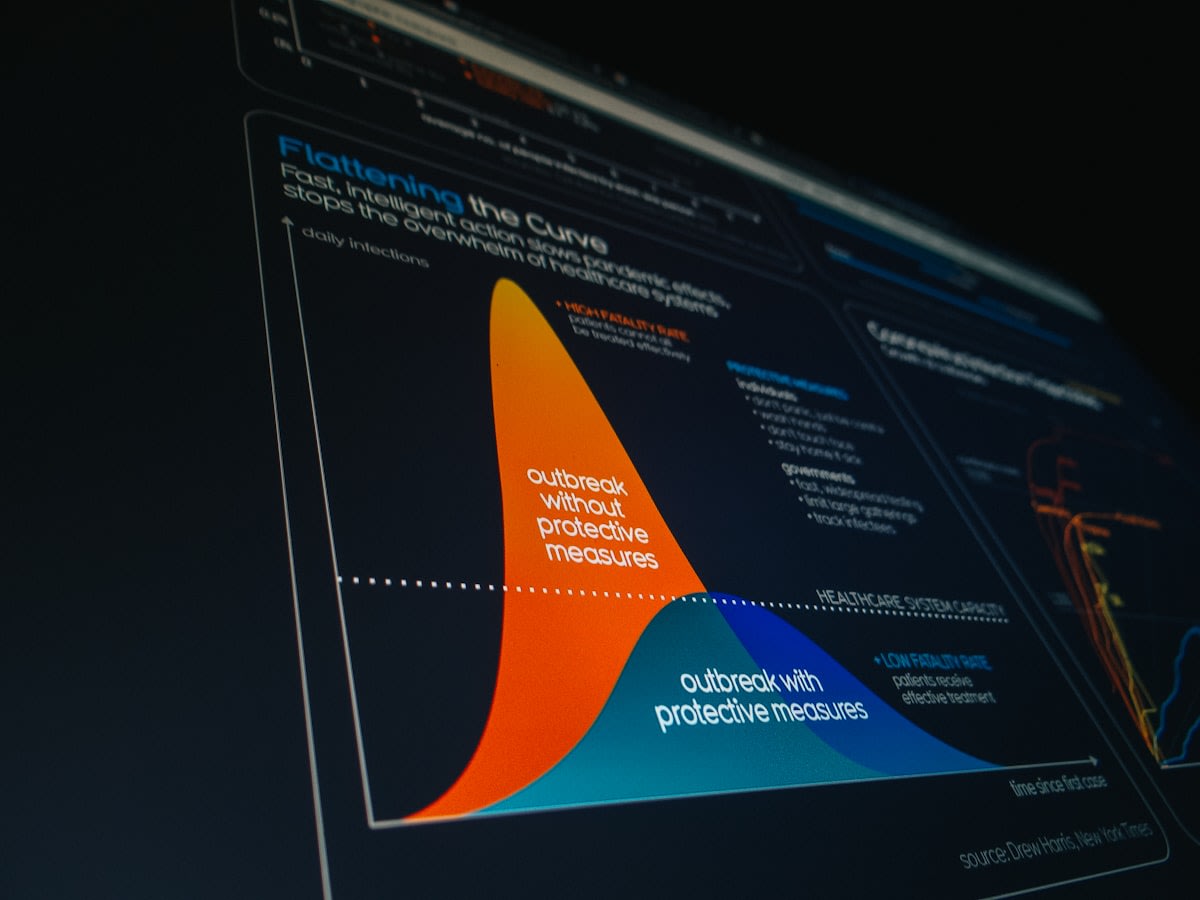
Once these mental prerequisites are in place, you can stop viewing uncertainty as a threat and start viewing it as a source of alpha. In a world where everyone is terrified of the unknown, the person who can quantify that unknown holds the power. This is how hedge funds in London or tech incubators in Singapore outpace their conservative peers. They don't have a crystal ball; they have a better playbook for handling the fog.
The Probabilistic Execution Process
- Establish the Base Rate: Find the historical success rate for this type of venture. If 90% of new retail entries in a specific region fail within three years, your starting probability of success is 10%, regardless of how great your specific product feels.
- Assign Initial Probabilities: Based on the base rate and your specific advantages, assign a percentage chance of success. Avoid round numbers like 50% or 80%; force yourself to be precise (e.g., 62%) to trigger more analytical thinking.
- Apply Bayesian Updating: As new information arrives—a failed pilot test, a competitor's move, a shift in regulation—update your probability. Do not cling to your first guess. If the data shifts, your percentage must shift.
- Calculate Expected Value (EV): Multiply the probability of the win by the value of the win, and subtract the probability of the loss multiplied by the cost of the loss. If the EV is positive and the risk of ruin is low, the move is a mathematical 'buy'.
- Execute and Audit the Process: Make the decision and record the logic used. When the outcome arrives, evaluate whether the process was sound, regardless of whether the result was a win or a loss.
Let's look at this in a real-world context. Imagine an energy firm in Oslo considering a massive investment in offshore wind technology. The base rate for such projects might be a 60% success rate. However, the firm possesses a proprietary turbine design that increases efficiency by 15%. They update their probability to 75%. If the payoff is $1 billion and the loss is $200 million, the Expected Value is $(0.75 1B) - (0.25 200M) = $700 million. The decision becomes a matter of simple arithmetic rather than an agonizing leap of faith.
| Scenario | Probability | Impact (Value) | Weighted Value |
|---|---|---|---|
| Bull Case (Market Surge) | 20% | $10,000,000 | $2,000,000 |
| Base Case (Steady Growth) | 50% | $2,000,000 | $1,000,000 |
| Bear Case (Market Crash) | 30% | -$5,000,000 | -$1,500,000 |
| Total Expected Value | 100% | N/A | $1,500,000 |
The table above illustrates why the probabilistic approach is superior. A binary thinker looks at the 'Bear Case' and sees a $5 million loss, which triggers a fear response and leads to inaction. The probabilistic thinker sees that the weighted value of the entire venture is still positive $1.5 million. They understand that while they might lose money on this specific bet, repeating this process 100 times will make them incredibly wealthy. This is the secret to confidence: it is not the confidence that you will be right, but the confidence that your process is mathematically sound.
The Action Window
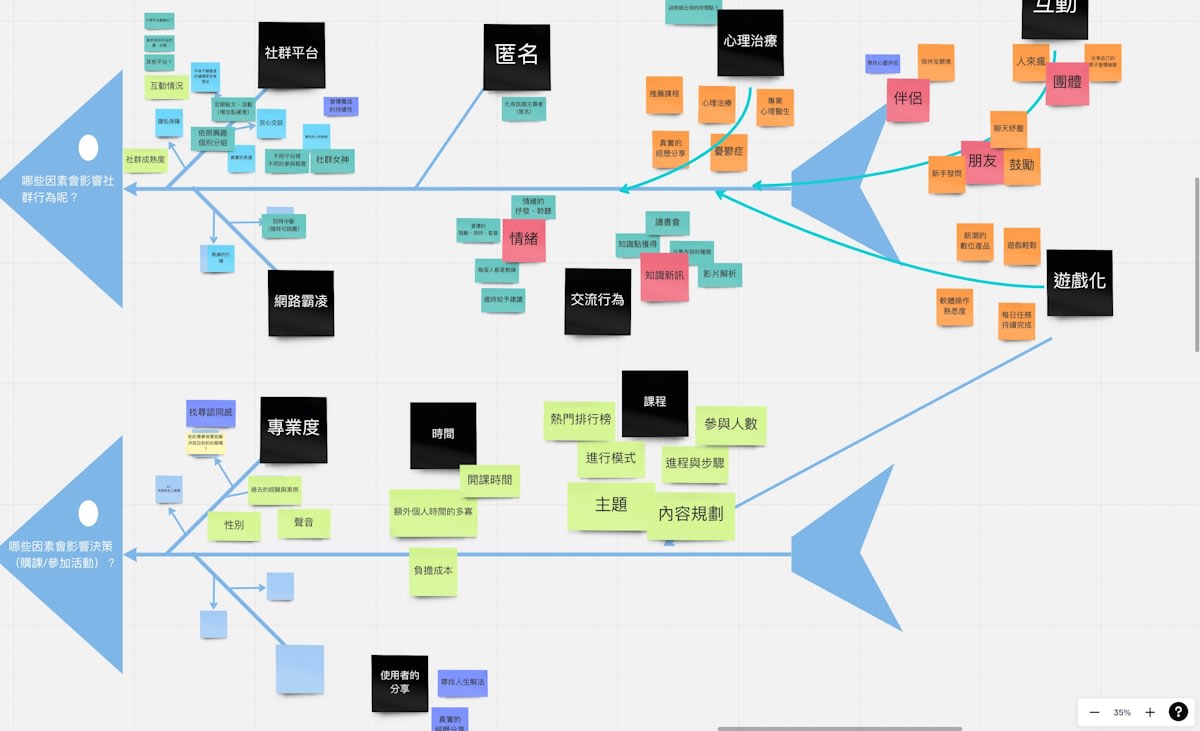
The 40/70 Rule: Former US Secretary of State Colin Powell argued that if you have less than 40% of the information, you are guessing. If you wait for more than 70%, you've waited too long. The sweet spot for high-stakes action is between 40% and 70% certainty.
Common Pitfalls and Cognitive Traps
The most dangerous trap in this playbook is 'Resulting.' This is the tendency to judge a decision based on its outcome rather than the process used to make it. If you bet your company on a 90% probability and you hit the 10% failure rate, resulting tells you that you made a 'stupid' decision. In reality, you made a brilliant decision with a bad outcome. If you punish people for bad outcomes that resulted from good processes, you will cultivate a culture of cowardice where no one takes calculated risks.
Then there is the Overconfidence Bias. Practitioners often overestimate their ability to influence the probability of an outcome. You might believe your leadership skills can turn a 20% chance of success into an 80% chance. Rare is the leader who can shift the needle that dramatically. Always discount your own 'special sauce' by at least 10% to account for the hubris that blinds most executives. Acknowledging your limitations is the only way to maintain an accurate probability map.
- Sunk Cost Fallacy: Continuing to invest in a losing probability just because you've already spent money on it.
- Confirmation Bias: Only updating your probability with information that supports your initial thesis.
- The Narrative Fallacy: Creating a clean story after the fact to explain a random probabilistic event.
- Availability Heuristic: Overweighting a recent, vivid failure (like a crash in Kenya) over long-term statistical data.
Confidence is not the absence of doubt; it is the mastery of it. When you stop seeking certainty, you stop being a victim of circumstance. You move from a reactive state—hoping things go well—to a proactive state where you are managing a portfolio of probabilities. Whether you are managing a sovereign wealth fund or a small design agency, the math remains the same. Bet on the process, embrace the variance, and let the law of large numbers do the heavy lifting.