
Why do we feel paralyzed when faced with a dozen high-quality options? Western culture has long sold us the lie that more choice equals more freedom. In reality, an abundance of options often triggers a psychological freeze. Barry Schwartz, an emeritus psychology professor at Swarthmore University, identifies this as the Paradox of Choice. When the menu is too long, we don't feel liberated; we feel anxious, indecisive, and eventually, less satisfied with whatever we finally pick. This isn't just about picking a pair of jeans; it is a cognitive tax that drains our mental energy before we even reach the most critical decisions of our day.
The consequences of this mental noise are tangible and measurable. Consider the impact on healthcare or government administration. In the case of Medicare Part D prescription drug plans, research indicates that people in states with more choices were actually less likely to choose any plan at all. This paralysis is the enemy of execution. When you spend your cognitive capital on trivialities, you leave yourself bankrupt when it is time to manage high-stakes risks or lead a global team. To survive in an era of acceleration, you must stop treating choice as a luxury and start treating it as a resource to be conserved.
The Cognitive Dividend
The goal is not to eliminate choice entirely, but to curate it. By limiting the number of daily decisions, you can potentially recover two hours of productive time every single day.
Prerequisites for High-Stakes Decision Making
Before applying the RAPID framework, you need a specific mental setup. First, you must accept the premise that 'perfect' is the enemy of 'done.' As Schwartz notes, when you only have two brands of jeans to choose from, you don't expect a perfect fit, and you are generally more satisfied with the result. Second, you need a baseline of data. You cannot standardize a process if you do not understand the variables. Whether you are managing a supply chain in Southeast Asia or a neonatal ward in Europe, the prerequisite is a shift from intuitive guessing to evidence-based protocols.
- A commitment to reducing daily trivial choices to preserve mental energy.
- Access to standardized guidelines or historical data to replace guesswork.
- A willingness to prioritize speed and satisfaction over the pursuit of an impossible 'perfect' option.
- An understanding of the current risk landscape, especially if AI is accelerating your business processes.
The Acceleration Gap: Why Old Methods Fail
We are currently witnessing a widening gap between the pace of technological transformation and our ability to govern it. AI adoption is accelerating business processes to a speed that traditional risk functions simply cannot handle. Security and compliance teams are often left scrambling to understand where a business is exposed as AI becomes embedded in customer experiences and internal workflows. When the speed of the environment increases, the cost of decision fatigue skyrockets. You can no longer afford to 'think it through' for a week when the risk profile changes in milliseconds.

This is where standardization becomes a survival mechanism. Look at the implementation of standardized lung ultrasound (LUS) in neonatal intensive care. By following a rigorous, international expert consensus, clinicians significantly reduced chest radiography exposure and the need for mechanical ventilation. They didn't decide the approach on a case-by-case basis through exhaustive debate; they applied a standardized protocol. This removed the mental exhaustion of the decision process and improved the clinical outcome. The lesson is clear: the more high-stakes the environment, the more you need a pre-defined system to dictate the path.
Implementing the RAPID Framework
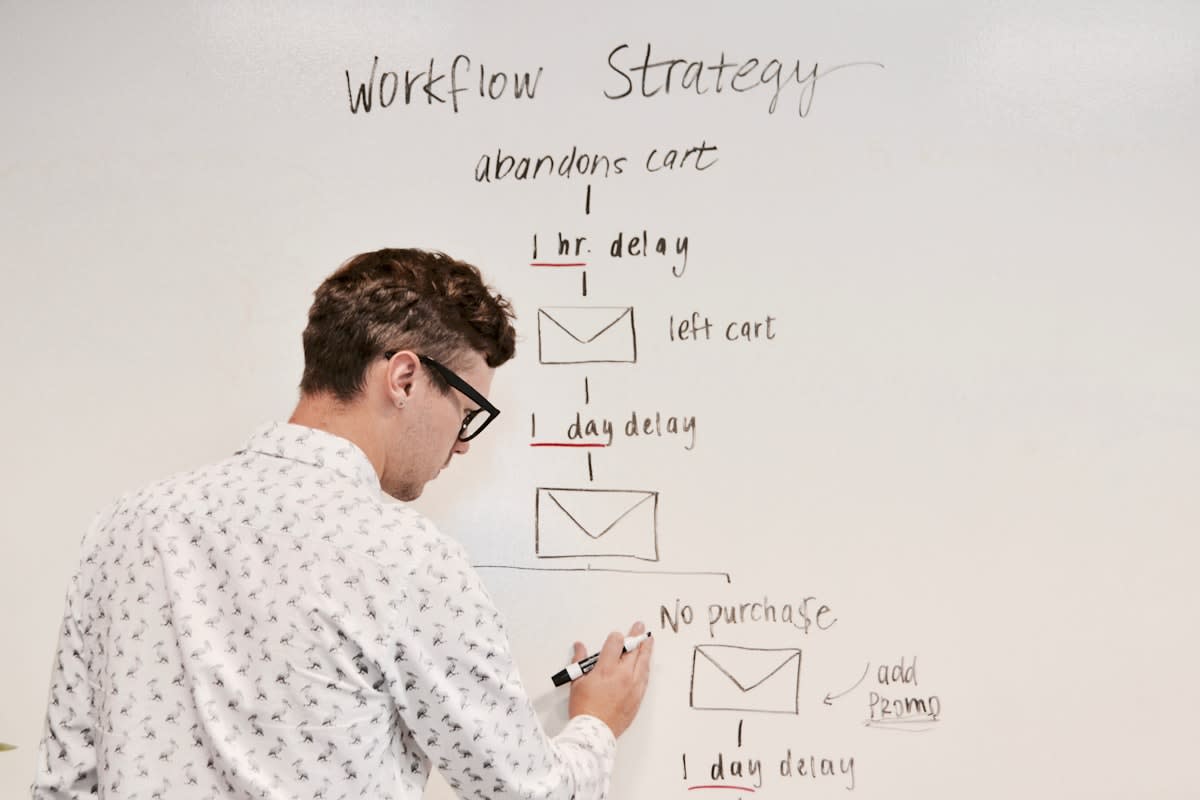
The RAPID framework is designed to move you from a state of analysis paralysis to a state of decisive action. It combines the psychological insights of choice reduction with the technical precision of machine-learning frameworks. By treating your decision-making process as a workflow rather than a series of emotional events, you eliminate the friction that leads to burnout.
- Restrict the Choice Architecture: Actively limit the number of options you consider. Instead of seeking every possible alternative, set a hard cap (e.g., three viable options). This minimizes mental noise and prevents the anxiety associated with the Paradox of Choice.
- Automate through Standardization: Create a protocol for recurring high-stakes decisions. Mimic the neonatal LUS approach by establishing a set of evidence-based guidelines that dictate the first three steps of any crisis, removing the need for initial deliberation.
- Precision-Verify with Data: Use a high-accuracy model to validate your direction. For example, in regional electrification mapping in Ethiopia, a Random Forest (RF) classifier achieved 86.8% overall accuracy and a 71.3% Kappa coefficient. Don't guess; use a framework that provides a mathematical confidence interval.
- Integrate Real-Time Monitoring: Ensure your decision is not a one-time event but a loop. As AI changes the risk landscape, your governance must move in real time to verify if policies are actually being followed, rather than relying on quarterly audits.
- Detach the Routine: Outsource all low-stakes decisions to a rigid routine. By automating what you eat, wear, or how you start your morning, you save your cognitive energy for the decisions that actually move the needle.
To illustrate the power of Step 3 (Precision-Verify), consider the difference between a simple Decision Tree and a Random Forest model in geospatial analysis. While a simple tree might provide a rough guide, the Random Forest approach allows for far more nuanced electrification estimation mapping. When you apply this logic to business decisions, you stop asking 'What do I feel is right?' and start asking 'Which model provides the highest probability of success?' This shift in questioning is what separates the exhausted manager from the master practitioner.
| Decision Type | Traditional Approach | RAPID Approach | Expected Outcome |
|---|---|---|---|
| Daily Routine | Spontaneous Choice | Rigid Routine | 2 Hours Saved Daily |
| High-Stakes Risk | Ad-hoc Analysis | Standardized Protocol | Reduced Error/Exposure |
| Strategic Planning | Infinite Options | Restricted Choice Architecture | Faster Execution/Higher Satisfaction |
| Technical Validation | Expert Opinion | Precision-ML Framework | 86.8% Higher Accuracy |
Once the framework is in place, the transition from stress to flow happens almost instantly. You stop fighting the environment and start leveraging it. The mental exhaustion we associate with leadership is rarely about the work itself; it is about the sheer volume of micro-decisions required to sustain that work. When you restrict the architecture of those decisions, you reclaim your agency.
Common Pitfalls to Avoid
The most common mistake is the fear of missing out on the 'perfect' option. This is the core of the Paradox of Choice. You might feel that by restricting your options to three, you are ignoring a potential fourth, superior path. However, the data shows that this search for perfection leads to lower satisfaction and higher anxiety. The goal is not the perfect choice, but a satisfactory choice made with speed and confidence.
Another trap is relying on static governance in a dynamic AI environment. If you build a standardized protocol but fail to integrate real-time monitoring, you are simply automating an obsolete process. As AI evolves faster than the programs built to govern it, your RAPID framework must include a feedback loop that updates the 'Standardization' step based on real-time risk data.
"The more choices you have, the better, right? Research shows that having more options can make people anxious, indecisive and, paradoxically, less happy with what they pick."— Barry Schwartz
Finally, avoid the temptation to over-complicate the 'Detach the Routine' phase. You do not need a complex system to manage your morning; you need a boring one. The beauty of a boring routine is that it requires zero cognitive load. Whether it is the way you organize your emails or the way you structure your weekly reviews, the less you have to think about the process, the more you can think about the problem.