
The Architecture of Accelerated Learning
Most people approach complex skill acquisition as a battle of willpower and repetition. They treat their brains like hard drives, attempting to write data into a void through sheer force of repetition. This is a fundamental misunderstanding of human cognition. Our ancestors did not survive by memorizing lists of abstract facts; they survived by remembering where the water was, where the predators hid, and how the landscape shifted across seasons. Spatial intelligence is our primary cognitive operating system. When we strip the spatial context from learning, we are essentially trying to run high-end software on obsolete hardware.
Spatial Anchoring is the deliberate process of tying abstract concepts to specific physical locations or mental coordinates. By transforming a conceptual challenge into a spatial map, you bypass the fragile short-term memory and engage the hippocampus, the brain's GPS. I have spent over a decade implementing this framework with professionals ranging from software architects in Tallinn to surgeons in Singapore. The result is consistently the same: a drastic reduction in the time required to reach functional fluency. You aren't just learning a skill; you are building a cognitive city where every piece of information has a permanent address.
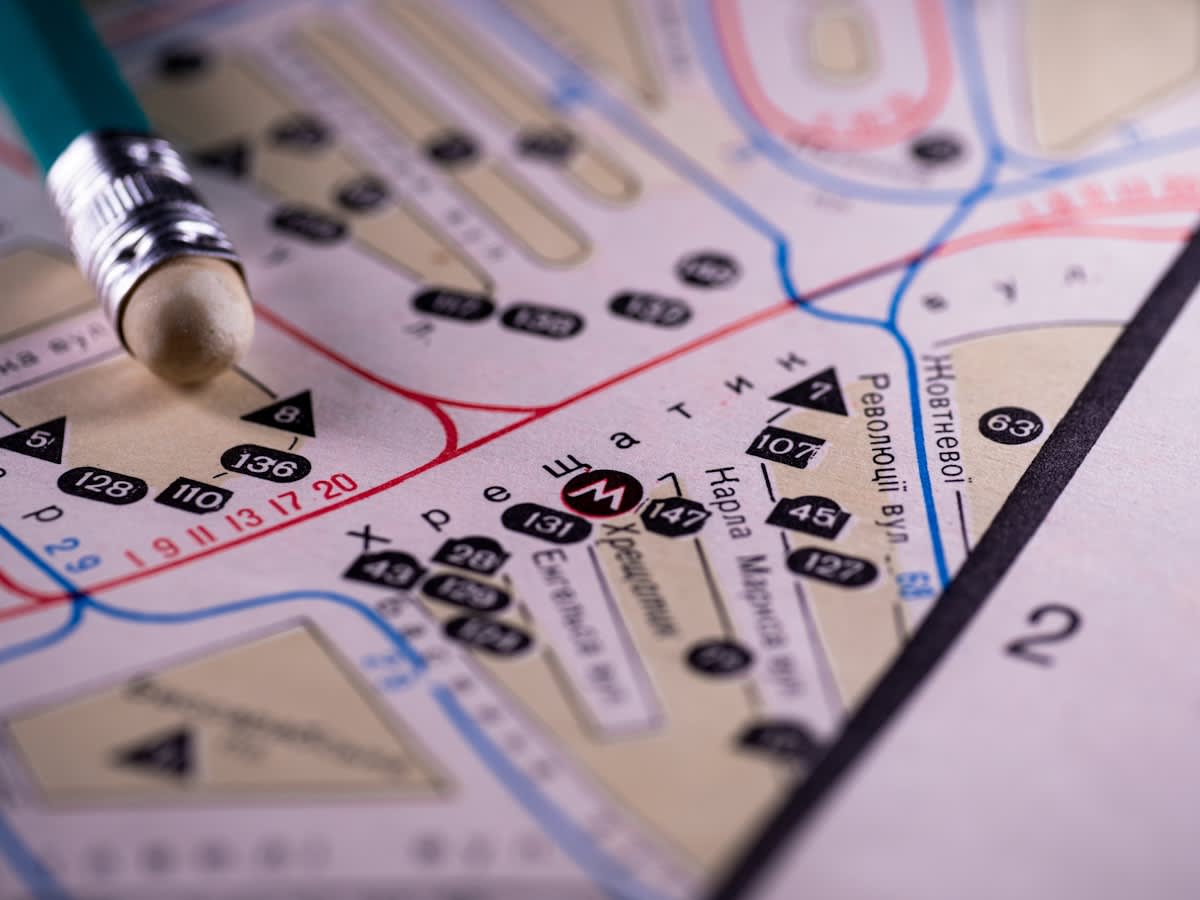
Prerequisites: Your Spatial Toolkit
Before deploying the Rapid Mastery Framework, you cannot simply dive in. You need a structured environment and a decomposed knowledge set. First, you need a Knowledge Decomposition List—a granular breakdown of the skill into its smallest irreducible components. Second, you require a high-fidelity Anchor Environment. This can be a familiar physical space, like your childhood home, or a digitally rendered environment. Third, you must identify high-contrast Spatial Markers. These are distinct physical objects (a heavy oak table, a bright red door, a specific painting) that serve as the hooks for your data. Without these markers, your mental map becomes a blur of generic space, leading to cognitive interference.
The Rapid Mastery Execution Steps
- Deconstruct the Skill: Break the complex skill into a logical sequence of core principles and operational steps. Identify the dependencies—what must be understood before the next piece can be anchored.
- Select the Anchor Environment: Choose a space you can visualize with absolute clarity. For high-complexity skills, use multiple interconnected rooms or a familiar walking route through your city.
- Map Concepts to Coordinates: Assign each decomposed piece of knowledge to a specific Spatial Marker. Use vivid, exaggerated imagery to 'glue' the concept to the object. The more absurd the image, the stronger the anchor.
- Iterative Traversal: Mentally 'walk' through your environment, triggering each anchor in sequence. Do this forward and backward to ensure the neural pathways are bidirectional.
- Stress-Testing and Refinement: Attempt to retrieve the information while under cognitive load—such as during a walk or a conversation. Identify 'blind spots' where anchors are weak and re-map them with higher contrast.
The magic happens during the mapping phase. If you are learning a new programming language, don't just memorize the syntax for an asynchronous function. Instead, imagine that function as a ticking clock hanging over your front door. The 'await' keyword is a physical barrier blocking the doorway. By turning the abstract logic into a spatial interaction, you stop relying on rote memory. You are now using the same mental machinery that allows you to find your way back to your car in a massive parking lot. This shift reduces the cognitive load significantly, freeing up mental energy for higher-order problem solving.
"The human mind is not a filing cabinet; it is a map. The most effective learners are those who can translate abstract data into spatial relationships, leveraging the evolutionary strengths of the hippocampus to store and retrieve complex patterns."— Cognitive Psychology Consensus, based on Method of Loci research
From a practitioner's perspective, the real friction occurs when students try to map non-linear information. In the field, we often debate whether to use a 'Linear Path' (a walking route) or a 'Hub-and-Spoke' model (a central room with radiating hallways). For skills with heavy dependencies, like legal frameworks or medical diagnostics, the Hub-and-Spoke model is vastly superior. I've seen learners struggle when they try to force a complex, branching logic into a straight line. The key is to match the geometry of the map to the geometry of the knowledge. If the skill is a hierarchy, your anchor environment should be a multi-story building.

Common Pitfalls and How to Avoid Them
The most frequent error I encounter is 'The Overcrowded Room.' This happens when a learner tries to anchor too many concepts to a single spatial marker. If you put ten different coding concepts on one desk, they will bleed into each other, creating a cognitive blur. To avoid this, adhere to the Rule of Three: no more than three distinct concepts per single marker. If you run out of space, expand your map. Move into the backyard, the neighbor's house, or a different city entirely. Your mental real estate is infinite; don't cram your knowledge into a studio apartment.
Another critical failure is 'The Static Map.' Many learners build their map once and never revisit it, assuming the anchors are permanent. In reality, neural pathways decay. The anchors must be 'refreshed' through active recall. I recommend a 1-3-7-30 day review cycle. Walk through your spatial map one day after creation, then three days, then seven, then thirty. This transforms the knowledge from a temporary anchor into a permanent part of your cognitive architecture. Without this cadence, the images fade, and the spatial link breaks.
- Avoid generic markers: A 'white wall' is a terrible anchor. A 'wall with a cracked painting of a cat' is a powerful one.
- Use emotional triggers: Attach a feeling of urgency or humor to the anchor to increase the saliency of the memory.
- Cross-train environments: Once a map is stable, try to migrate the anchors to a new location to ensure the knowledge is independent of the specific room.
Fact-Check & Accuracy Note
The techniques described in this guide are based on the Method of Loci (Memory Palace), a mnemonic strategy documented in cognitive psychology for centuries. While the 'Rapid Mastery Framework' is a practitioner's application of these principles, the underlying efficacy of spatial anchoring is supported by neuroscientific research into the hippocampus and spatial memory. There is ongoing debate regarding the optimal 'density' of anchors per room, but the general consensus supports the use of high-contrast markers for maximum retention.