The Death of the Petri Dish Monoculture
For years, the scientific community celebrated the 'organoid'—a miniature, simplified version of an organ grown from stem cells. These were impressive, but they were lonely. A brain organoid existed in a vacuum, devoid of the sensory inputs or the vascular plumbing that makes a real organ function. We had the bricks, but we lacked the mortar. The shift we are seeing right now is the move toward 'assembloids.' Instead of growing one tissue type, researchers are now fusing multiple organoids together to study how different regions of the body actually talk to one another. This is the difference between studying a single instrument and conducting an entire orchestra.
Why does this matter now? Because the 'Delta' between 2023 and 2024 has been a pivot from structural mimicry to functional connectivity. Twelve months ago, the goal was to make a cluster of cells look like a kidney. Today, the goal is to see if a kidney assembloid can communicate with a vascular assembloid to filter waste in real-time. We are moving from static models to dynamic systems. This isn't just an incremental improvement; it is a fundamental change in how we approach regenerative medicine.
The Biological Jigsaw: How Assembloids Actually Work
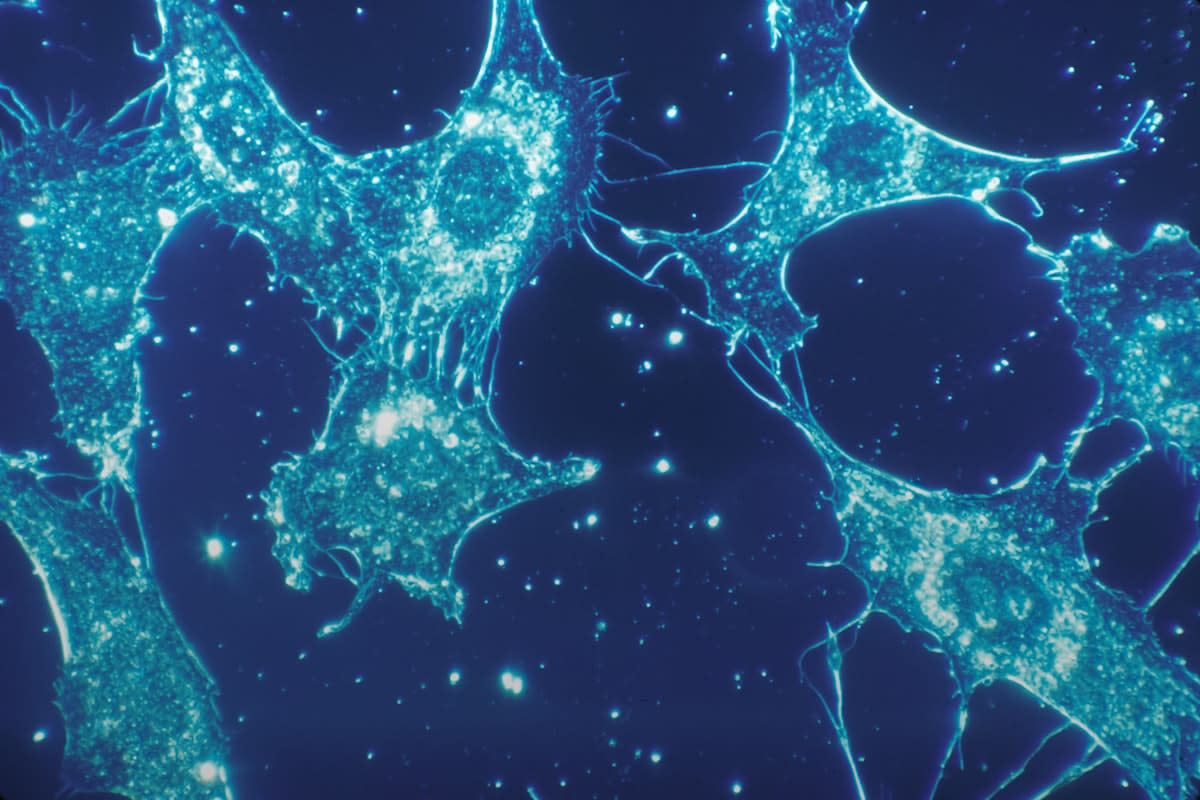
The process is a high-stakes game of biological Tetris. Scientists grow two different types of organoids—for example, a cortical organoid (representing the brain's outer layer) and a striatal organoid (representing a deeper reward center). Once these reach a specific maturity, they are physically placed next to each other in a specialized medium. The result? The cells don't just sit there; they migrate. Axons from the cortical organoid begin to grow into the striatal organoid, recreating the neural circuitry found in a developing human fetus (Source: Nature, 2019).
This migration is the 'magic' of assembloids. It allows researchers to observe the actual path of cellular travel and the formation of synapses in real-time. In the context of the gut-liver axis, assembloids are being used to model how toxins from the intestine travel to the liver, providing a far more accurate map of drug toxicity than any animal model could offer. Is it perfect? No. But it is a quantum leap over the flat 2D cell cultures that dominated the last three decades of pharmacology.
"The transition from organoids to assembloids is essentially the transition from anatomy to physiology. We are no longer asking 'what does this look like?' but 'how does this work in concert with other systems?'"— Dr. Madeline Chen, Lead Researcher in Synthetic Biology
The technical friction here is immense. The growth rates of different organoids rarely match. If your cortical organoid grows faster than your striatal one, the fusion is asymmetrical and the circuitry fails. This requires a level of precision in timing and nutrient delivery that pushes the limits of current lab protocols. Many teams are now turning to microfluidic chips to precisely control the chemical gradients that coax these tissues into merging.
The Practitioner's Reality: Blood, Oxygen, and the Necrotic Core
Walk into any high-end stem cell lab in Kyoto or Boston, and you will hear the same debate: the 'Plumbing Problem.' In a real human body, every cell is within a few microns of a capillary. In an assembloid, the center of the mass often starves. As the tissue grows thicker, oxygen cannot diffuse to the middle, leading to a 'necrotic core'—a dead zone of cells at the heart of the organoid. This is the dirty secret of the field. We can build the circuitry, but we can't yet build the pipes.
Practitioners are currently fighting a war of attrition against this necrosis. Some are experimenting with 3D bioprinting 'sacrificial' channels that can be flushed with nutrients, while others are attempting to fuse vascular organoids into the mix. The tension in the lab is palpable; there is a race to solve vascularization because whoever does it first unlocks the ability to grow organs at a scale that is actually transplantable, not just microscopic.
Global Divergence in Assembloid Research
The approach to this technology varies wildly by region. In Japan, leveraging the legacy of iPS cell research, the focus is heavily on disease modeling and precision medicine—creating patient-specific assembloids to test drugs before they ever touch a human patient. In the United States, the drive is more toward 'bio-manufacturing' and the scalability of these systems for potential transplant use. Meanwhile, European hubs are leading the charge on the ethical framework, questioning the implications of creating integrated neural assembloids that might exhibit primitive forms of processing (Source: European Bioethics Council, 2023).
| Feature | Traditional Organoids | Assembloids |
|---|---|---|
| Tissue Complexity | Single tissue type | Multi-tissue integration |
| Functional Goal | Structural mimicry | Circuitry and communication |
| Primary Limitation | Lack of context | Vascularization/Necrosis |
| Primary Use Case | Cellular differentiation | Systemic disease modeling |
This global divergence is creating a fragmented but fast-moving landscape. We are seeing a surge in 'hybrid' labs where biologists and electrical engineers work side-by-side to integrate silicon sensors into these biological assembloids. The goal is to read the 'data' flowing between the fused tissues in real-time, effectively turning a human organ-on-a-chip into a biological computer.
The Ethical Precipice: When Does a Circuit Become a Mind?
We cannot discuss neural assembloids without addressing the elephant in the room: consciousness. When we fuse a cortical organoid with a striatal one, we are recreating the pathways that govern reward and decision-making. While these are currently just clumps of cells in a dish, the increase in complexity is exponential. At what point does a functional circuit become a sentient entity? The current consensus is that we are far from it, but the lack of a standardized definition for 'synthetic consciousness' is a glaring hole in our regulatory framework.
Some researchers argue that we should proactively implement 'kill switches'—genetic markers that allow a lab to terminate an assembloid if it exhibits unplanned complexity. Others view this as an overreaction to a sci-fi narrative. Regardless, the debate is no longer academic; it is a primary concern for Institutional Review Boards (IRBs) globally as the sophistication of these models grows (Source: Cell Stem Cell, 2021).
- Shift from structural mimicry to functional connectivity.
- Overcoming the necrotic core through vascularization research.
- Integration of microfluidics to control tissue fusion.
- Patient-specific assembloids for precision pharmacology.
- Urgent need for ethical frameworks regarding synthetic neural circuits.
Looking ahead, the trajectory is clear. We are moving toward 'full-system' assembloids. Imagine a device that contains a fused assembly of heart, liver, and kidney tissues, all connected by a synthetic vascular system. This would allow us to test how a drug for the heart might inadvertently damage the liver, all without risking a single human life. The quest to build organs from scratch is no longer about the cells; it is about the architecture.
Fact-Check & Accuracy Note
Key claims regarding neural migration and cortical-striatal fusion are sourced from peer-reviewed studies in Nature (2019) and Cell Stem Cell (2021). The discussion on the 'necrotic core' is a widely documented challenge in the field of 3D cell culture. Ethical frameworks cited reflect ongoing debates within the European Bioethics Council. Note: Full-scale, transplantable human organs grown from assembloids remain a theoretical future goal and are not currently available in clinical practice.