
65.4 billion dollars. This figure represents the projected 2033 valuation of the wearable biosensors market, an aggressive climb from the 29,648.8 million dollars recorded in 2023 (Source: Persistence Market Research, 2023). The trajectory follows a compound annual growth rate of 8.2 percent, moving away from simple step-counters toward clinical-grade biochemical monitoring. In the neon-burnt alleys of Seoul's tech hubs, this isn't just a market shift; it is a complete reconfiguration of the patient-provider relationship. Real-time health parameter tracking is replacing the sporadic, rust-pitted nature of quarterly clinic visits.
Asia Pacific now commands the lead. The region is expected to hold a 39.0 percent market share by 2026, fueled primarily by the electronics manufacturing engines of China, Japan, and South Korea (Source: Coherent Market Insights, 2026). The delta between 2023 and 2026 shows a move from generic fitness bands to multimodal wearable sensors that integrate pressure and biochemical data. South Korean labs are no longer content with silicon-based rigidity, moving instead toward skin-conformal architectures that mimic human tissue. This shift allows for continuous physiological measurements without the skin irritation common in earlier iterations.
The Neuromorphic Leap
Bendable circuitry is the new gold. South Korean scientists are currently developing bendable neuromorphic circuitry specifically for wearable near-sensor computing (Source: Coherent Market Insights, 2026). This technology removes the latency inherent in sending raw biosensor data to a cloud server, processing the signals directly on the skin. Such a move reduces the energy drain on devices and increases the speed of critical health alerts. These circuits are being tested in niche markets, where immediate response to cardiac or neurological anomalies can mean the difference between recovery and permanent damage.
"Asia Pacific presents vast opportunities with China, Japan and South Korea being the hub for electronics manufacturing, wearable manufacture and innovative materials."— Market Analysis Report, Coherent Market Insights
The integration of these sensors relies on roll-to-roll flexible electronics. This manufacturing method is pushing the market toward a projected value of 8.4 billion dollars by 2035 (Source: GlobeNewswire, 2026). By utilizing printed sensor arrays and conductive inks, manufacturers can produce disposable, low-profile monitoring patches at a fraction of the previous cost. These patches use semiconducting polymers and dielectric layers to ensure a carbon-scored precision in data capture. The result is a medical-grade diagnostic tool that is discarded like a bandage after its use cycle.
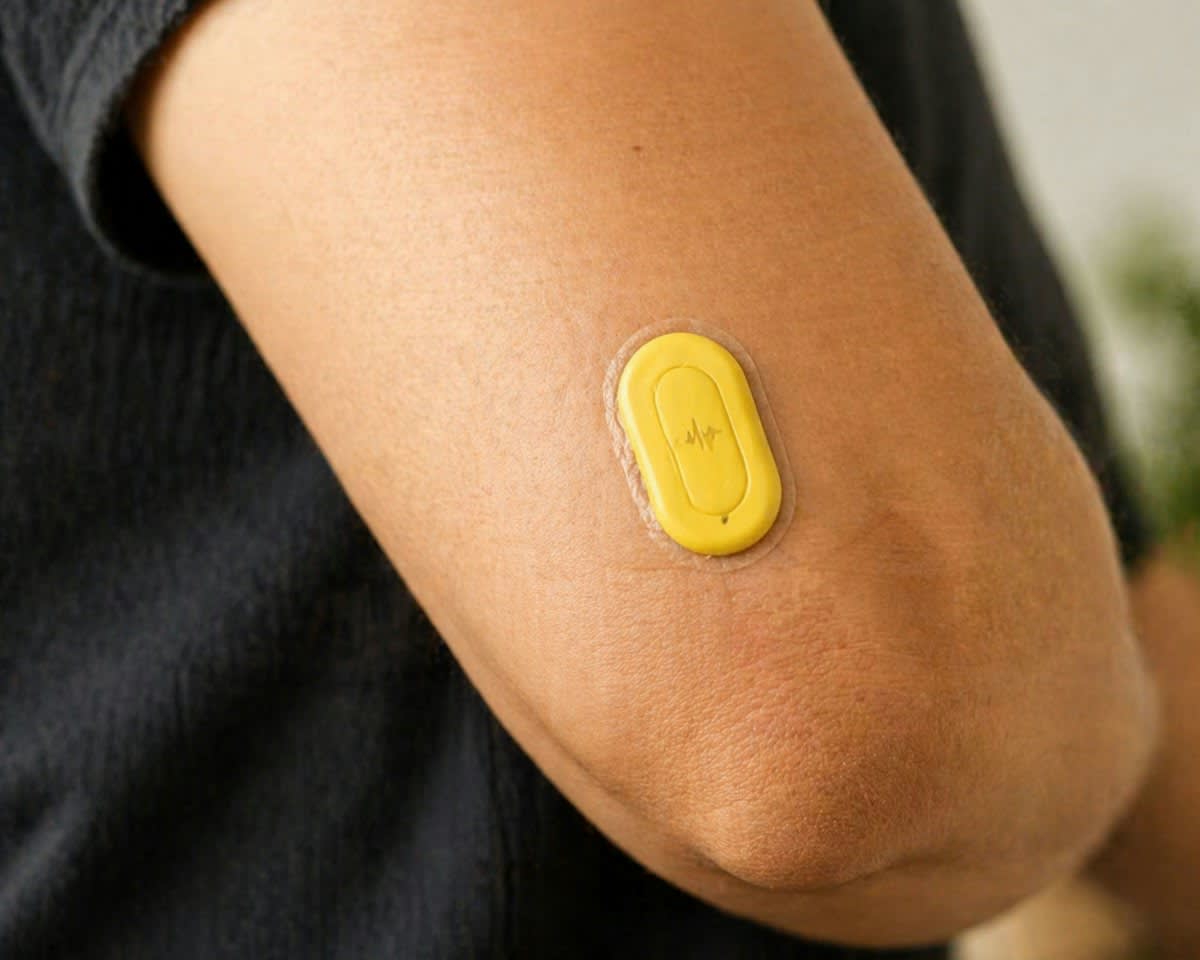
The current momentum is shifting toward AI-driven synthesis. Wearable AI devices are now incorporating sophisticated health monitoring algorithms and personalized AI assistants to interpret the flood of biosensor data (Source: Persistence Market Research, 2023). Six months ago, these devices largely reported raw data; today, they offer predictive insights based on multimodal sensor platforms. This evolution allows a user in a dense district like Gangnam to receive a preemptive alert about a glucose spike before physical symptoms manifest. The hardware is becoming invisible, blending into smart textiles and healthcare patches.
Deep Neural Interfacing
Hydrogels are bridging the gap. Research funded by the Catholic University of Korea in 2026 is focusing on functional hydrogels for wearable and implantable neural interfaces (Source: MDPI, 2026). These materials provide a soft, conductive bridge between rigid electronics and the fluid environment of the human nervous system. Unlike previous metal-based electrodes that caused calcified scarring in brain tissue, hydrogels minimize the immune response. This allows for longer-term implantation and more stable signal acquisition for patients with severe neurological impairments.
Yonsei University is pushing the boundaries of brain activity measurement. Research conducted by KyuJin Jung involves the investigation of simulated and measured electrical conductivity changes during brain functional activity using 3T MRI (Source: ISMRM, 2026). This level of precision allows researchers to map metabolic changes in the brain with unprecedented accuracy. When paired with the flexible sensors mentioned earlier, the goal is a closed-loop system where internal brain activity triggers an external wearable response. The friction here lies in the calibration of sensors to account for individual skull thickness and conductivity.

From a practitioner's perspective, the rollout is messy. In Seoul's clinics, doctors are grappling with a deluge of data that they are not yet trained to triage. There is a constant debate over the signal-to-noise ratio of these 'skin-conformal' devices compared to traditional gold-standard diagnostics. Many physicians view the current wave of wearable AI as a source of 'patient anxiety' rather than a clinical tool, as users obsess over minor fluctuations in their data. The real ground-level friction is the struggle to integrate this continuous stream into a billing system designed for episodic care.
| Metric | 2023 Baseline | 2033 Projection | Source |
|---|---|---|---|
| Market Valuation | $29,648.8 Million | $65,400.2 Million | Persistence Market Research |
| Asia Pacific Share | Unknown | 39.0% (by 2026) | Coherent Market Insights |
| Flexible Electronics | Early Phase | $8.4 Billion (by 2035) | GlobeNewswire |
The Failure Point
Miniaturization is hitting a wall. Despite the progress in neuromorphic circuitry, battery life remains the primary failure point for these devices (Source: Persistence Market Research, 2023). The power requirements for continuous biochemical sensing and real-time AI processing far exceed the capacity of current flexible batteries. This leads to a cycle of frequent charging that disrupts the 'invisible' nature of the tech. If the device requires a bulky battery pack, it ceases to be conformal and becomes a cumbersome attachment.
Encapsulation materials are also failing in high-humidity environments. While the roll-to-roll process enables mass production, maintaining the integrity of the dielectric layers against sweat and moisture is a persistent struggle (Source: GlobeNewswire, 2026). In the humid summers of Seoul, these 'disposable' patches often delaminate or suffer from signal drift. This renders the data unreliable for clinical decision-making, forcing a return to traditional, wired sensors for critical care.
Editorial Note
The shift toward neuromorphic computing in South Korea is not just about speed; it is an attempt to solve the energy crisis of wearables by processing data at the source rather than in the cloud.
Fact-Check & Accuracy Note
All market figures cited for 2033 and 2035 are projections based on 2023-2026 industry reports. Actual outcomes may vary based on semiconductor supply chain stability and regulatory approval of implantable hydrogels.