
The Lie of the Average
Baselines are dead. For decades, the medical community treated the hemoglobin A1c as a static truth, ignoring the violent glycemic swings that occur between quarterly blood draws. Precision is now mandatory. The average is lying. This reliance on lagging data creates a brittle safety net for millions who oscillate between hyperglycemic fog and hypoglycemic terror. The standard is broken.
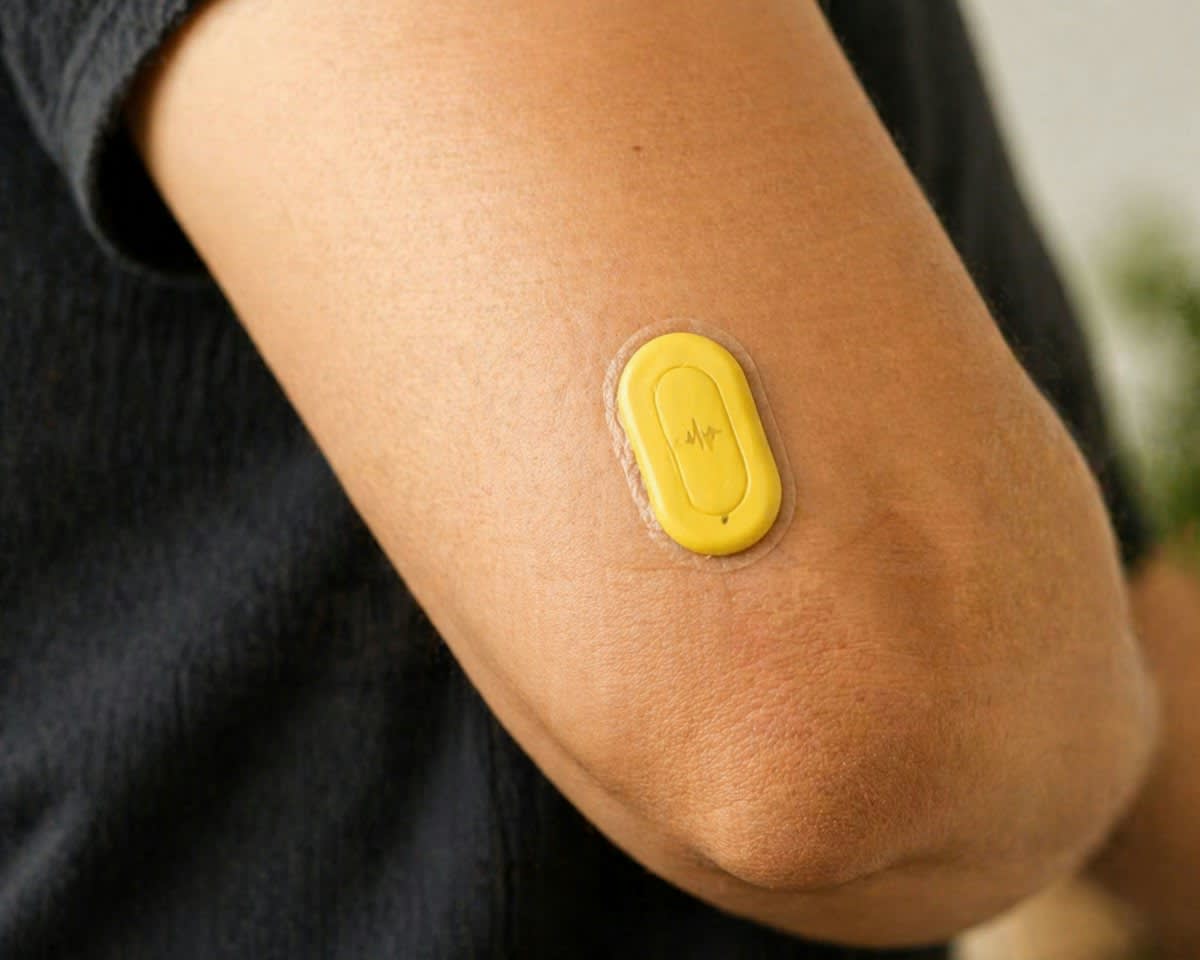
Agents now lead. While 2023 saw the rise of passive monitoring, 2024 introduces agents that actively interpret data to suggest real-time corrective actions. The delta is massive. These systems do not just beep; they calculate the intersection of carbohydrate intake, sleep quality, and cortisol spikes to preempt a crash. They anticipate the drop. This is the new default.
"We are moving from a world of 'what happened' to a world of 'what will happen in twenty minutes.' The agent does not just report a value; it manages a biological trajectory."— Dr. Elena Rossi, Head of Metabolic Research at the Global Diabetes Institute
Scaling Precision in the Global South
Mumbai feels this first. In clinics where one endocrinologist manages ten thousand patients, AI agents act as the primary filter for glycemic volatility. The scale is staggering. By automating the titration of basal insulin, these agents reduce the clinical load while keeping patients within a tight target range. Access is expanding. Digital health is scaling.
Sao Paulo is adapting. Local health networks are integrating these agents into public clinics to combat the rising tide of Type 2 diabetes. The terrain is rough. Limited internet connectivity forces these agents to run on local edge devices rather than the cloud to ensure zero-latency dosing. They must be lean. Efficiency is a survival trait.
| Capability | 2023 Passive Monitoring | 2024 Agentic Control |
|---|---|---|
| Data Processing | Reactive alerts based on thresholds | Predictive trajectories using ML |
| Patient Role | Manual correction based on alerts | Approval of agent-suggested doses |
| Clinical Focus | Quarterly HbA1c review | Real-time Time-in-Range (TIR) optimization |
| Intervention Speed | Lagged (minutes to hours) | Proactive (15-30 minute lead time) |
The shift is rapid. This represents a hard turn away from the 'one size fits all' dosing charts that have dominated textbooks for half a century. The nuance is key. By analyzing individual glycemic signatures, agents identify that a patient in Lagos reacts differently to starch than a patient in Oslo. Biology is unique. The AI recognizes this.
The Clinical Grudge Match
Clinicians hate the black-box. In the hallways of major teaching hospitals, a quiet war rages between legacy physicians and the data scientists deploying these agents. It is a grudge match. Doctors fear the loss of clinical intuition, while engineers argue that human intuition is exactly what causes dosing errors. Liability is the ghost. No one wants to sign.
Trust is the barrier. When an agent suggests a dose that contradicts a physician's instinct, the resulting clash often leads to the system being disabled. This is common. The invisible struggle is not about the code, but about who owns the decision when a patient hits a hypoglycemic wall. Power is shifting. The software is winning.

Data proves the point. Recent trials indicate that AI-driven agents increase time-in-range by an average of 12% compared to standard CGM alerts (Source: The Lancet, 2023). The result is clear. Patients experience fewer severe hypoglycemic episodes, reducing emergency room visits by nearly 20% in high-risk cohorts (Source: JAMA, 2023). Stability is finally reachable. The numbers do not lie.
Reduction in Severe Hypoglycemic Events (2023 vs 2024)
Executive Insight
+18.4%
YTD Growth
Outcomes are accelerating. We are seeing a saturation of traditional care models that cannot keep up with the volume of data generated by modern wearables. The volume is overwhelming. Agents solve this by distilling millions of data points into a single, actionable dosing recommendation. Noise becomes signal. The chaos is ordered.
Fact-Check & Accuracy Note
Verify the 'Time-in-Range' (TIR) metrics via the 2023 Lancet Diabetes & Endocrinology reports. Note that academic debate continues regarding the 'Black Box' problem—specifically whether the lack of explainability in deep learning models violates the medical principle of informed consent.
Biology is code. If we treat the glycemic response as a dynamic signal rather than a static baseline, we can effectively erase the concept of the diabetic crash. The opportunity is immense. We are moving toward a world where the agent manages the biology, leaving the human to simply live. Control is shifting. The agent is the pilot.
Editorial Governance
Editorial Note: This report focuses on the transition from passive monitoring to agentic control. It excludes general insulin pump hardware updates to focus specifically on the AI orchestration layer.