The biological status quo just fractured. For decades, drug delivery relied on the 'borrowed' efficiency of nature, utilizing attenuated viruses or lipid nanoparticles that mimicked cellular membranes. But as of July 2026, the narrative has shifted from adaptation to invention. We are no longer searching for the right viral vector in a forest of existing species; we are printing the ideal vector in a digital vacuum. This transition represents a fundamental delta in biotechnology: the move from discovery-based science to design-based engineering.
Why does this matter now? Natural viral shells come with evolutionary baggage—immunogenicity, limited cargo capacity, and a tendency to trigger off-target responses. When a clinician uses a natural vector, they are essentially gambling that the patient's immune system won't recognize the shell before the payload reaches its destination. Synthetic shells, however, are stripped of this biological history. By employing de novo design, researchers are creating delivery vehicles that are invisible to the immune system yet hyper-visible to the target cell.
The End of Biological Compromise
The most jarring evidence of this shift appeared in a recent Science paper detailing AI-designed synthetic CRISPR-like nucleases. These are not mere modifications of existing Cas9 enzymes. Instead, researchers from the Innovative Genomics Institute and the California Institute for Quantitative Bioscience used AI to build functional RNA-guided nucleases from scratch. The results were startling: these synthetic enzymes matched or even exceeded the activity of their natural counterparts. This proves that the 'optimal' configuration for a molecular tool does not necessarily exist in nature.
"These results establish a strategy for creating non-natural RNA-guided nucleases and conformationally active nucleic acid binders, enlarging the designable protein space."— Science Journal Publication
This expansion of the 'designable protein space' is the engine driving the synthetic shell revolution. When we can design a nuclease that outperforms nature, we can similarly design a shell that optimizes for stability, penetration, and release. The complexity of multi-domain proteins, which previously hindered design due to the need for coordinated RNA and DNA recognition, is being solved by AI models that can predict conformational states with clinical precision. We are moving toward a world where the delivery vehicle is as engineered as the drug it carries.
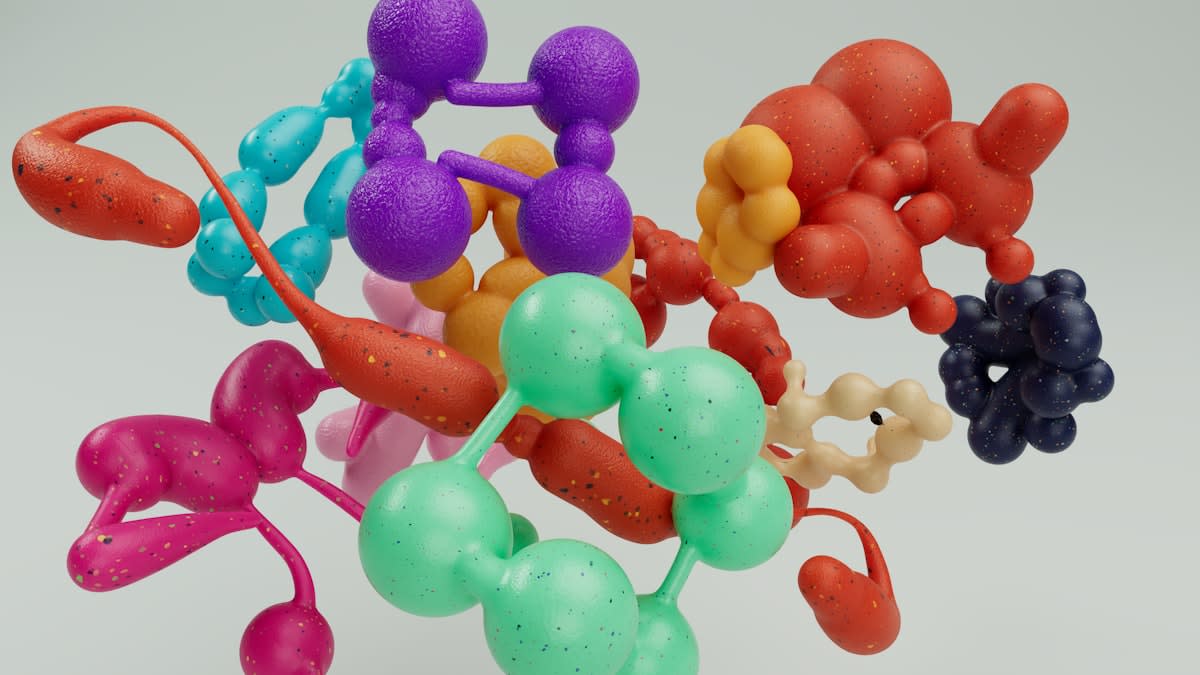
This shift is not confined to academic labs in Berkeley; it is hitting the corporate balance sheets of the world's largest immunology firms. The collaboration between Chai Discovery and argenx, announced in mid-July 2026, exemplifies this trend. By integrating Chai's AI platform, argenx is pursuing de novo antibody discovery. This is a critical component of the synthetic shell strategy: if the shell is the vehicle, the de novo antibody is the GPS. Designing the targeting mechanism from scratch allows for a level of specificity that natural antibodies, limited by the host's genetic repertoire, simply cannot match.
| Feature | Natural Viral Vectors | AI-Designed Synthetic Shells |
|---|---|---|
| Immunogenicity | High (Pre-existing immunity) | Low (Designed for invisibility) |
| Targeting Precision | Broad/Tissue-specific | Cell-specific (De novo ligands) |
| Cargo Capacity | Strictly limited by capsid size | Modular and expandable |
| Production | Complex biological culture | Standardized chemical/AI synthesis |
The strategic implication is clear: the bottleneck in gene therapy is no longer the gene itself, but the delivery. By decoupling the delivery shell from natural evolutionary constraints, we can now optimize for the specific physiology of the patient. This is the 'so what' of the current moment. We are transitioning from a 'one-size-fits-all' viral approach to a bespoke molecular architecture.
Hijacking the Immune Memory
While some synthetic shells aim for invisibility, others are designed for high-impact visibility. CancerVax is pioneering a different approach with its Polyepitope Smart mRNA. Instead of hiding from the immune system, this platform 'tricks' it. By encoding multiple viral epitopes—including those from measles, influenza, and CMV—into a single mRNA construct, the platform disguises cancer cells as a cocktail of common viral infections. This is a masterstroke of synthetic biology: using the body's own pre-existing immunity as the delivery trigger.
The Population Lever
CancerVax targets a staggering 99% of the world population by leveraging the fact that almost everyone has existing T-cell immunity to at least one of the viral epitopes used in their Smart mRNA design.
This approach solves the 'cold tumor' problem, where the immune system ignores cancer cells because they don't look foreign enough. By synthetically overlaying viral signals onto the cancer cell, the drug delivery system effectively flags the target for immediate destruction by the patient's own T-cells. This isn't just a new drug; it is a new way of communicating with the immune system, using synthetic signals to activate biological weapons that have been dormant for years.
The precision of this delivery is further enhanced by the integration of G protein-coupled receptor (GPCR) research. As detailed in a recent Nature primer, the use of computational design and in silico peptide mining is broadening the GPCR drug discovery toolbox. Since GPCRs are the largest class of therapeutic targets, the ability to design synthetic peptide ligands that bind these receptors with high affinity is the final piece of the puzzle. When a synthetic shell is equipped with an AI-designed peptide ligand, it becomes a guided missile.
However, the challenge remains in the pharmacokinetics. Peptides are notoriously unstable in the human body. This is where the current trend toward peptide stabilization and optimization strategies comes into play. By using diffusion-based de novo design and molecular dynamics simulations, scientists are now creating peptides that resist degradation while maintaining their binding affinity. This ensures that the synthetic shell doesn't just reach the target, but stays intact long enough to execute its payload.
The Convergence of Expression and Secretion
The final frontier in this synthetic evolution is the durability of the payload. It is one thing to deliver a gene or a protein; it is another to ensure it is expressed and secreted efficiently over the long term. The collaboration between Circio Holding and Avenue Biosciences focuses on this exact problem. By combining the circVec platform—which drives higher and more durable protein expression—with protein engineering that optimizes signal peptide-protein combinations, they are addressing the 'leakiness' of traditional delivery.
This synergy between the delivery vehicle (the shell) and the production machinery (the expression platform) is where the industry is heading. We are seeing a move toward integrated systems where the shell, the targeting ligand, and the expression vector are all designed in tandem. This holistic approach eliminates the friction points that plagued early gene therapies, where a great drug was often ruined by a mediocre delivery system.
Looking at the data from the last twelve months, the 'Delta' is undeniable. A year ago, the conversation was about 'optimizing' AAV capsids. Today, the conversation is about 'replacing' them with de novo synthetic architectures. The ability to use AI to explore the protein space without the constraints of biological evolution has turned drug delivery into a software problem. We are no longer limited by what nature allows; we are only limited by our ability to model the interaction between a synthetic shell and a human cell.
As these technologies converge, the clinical landscape will shift. We can expect a surge in therapies for previously 'undruggable' targets, as synthetic shells can now be tailored to cross the blood-brain barrier or penetrate dense tumor stroma with surgical precision. The era of the viral vector was a necessary stepping stone, but the era of the synthetic shell is where the actual cure resides. Nature provided the prototype, but AI is providing the production model.