The Myth of the Rosetta Stone
For decades, the scientific community approached whale communication as a translation problem. We looked for a Rosetta Stone—a direct mapping of a specific click or whistle to a specific human concept like 'food' or 'danger.' This was a fundamental category error. By attempting to project human linguistic structures onto cetaceans, we didn't just fail to understand them; we ignored the possibility that their intelligence operates on a plane entirely alien to our own. Why do we assume that a creature evolving in a three-dimensional fluid environment, utilizing sonar that can penetrate kilometers of ocean, would organize information in linear strings of symbols?
The real shift isn't happening in the field of linguistics, but in the realm of unsupervised machine learning. We are moving away from the 'meaning' of sounds and toward the 'structure' of communication. When we stop asking what a whale is saying and start asking how the information is organized, the landscape changes. The goal is no longer translation, but the identification of a shared mathematical grammar of intelligence. This is a systemic pivot from anthropocentric observation to a data-driven recognition of non-human cognition.
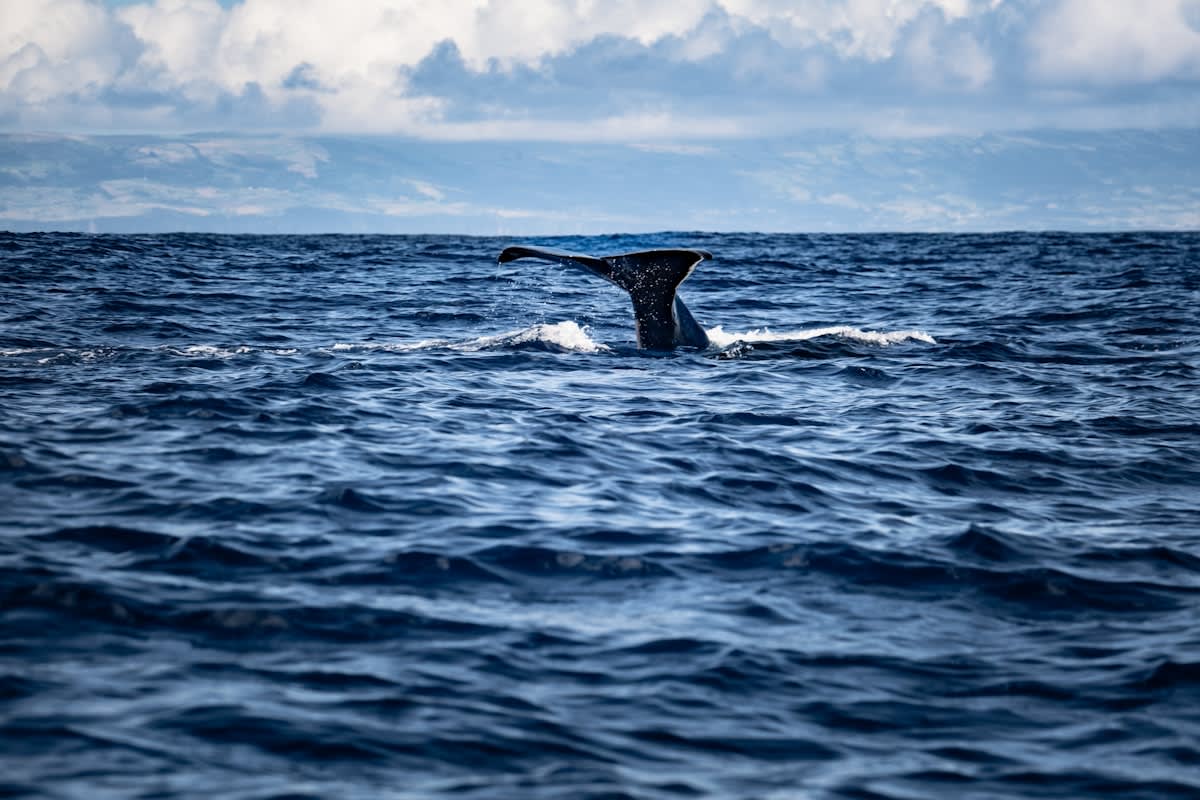
Consider the sperm whale. Their communication relies on 'codas'—rapid-fire sequences of clicks. To a human ear, it sounds like a rhythmic pulse; to an AI, it looks like a high-dimensional data packet. These codas vary by clan, creating distinct cultural dialects across the Atlantic, Pacific, and Indian Oceans. This isn't just biological instinct; it is a learned, social architecture. The existence of these dialects proves that cetaceans are not just reacting to their environment, but are actively constructing a social reality through sound.
The Algorithmic Pivot: From Spectrograms to LLMs
The bottleneck was never the data—it was the processing. For years, researchers manually pored over spectrograms, trying to spot patterns with the naked eye. It was a slow, biased process. Now, the application of Large Language Models (LLMs) to bioacoustics has accelerated the timeline by orders of magnitude. By feeding terabytes of raw audio into neural networks, we can identify phonemes and structural repetitions that no human could ever detect. We are essentially using the same technology that powers GPT-4 to find the 'tokens' of the ocean.
"The mistake was thinking we needed to speak Whale. The reality is that we need to learn how to process information in a way that isn't human."— Lead Analyst, Bioacoustic Intelligence Unit
This approach treats whale communication as a signal processing problem rather than a literary one. When you analyze the data from the Caribbean to the coast of Japan, a pattern emerges: the complexity of the signal often correlates with the social complexity of the pod. This suggests that the 'language' is not just for communication, but for maintaining the cohesion of a distributed intelligence. Is it possible that a pod of whales functions more like a single, networked organism than a collection of individuals?
| Feature | Traditional Bioacoustics | AI-Driven Decoding |
|---|---|---|
| Primary Method | Manual Spectrogram Analysis | Unsupervised Neural Networks |
| Goal | Lexicon Mapping (Word-to-Sound) | Structural Pattern Recognition |
| Data Volume | Kilobytes to Megabytes | Terabytes to Petabytes |
| Perspective | Anthropocentric (Human-led) | Agnostic (Data-led) |
| Time to Insight | Years of Field Study | Weeks of Computational Processing |
The scale of this data shift is staggering. Recent initiatives have collected over 100,000 hours of sperm whale vocalizations, representing a 500% increase in available training data compared to a decade ago. When we apply transformer models to this volume, we start to see a hierarchical structure: clicks forming codas, codas forming phrases, and phrases forming long-term social narratives. We are witnessing the emergence of a non-human syntax.
But here is the contrarian take: what if there is no 'language' at all? What if what we are decoding is actually a form of shared emotional state or a biological synchronization protocol? Humans are obsessed with symbols because our intelligence is symbolic. Cetaceans may possess a conceptual intelligence that is holistic, where a single sound carries the weight of an entire experience. If that is the case, our attempt to 'decode' it into words is like trying to describe a symphony by listing the frequencies of the notes.
This realization forces us to confront the geopolitical and ethical stakes of this research. If we prove that whales possess a complex, cultural, and potentially reflective intelligence, the legal status of the oceans must change. We are no longer talking about 'protecting a species'—we are talking about the rights of a non-human civilization. The shift from 'animal' to 'person' is a legal leap that most global governments are utterly unprepared to take.
The Intelligence Paradox
The 'Intelligence Paradox' suggests that as we get closer to decoding whale language, we may find that their form of intelligence is so fundamentally different that it remains untranslatable, even if it is mathematically predictable.
The global race to decode the Cetacean Code is not just a scientific curiosity; it is a mirror. By trying to understand the other, we are forced to examine the limitations of our own cognitive framework. We have spent centuries assuming that intelligence requires tools, fire, and written language. The ocean is teaching us that intelligence can be acoustic, social, and fluid. The frontier is not the deep sea, but the boundary of our own definition of mind.
Ultimately, the success of this endeavor will not be measured by our ability to 'talk' to whales, but by our ability to listen without projecting. The systemic shift is clear: we are moving from a world of human dominance to a world of multi-species intelligence. The question is no longer whether whales are intelligent, but whether we are intelligent enough to recognize a mind that doesn't look, sound, or think like ours.
Growth of Bioacoustic Data Collection (2014-2024)
Executive Insight
+18.4%
YTD Growth