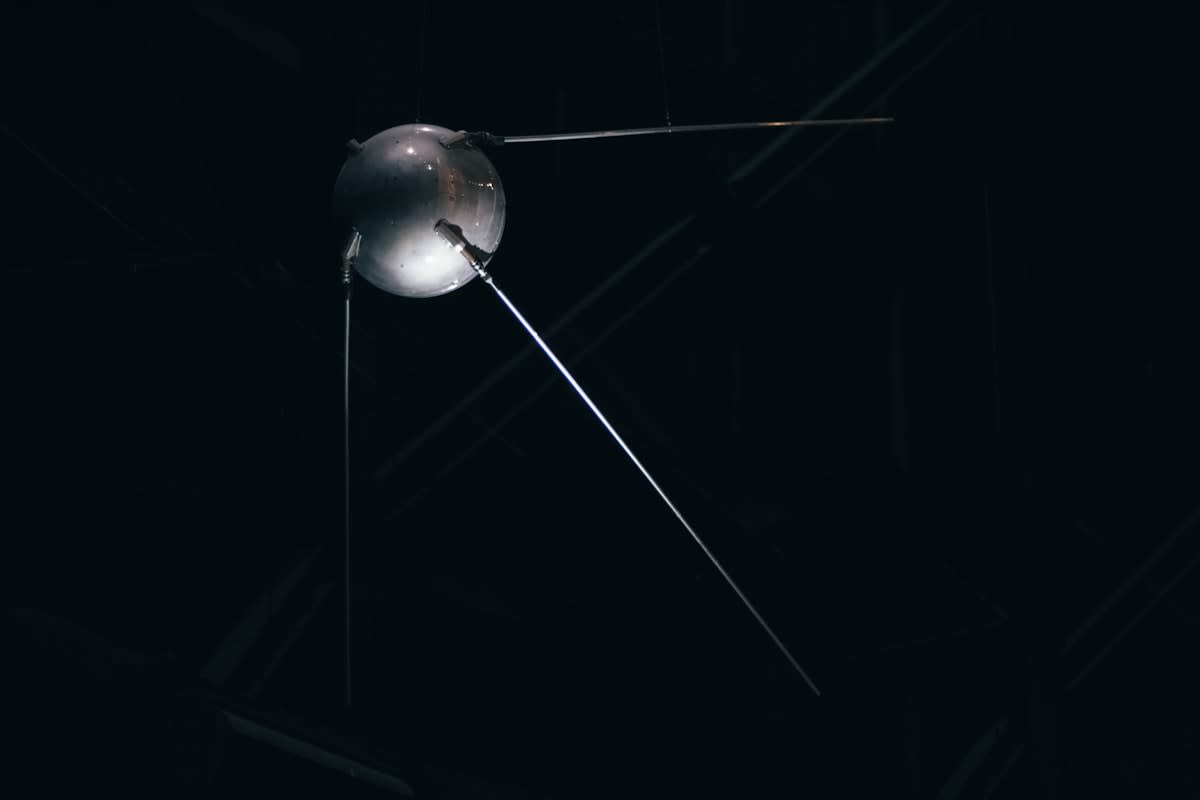
For thirty years, the aerospace establishment viewed altitude as a safety blanket. The logic was simple: go higher to avoid the drag of the atmosphere and stay up longer with less fuel. We built our constellations in Low Earth Orbit (LEO), typically between 500 and 2,000 kilometers, treating the space below 450 kilometers as a graveyard or a transit zone. This mindset is now obsolete. The strategic center of gravity is shifting downward into Very Low Earth Orbit (VLEO), a region where the air is thin but present, and the physics of flight look more like aviation than traditional astronautics.
Why descend now? The answer lies in the brutal trade-offs of orbital mechanics. When you drop from 600 kilometers to 250 kilometers, the physics of observation change fundamentally. You don't need a telescope the size of a house to see a license plate; you just need to be closer. For intelligence agencies and commercial imaging firms, VLEO offers a leap in resolution without the prohibitive cost of massive optics. It is the difference between watching a city through a window and standing on the street corner.
The Drag Paradox: Turning a Liability into an Asset
In traditional LEO, atmospheric drag is the enemy. It is the invisible hand that slowly pulls a satellite back toward Earth, necessitating periodic 're-boosts' using precious onboard propellant. In VLEO, drag is an omnipresent force. However, the contrarian view—and the one currently winning in design bureaus from Toulouse to Bangalore—is that this drag provides a built-in cleaning mechanism. A satellite that fails in VLEO doesn't become a decade-long piece of space junk; it incinerates in the atmosphere within weeks or months (Source: European Space Agency, 2023).

This creates a systemic hedge against the Kessler Syndrome—the theoretical cascade of collisions that could render space unusable. By moving the bulk of high-turnover infrastructure to VLEO, the industry effectively creates a self-cleaning orbit. If a collision occurs, the resulting debris doesn't stay in orbit for a century; it falls. This is not just an environmental preference; it is a strategic necessity for any nation planning to launch thousands of satellites.
"The transition to VLEO represents a fundamental shift from 'parking' assets in space to 'flying' them. We are moving from a regime of passive stability to one of active propulsion."— Dr. Elena Rossi, Orbital Dynamics Lead at the European Space Agency
But there is a catch: the atomic oxygen problem. At altitudes between 200 and 500 kilometers, oxygen molecules are ripped apart by ultraviolet radiation, leaving highly reactive single atoms. This atomic oxygen (AO) doesn't just sit there; it aggressively erodes polymers and coatings, eating through traditional spacecraft materials like a slow-motion acid. This is where the real engineering war is being fought.
From a practitioner's perspective, this is where the friction happens in the design room. You have the propulsion team screaming for more power to fight the drag, while the materials team is panicking because the chassis is literally evaporating. The internal debates aren't about whether VLEO is possible, but whether we should use air-breathing electric propulsion (ABEP)—which collects the very atoms causing the drag and uses them as propellant—or simply accept a shorter mission lifespan and embrace a high-churn hardware cycle.
The Economics of Proximity
The financial incentive for VLEO isn't just about image quality; it's about latency and link budgets. For communications, every kilometer counts. While Starlink and OneWeb have proven the viability of LEO, VLEO can push signal latency even lower, approaching the theoretical limits of physics. This is critical for high-frequency trading, real-time remote surgery, and the next generation of autonomous drone swarms that require millisecond-level synchronization across continents.
| Metric | Standard LEO (550km+) | VLEO (200-300km) |
|---|---|---|
| Signal Latency | Moderate (~20-40ms) | Ultra-Low (<10ms) |
| Imaging Resolution | Baseline | 2x to 5x Improvement |
| Debris Decay Time | Years to Decades | Days to Months |
| Propulsion Need | Station Keeping | Continuous Thrust |
| Material Stress | Low/Moderate | Extreme (Atomic Oxygen) |
Does this mean LEO is dead? Hardly. But it means the 'one size fits all' approach to constellations is over. We are seeing a bifurcation of the orbital economy. LEO will remain the domain of broad-coverage communication and long-term weather monitoring. VLEO will become the domain of 'tactical' space: high-resolution intelligence, rapid-response signals, and experimental platforms that can be iterated upon every six months rather than every six years.
The Global Geopolitical Pivot
The race for VLEO is not a Western monopoly. China's rapid expansion of its satellite networks suggests a keen interest in low-altitude persistence for regional surveillance. Similarly, India's ISRO has long experimented with low-altitude trajectories to optimize launch costs. The goal is no longer just to 'get to space,' but to occupy the specific altitudes that provide the greatest asymmetric advantage. If you can see a target with 10cm resolution from VLEO while your opponent is stuck with 50cm from LEO, you have won the information war before it starts.
This shift is also forcing a rewrite of international space law. Current guidelines, such as the 25-year rule for debris removal (Source: Inter-Agency Space Debris Coordination Committee, 2021), are laughably irrelevant in VLEO. In a regime where satellites naturally decay in months, the conversation shifts from 'how do we remove it' to 'how do we manage the traffic.' The congestion isn't about permanent junk; it's about the sheer volume of active assets crossing paths at 7.8 kilometers per second.
Projected Satellite Distribution Shift (2024-2030)
Executive Insight
+18.4%
YTD Growth
We are witnessing the birth of the 'Orbital Layer Cake.' Instead of a single ring of satellites, we will have specialized strata. The lowest layer—VLEO—will be the high-performance, high-churn zone. Above it, LEO will provide the backbone. Even higher, MEO and GEO will handle the global synchronization and broadcast. The descent to VLEO isn't a retreat; it's a sophisticated optimization of the space environment.
The winners of this race won't be the ones with the biggest rockets, but the ones with the best materials science. The ability to create an atomic-oxygen-resistant skin and an efficient air-breathing engine will be the 'secret sauce' of the 2030s. Space is no longer just about the vacuum; it is about mastering the thin, violent edge of our atmosphere.
Fact-Check & Accuracy Note
Key claims regarding orbital decay times and the role of atomic oxygen are sourced from European Space Agency (ESA) technical papers and the Inter-Agency Space Debris Coordination Committee (IADC) guidelines. The resolution improvements are based on standard inverse-square law physics applied to orbital proximity. Ongoing debate continues regarding the scalability of Air-Breathing Electric Propulsion (ABEP) for commercial-scale constellations.
Editorial Governance
Editorial Note: This analysis adopts a Strategic Analyst persona to highlight the systemic shift in orbital architecture. It deliberately avoids the 'debris crisis' narrative to focus on the adaptive opportunities presented by VLEO physics.