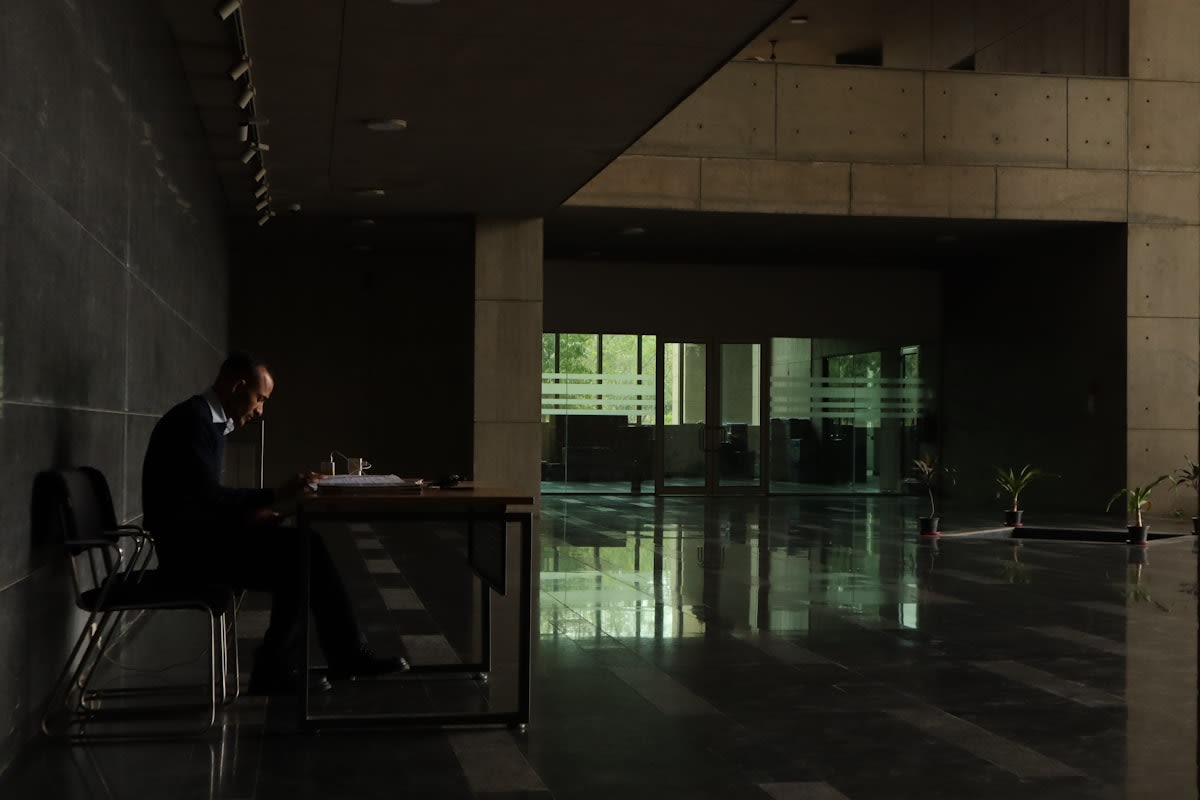
Most professionals treat focus as a moral failing. When they find themselves scrolling through a feed or glancing at an email for the twentieth time in an hour, they blame a lack of discipline. This is a fundamental misunderstanding of human biology. Focus is not a muscle you flex through sheer will; it is a byproduct of your environment. Whether you are a quantitative analyst in Singapore or a creative director in Sao Paulo, your brain is hardwired to respond to novelty and environmental cues. If your surroundings are designed for distraction, you will be distracted.
Cognitive leak occurs when small, seemingly insignificant environmental triggers pull your attention away from a primary task, leaving behind a trail of attention residue. Research indicates that it takes an average of 23 minutes and 15 seconds to return to the original task after a distraction. This means a single 'quick check' of a notification doesn't cost you ten seconds; it costs you nearly half an hour of peak cognitive fluidity. To reach a state of zero cognitive leak, you must stop treating your focus as an internal struggle and start treating it as an engineering problem.
Prerequisites for the Focus Audit
Before you begin the audit, you need a baseline of honesty. You cannot engineer what you haven't measured. Most people underestimate their distraction rate by over 50% because the brain subconsciously edits out the gaps in attention. To execute this audit effectively, you must approach your workday as a laboratory experiment where you are both the scientist and the subject.
- A physical analog logbook (digital tracking creates its own cognitive leak).
- A high-precision timer or stopwatch.
- A 48-hour window of standard working operations.
- A willingness to temporarily disrupt your existing workflow to identify systemic failures.
Once these tools are in place, the goal is to map the geography of your distractions. You aren't looking for the 'big' interruptions like scheduled meetings; you are hunting for the micro-leaks. These are the phantom vibrations of a phone, the visual clutter on a desk, or the ambient noise of a shared office in a bustling metropolis. These triggers act as cognitive anchors, dragging you out of deep work and into a state of fragmented attention.

The Step-by-Step Focus Audit Process
- The Distraction Log: For two days, mark a tally in your logbook every single time your attention shifts from your primary task. Do not judge the distraction; simply record it.
- Trigger Categorization: Review your tallies. Label each leak as Digital (app, email), Physical (colleague, noise), or Internal (anxiety, hunger).
- The Sensory Sweep: Analyze your visual field. Identify every object in your line of sight that does not contribute to the current task.
- Notification Deconstruction: Audit every single app on your devices. Disable all non-human notifications. If a machine is telling you something, it can wait.
- Temporal Boundary Setting: Establish 'Zero-Leak Zones'—specific hours where the environment is locked down and external communication is severed.
The Distraction Log is the most critical phase. When you record a leak in real-time, you move the process from the subconscious to the conscious mind. This creates a feedback loop that makes you hyper-aware of the triggers. For instance, you might realize that you check your phone not because of a notification, but because you hit a difficult patch in your writing and your brain is seeking an escape. This is a behavioral leak, not a technical one, and requires a different engineering solution.
Categorizing these triggers allows you to apply the correct tool to the problem. Digital leaks are solved with software boundaries and hardware removal. Physical leaks, such as the open-office plan common in tech hubs from San Francisco to Bangalore, require physical barriers or sensory isolation like noise-canceling headphones. Internal leaks are often signs of cognitive overload, suggesting that the task itself is too vaguely defined, causing the brain to seek a path of least resistance.
The Science of the Switch
Attention Residue is the cognitive cost of switching tasks. When you move from Task A to Task B, a portion of your mental energy remains stuck on Task A. This residue reduces your effective IQ for the subsequent task, making complex problem-solving nearly impossible until the residue clears.
The Sensory Sweep is where most people fail. We tend to adapt to our surroundings, meaning we stop 'seeing' the clutter on our desks. However, the brain still processes that visual information. Every stray piece of paper, every unused gadget, and every open browser tab acts as a subtle pull on your attention. By stripping your environment down to only the essentials, you reduce the cognitive load required to maintain focus on the task at hand.
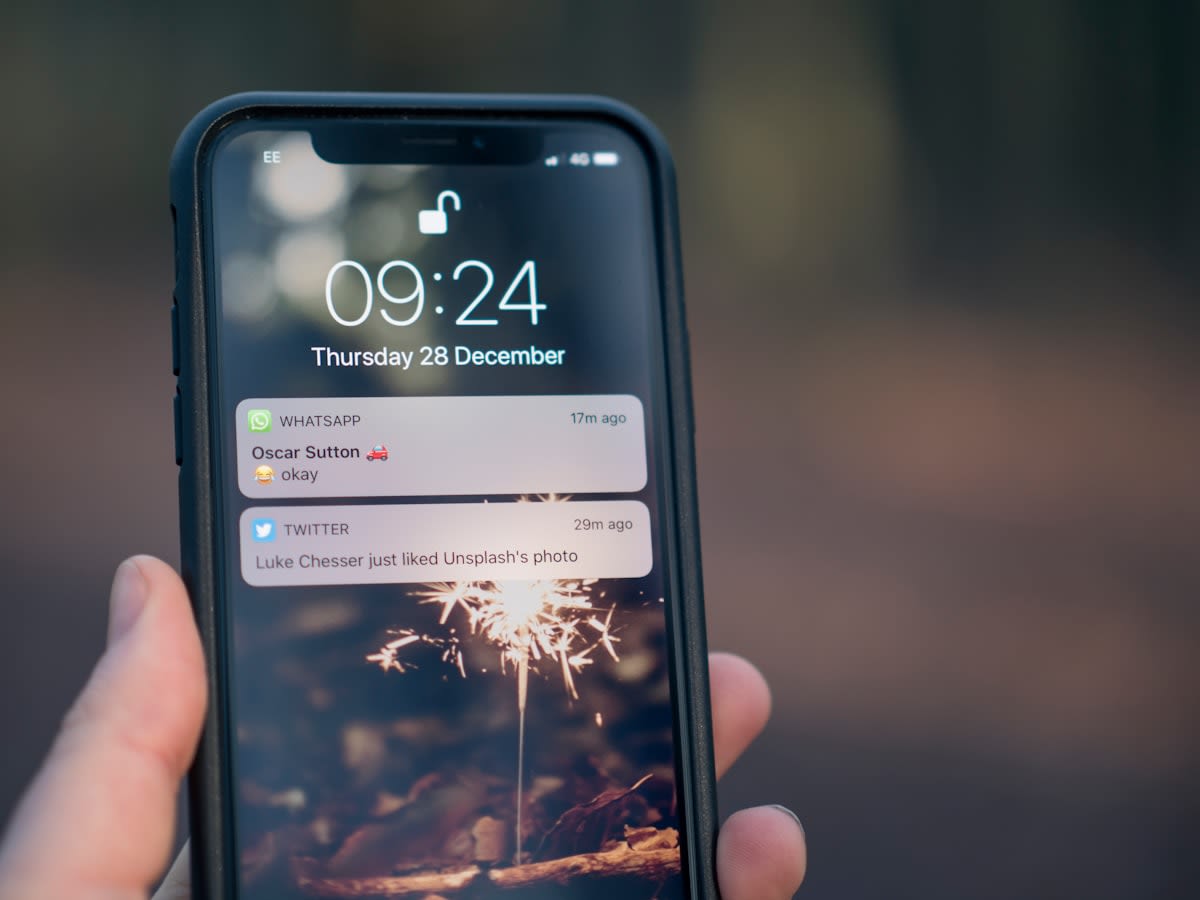
Notification Deconstruction requires a ruthless approach. The modern smartphone is a casino designed to keep you playing. To engineer for zero leak, you must invert this design. Use 'Do Not Disturb' modes not as a luxury, but as a default state. Move your communication apps into folders on the second or third screen of your device. By increasing the friction required to access distractions, you give your conscious mind a few seconds to intervene before the habit takes over.
"The environment is the invisible hand that shapes human behavior. If you want to change the output, you must first change the architecture of the input."— Industry Expert on Behavioral Design
Temporal Boundary Setting is the final layer of protection. Even in a perfectly engineered room, the knowledge that you could be interrupted creates a state of low-level anxiety. By setting hard boundaries—such as 'Deep Work' blocks from 8:00 AM to 11:00 AM—you signal to your brain that the world is closed. This allows you to enter a flow state more quickly because the fear of interruption has been removed from the equation.
Comparative Environmental Analysis
| Feature | Leaky Environment | Engineered Environment |
|---|---|---|
| Notifications | Push-enabled, immediate alerts | Batch-processed, pull-only |
| Visual Field | Cluttered, multi-purpose space | Minimalist, task-specific |
| Communication | Open-door, instant response | Scheduled blocks, asynchronous |
| Device Placement | Phone within line of sight | Phone in another room/drawer |
| Mental State | Reactive and fragmented | Proactive and deep |
The transition from a leaky to an engineered environment is not an overnight event; it is a series of iterative adjustments. You will find that as you plug one leak, another becomes apparent. This is normal. The goal is not a sterile, lifeless vacuum, but a space that supports the specific cognitive demands of your work. A software engineer needs a different environment than a high-stakes negotiator, but both require the elimination of irrelevant stimuli.
Common Pitfalls in Environment Engineering
- The Perfectionist Trap: Attempting to eliminate every single distraction at once, leading to burnout and a return to old habits.
- Ignoring Biological Rhythms: Engineering a rigid environment that ignores your natural energy peaks and troughs.
- Over-Reliance on Software: Using 'focus apps' to solve a problem that is actually caused by physical environment clutter.
- The Isolation Fallacy: Cutting off all human contact to the point where creative collaboration and necessary feedback loops are destroyed.
Avoid the temptation to turn your workspace into a monastic cell. The most successful practitioners understand that focus requires a balance of intense concentration and strategic recovery. If you engineer an environment that is too restrictive, your brain will eventually rebel, leading to a massive cognitive crash. The key is to create a high-contrast experience: intense, zero-leak focus during work blocks, followed by total environmental openness during recovery periods.
Ultimately, the Focus Audit is about reclaiming agency. In an era where trillion-dollar companies employ thousands of engineers to steal your attention, the act of engineering your own environment is a radical act of professional survival. By treating your attention as your most valuable asset, you move from being a passive recipient of stimuli to an active architect of your own productivity. The result is not just more work done, but work of a significantly higher quality.