The End of the Human Monopoly
For millennia, humanity operated under a comfortable delusion: that we were the only species possessing a complex, symbolic language. We categorized the screams of primates, the songs of whales, and the dances of bees as mere instinctive signals—emotional outbursts or basic warnings. We viewed ourselves as the sole architects of meaning in a world of noise. That era of arrogance is collapsing. We are not witnessing a gradual improvement in zoology, but a systemic rupture in how we define communication itself.
The catalyst is not a better hearing aid or a more patient biologist. It is the arrival of self-supervised learning (SSL) and high-dimensional geometry. By treating animal vocalizations not as sounds to be interpreted by human ears, but as raw data streams to be mapped in latent space, we have bypassed the need for a bilingual translator. We are no longer asking what a whale sound means in English; we are asking how the structure of whale communication mirrors the structure of human language.
Why now? Because the compute power required to process petabytes of bioacoustic data has finally caught up with the complexity of the signals. We have moved from the era of the spectrogram—where a human looked at a picture of a sound—to the era of the manifold, where an AI identifies the underlying mathematical shape of a conversation. This is a fundamental shift from descriptive biology to predictive linguistics.
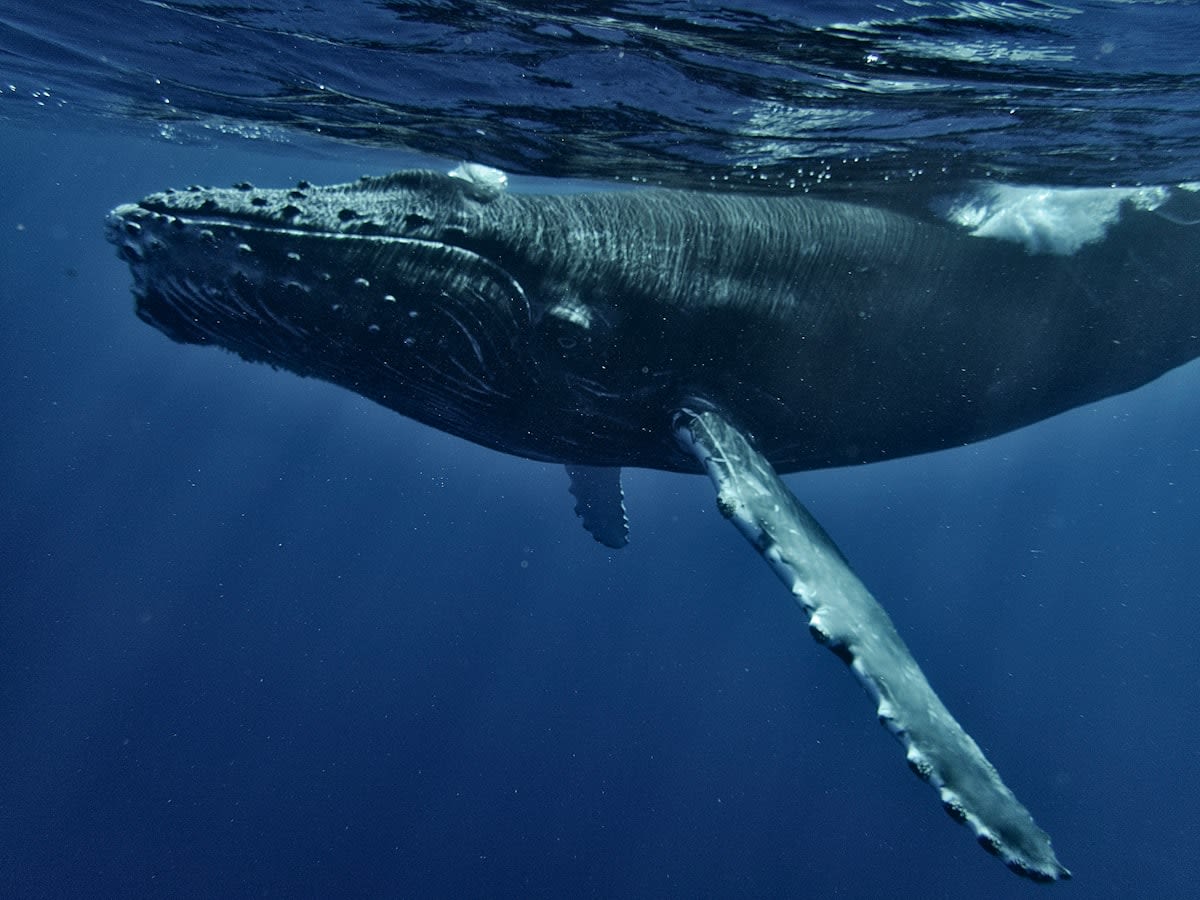
Consider the Project CETI (Cetacean Translation Initiative). They aren't just recording sperm whales in the Caribbean or the Pacific; they are deploying a global network of sensors to capture the 'codas'—the rhythmic clicking patterns these giants use to maintain social cohesion. The scale is staggering. We are talking about hundreds of terabytes of data being fed into transformers that look for the same patterns that allow GPT-4 to predict the next word in a sentence.
Does this mean we will soon be chatting with dolphins about the weather? Hardly. That is the Disney-fied version of the story. The reality is far more profound. We are discovering that non-human communication likely operates on a logic entirely alien to our own. Sperm whales may communicate in concepts of pressure, sonar-imaging, and kinship that have no direct English equivalent. The goal is not translation in the traditional sense, but alignment.
"We are not translating a language; we are mapping a mind. The objective is to find the universal invariants of communication that exist regardless of whether the speaker has a larynx or a blowhole."— Strategic Analysis on Bio-Linguistics
This transition is happening globally, from the rainforests of the Amazon to the coral reefs of the Indo-Pacific. In these regions, researchers are applying the same 'foundation model' approach used in human NLP. By training models on vast amounts of unlabelled animal data, the AI begins to cluster sounds into 'tokens.' Once you have tokens, you have a grammar. Once you have a grammar, you have a system that can be decoded.
The Earth Species Project is pushing this even further, attempting to build a general-purpose translation engine for all non-human life. They are targeting over 20 species, treating the problem as a multi-modal challenge. It is not just about audio; it is about integrating scent, posture, and electrical impulses into a single coherent data map.
| Feature | Traditional Ethology | AI-Driven Translation |
|---|---|---|
| Approach | Observation & Hypothesis | Pattern Recognition & Latent Mapping |
| Data Volume | Localized, manual recordings | Global, petabyte-scale datasets |
| Interpretation | Human-centric (Anthropomorphism) | Mathematical (Structural Alignment) |
| Speed of Discovery | Decades per species | Months per dataset |
| Goal | Categorization of behavior | Functional communication |
This brings us to a critical friction point: the risk of projecting our own cognitive structures onto other species. If an AI tells us a crow is 'asking for food,' is the crow actually asking, or is the AI simply finding the closest human equivalent for a complex biological drive? The danger is that we create a mirror of ourselves rather than a window into the animal mind.
Yet, the opportunity outweighs the risk. Imagine the resilience we could build into our ecosystems if we could actually receive feedback from the species we are displacing. Instead of guessing why a bee colony is collapsing based on pesticide levels, we could potentially decode the distress signals they are sending to one another. We are moving from a monologue of human dominance to a planetary dialogue.

The systemic shift here is the democratization of biological understanding. When the 'code' for animal communication becomes open-source, the power dynamic between humans and nature shifts. We can no longer claim ignorance of animal suffering or intelligence when the data is literally screaming in our faces, parsed into clear, mathematical clusters.
We are seeing a 10-fold increase in the precision of spectrogram analysis thanks to neural networks that can filter out background ocean noise with 99% accuracy. This clarity allows us to see the 'phonemes' of the sea. If we can identify the basic building blocks of a sperm whale's vocabulary, we can begin to test hypotheses by playing back synthesized sounds and observing the reaction. This is the scientific method accelerated by silicon.
But let us be clear: this is not about friendship. It is about intelligence gathering on a planetary scale. The ability to communicate with other species is a strategic asset for conservation, agriculture, and medicine. Understanding how a bat's sonar system encodes spatial data could revolutionize our own autonomous navigation systems. The 'Great Translation' is as much about human advancement as it is about animal liberation.
Ultimately, this journey forces us to confront the most uncomfortable question of all: what happens when the animals talk back and they don't like what we've done to their homes? The translation of language is the first step toward the translation of rights. Once a species is recognized as a communicative entity with its own internal logic, the legal framework of 'property' becomes untenable.
We are standing on the threshold of a new biological era. The silence is ending. Not because the animals have started speaking, but because we have finally stopped talking long enough to learn how to listen with the help of our machines.