
The Architecture of Forgetting
Your brain is deleting files. Not because it is broken, but because it is optimizing. For decades, we viewed memory as a static warehouse—the more you stored, the smarter you were. This is a relic of an era where information was scarce and the cost of retrieval was high. Today, we live in an age of abundance where the cost of retrieving a fact is nearly zero. When the effort to remember a piece of information exceeds the effort to find it, the biological brain makes a strategic decision: it discards the data and remembers the path to the source instead.
This shift isn't a glitch in our biology; it is a systemic adaptation. We are witnessing the transition from a storage-based intellect to a retrieval-based intellect. The cognitive load is shifting from the 'what' to the 'where'. This isn't a decline in intelligence, but a redistribution of mental resources. By offloading the mundane burden of rote memorization, the human mind is theoretically freed to engage in higher-order synthesis—connecting disparate dots rather than simply holding them.
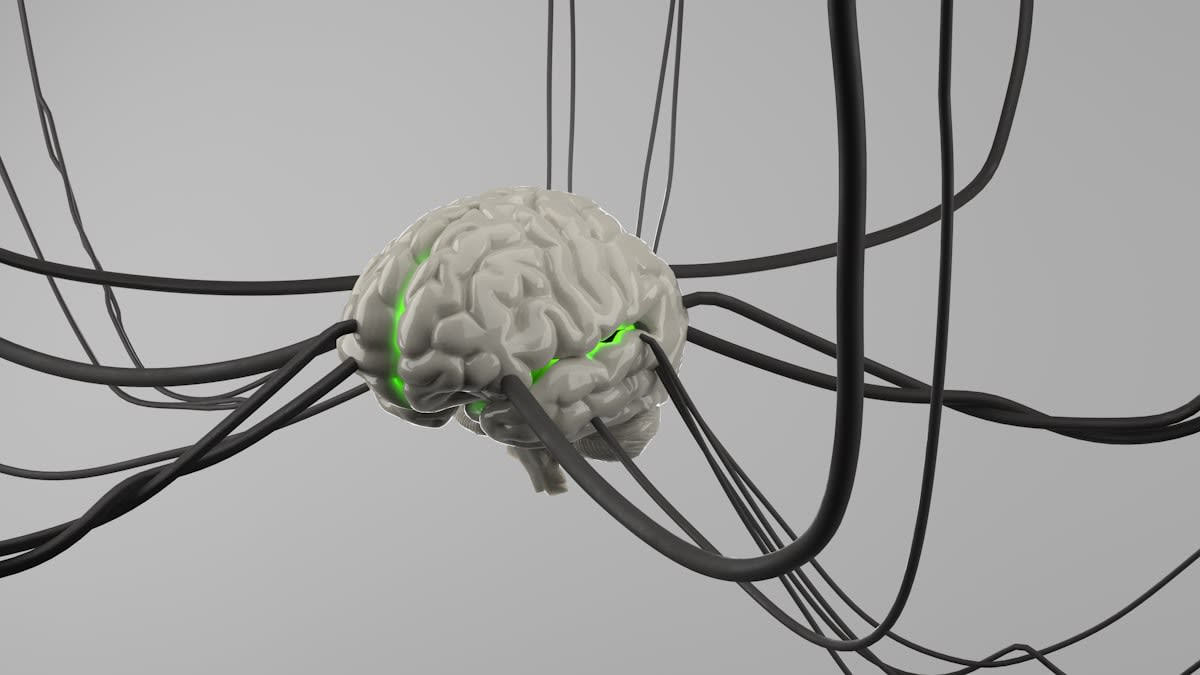
The phenomenon is formally recognized as the Google Effect. In a seminal study conducted by Columbia University, researchers discovered that participants were less likely to remember a piece of information if they believed it would be available to them online later (Source: Sparrow et al., 2011). The brain essentially flags the information as 'externally stored,' which prevents it from being encoded into long-term biological memory. This is not a failure of the mind, but an efficiency mechanism.
"The internet has become a transactive memory source. We are not just using tools; we are integrating them into our cognitive processes, treating the cloud as an extension of our own neocortex."— Betsy Sparrow, Professor of Psychology at Columbia University
This brings us to a critical juncture in human behavior. If we stop storing the building blocks of knowledge internally, do we lose the ability to think critically about that knowledge? This is the central debate currently polarizing the field of cognitive psychology. Some argue that without a deep internal library, we cannot perform the spontaneous synthesis required for true innovation. Others contend that we are simply evolving into 'curators' of information, where the skill lies in the ability to filter and connect rather than to recall.
This transition is playing out differently across the globe, reflecting diverse cultural relationships with technology.
In mobile-first economies across Southeast Asia and Sub-Saharan Africa, the leapfrog effect is evident. Entire generations have bypassed the 'analog storage' phase of education, moving straight into a digital-augmented cognitive model. Here, the ability to navigate complex digital ecosystems is not just a technical skill—it is a primary cognitive function. The reliance on digital tools is not a late-stage addiction but a foundational element of how these populations interact with knowledge and commerce.
| Cognitive Function | Analog Era (Internalized) | Digital Era (Distributed) |
|---|---|---|
| Information Storage | Rote memorization of facts | Indexing and retrieval paths |
| Mental Processing | Linear synthesis of stored data | Rapid cross-referencing of external nodes |
| Skill Valuation | Depth of recall | Speed and accuracy of curation |
| Cognitive Load | High (burden of retention) | Low (burden of filtering) |
I have spent years watching the tension between traditionalists and the new guard of cognitive scientists. The traditionalists cling to the mental muscle metaphor—the idea that if you don't exercise your memory, it atrophies. But the reality on the ground is different. The practitioners I debate with in Zurich or Singapore aren't worried about the loss of the 'what'; they are obsessed with the 'where' and the 'how'. They see the brain not as a failing hard drive, but as a sophisticated router. The real friction occurs in education, where curricula still reward the internal storage of facts while the actual economy rewards the ability to synthesize those facts in real-time.
The danger is not that we are forgetting, but that we are becoming fragile. When we outsource our memory to a single point of failure—a smartphone or a specific cloud service—we create a cognitive dependency. If the tool vanishes, the knowledge vanishes. This is the 'Digital Fragility' paradox: we have more access to information than any humans in history, yet we possess less of it internally. This creates a precarious state where our intelligence is contingent upon our connectivity.
However, this fragility is a price worth paying for the exponential increase in processing speed. The ability to cross-reference a thousand sources in seconds allows for a level of systemic analysis that was impossible for the analog mind. We are moving toward a symbiotic intelligence. The goal is no longer to be a walking encyclopedia, but to be a master conductor of an external information orchestra.
The endgame is a fundamental rewrite of human cognition. We are transitioning from a species that remembers to a species that knows how to find. This requires a new kind of literacy—one that emphasizes verification, source criticism, and the ability to synthesize fragmented data into a coherent whole.
Fact-Check & Accuracy Note
This article relies on the transactive memory framework established by Wegner (1985) and the 'Google Effect' findings from Sparrow et al. (2011). While the shift toward digital offloading is well-documented, the long-term impact on neuroplasticity remains a subject of ongoing debate among cognitive neurologists, with some arguing that the loss of internal storage may eventually limit the capacity for complex conceptual blending.
Editorial Perspective
Editorial Note: This piece adopts a contrarian perspective, viewing digital amnesia as an adaptation rather than a deficit. The analysis focuses on systemic cognitive shifts rather than individual behavioral changes.