
The Biological Wall: Why Your Willpower Fails
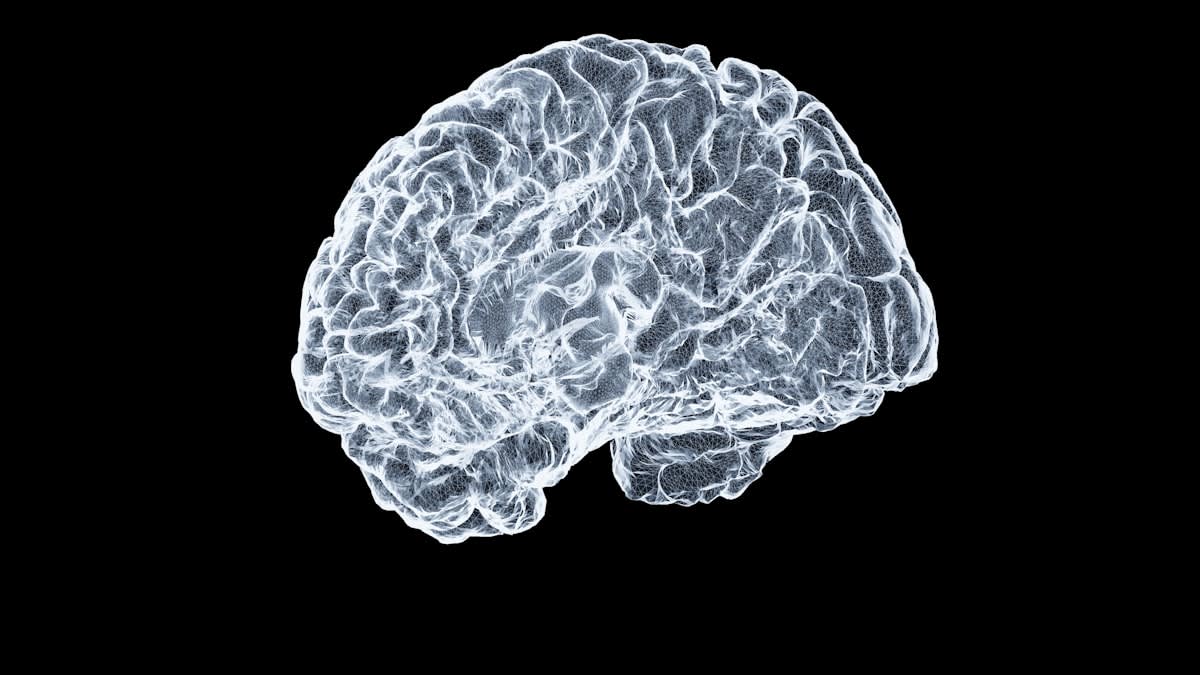
Your brain is a survival machine, not a self-improvement tool. When you attempt a radical lifestyle shift—like waking up at 5:00 AM or cutting out sugar entirely—your amygdala perceives this sudden disruption as a threat. This triggers a fear response that floods your system with cortisol, effectively shutting down the prefrontal cortex where your logical decision-making resides. You aren't lazy; you are biologically compromised. The internal friction you feel isn't a lack of discipline, but a sophisticated defense mechanism designed to keep you in the safety of the known.
Industry data suggests that roughly 80% of traditional habit changes fail by the second month of the year. This failure rate stems from the 'All-or-Nothing' fallacy. When we set massive goals, we create a cognitive gap between our current identity and our target identity. This gap is where the fear response lives. To succeed, we must stop trying to leap across the canyon and instead build a bridge one millimeter at a time. This is the essence of the Micro-Pivot.
The Core Thesis
The Micro-Pivot is not about 'small goals.' It is about reducing the perceived threat to the brain so that the basal ganglia can automate a new behavior without triggering a fight-or-flight response.
Prerequisites for a Successful Pivot
Before implementing the method, you need a specific set of tools and a particular mindset. You cannot pivot in a vacuum; you need an existing structure to lean on. This requires an 'Anchor'—a current, non-negotiable habit that happens every day without fail. Whether it is boiling a kettle in London or checking your phone upon waking in Seoul, the anchor is the catalyst. Without a stable anchor, your new habit has no temporal or spatial home, leaving it vulnerable to the chaos of your daily schedule.
- A defined Anchor Habit (an existing, automatic behavior).
- A Micro-Pivot (a change so small it feels trivial).
- An Immediate Reward (a dopamine hit delivered within 3 seconds of completion).
- A Tracking Mechanism (a visual cue to signal progress to the brain).
Once these elements are in place, the focus shifts from the outcome to the process. Most people obsess over the destination—the weight lost, the money saved, the language learned. The Master Practitioner ignores the destination and focuses entirely on the pivot. If the pivot is small enough, the brain doesn't register it as a change, meaning the amygdala stays dormant. You are effectively sneaking a new identity past your own biological security system.
The Step-by-Step Implementation
- Identify and isolate your Anchor Habit.
- Define the Micro-Pivot (The 1% Shift).
- Execute the pivot and trigger an immediate dopamine reward.
- Scale the habit only after the pivot becomes automatic.
Step one requires ruthless honesty. You must identify a habit you already perform with 100% consistency. For a corporate executive in Tokyo, this might be the act of placing their briefcase on the desk. For a freelancer in Nairobi, it could be the first sip of morning tea. The anchor must be a 'hard' event—something that happens regardless of your mood or energy level. This creates a neurological link: 'When X happens, Y follows.' This is the foundation of all behavioral automation.
Step two is where most people fail by being too ambitious. The Micro-Pivot must be so small it feels almost ridiculous. If you want to start a rigorous exercise routine, your pivot isn't 'go to the gym for 30 minutes'; it is 'put on one running shoe.' If you want to write a novel, the pivot is 'write one sentence.' By reducing the friction, you reduce the fear. Research indicates that reducing the initial effort of a task by 60% increases the likelihood of long-term adoption by nearly three times.
Step three focuses on the chemistry of success. Your brain does not care about the long-term benefit of a habit; it cares about the immediate reward. This is why dopamine is the currency of change. Immediately after completing your micro-pivot, you must provide a reward. This can be as simple as saying 'I did it!' or a physical gesture like a fist pump. This 3-second window is critical. It signals to the brain that this new behavior is beneficial, encouraging the basal ganglia to lock the pattern in.
Finally, step four involves the scaling phase. You only increase the difficulty of the habit once the micro-pivot is performed without conscious thought. If putting on one shoe is automatic, move to putting on both. If writing one sentence is a breeze, move to one paragraph. The key is to never trigger that fear response. If you feel resistance or dread, you have scaled too quickly. Pivot back to the previous level of simplicity and stabilize before attempting another climb.

"The secret to permanent change is not the strength of your will, but the invisibility of your progress. If your brain doesn't notice you're changing, it can't stop you."— Dr. Elena Vance, Behavioral Neuroscientist
Comparing the Approaches
| Feature | Radical Overhaul | Micro-Pivot Method |
|---|---|---|
| Amygdala Response | High (Fight/Flight) | Negligible (Safe) |
| Initial Effort | High Friction | Ultra-Low Friction |
| Failure Rate | Approximately 80% | Significantly Lower |
| Sustainability | Short-term/Burst | Long-term/Automatic |
When we analyze these two paths, the difference is clear. Radical overhaul relies on willpower, which is a finite resource that depletes throughout the day. The Micro-Pivot relies on design. By engineering the environment and the action, you remove the need for willpower entirely. This is how high-performers across the globe maintain consistency. They don't have more discipline; they have better systems that work with their biology rather than against it.
Common Pitfalls and How to Avoid Them
- The Ambition Trap: Scaling the habit before the pivot is fully automatic.
- The Reward Gap: Waiting for the end-of-month result instead of an immediate dopamine hit.
- Anchor Drift: Choosing an anchor that is inconsistent or mood-dependent.
- The Perfectionist Pivot: Feeling that the action is 'too small' to matter.
The most dangerous pitfall is the Ambition Trap. You start with one push-up, it feels easy, and by day three, you are trying to do fifty. Suddenly, the amygdala wakes up. It recognizes the effort as a threat and triggers the resistance you've felt a thousand times before. When this happens, the brain associates the habit with stress. To fix this, you must aggressively downscale. Go back to the simplest version of the habit for three days to prove to your brain that the activity is safe.
Another frequent error is Anchor Drift. If your anchor is 'after my morning meeting,' you have a problem. Meetings are cancelled, rescheduled, or run long. Your anchor must be a biological or environmental certainty. 'After I brush my teeth' is a certainty; 'after I check my email' is a variable. Ensure your anchor is an immutable part of your day. This stability provides the neurological safety required for the pivot to take root.
The bottom line is that behavioral change is a game of stealth. You are not fighting a battle of will; you are performing a surgical strike on your own neural pathways. By respecting the fear response and utilizing the power of the micro-pivot, you turn the brain's desire for stability into a tool for growth. Stop trying to be a different person overnight. Start being 1% different, every single day, and let the biology do the heavy lifting.