Genie 4: A new generation of world simulation
Source Entity
Google DeepMind News
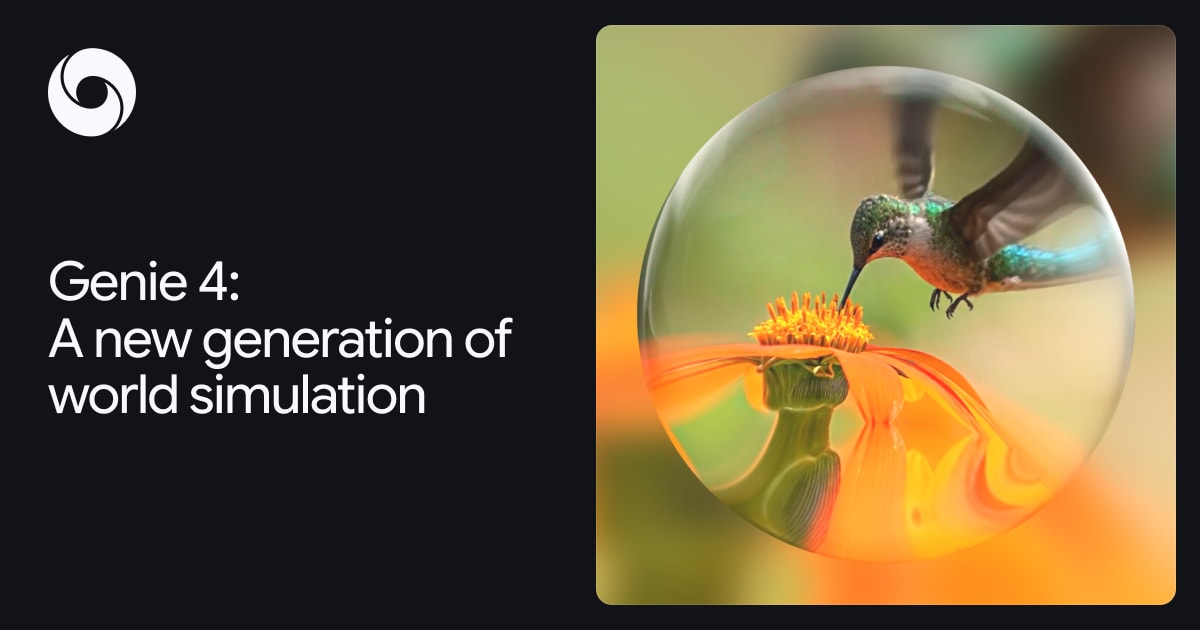
Genie 4 is a new, experimental world model designed to provide unprecedented realism in real-time simulations. By integrating photorealism and native audio, it serves as a powerful tool for rapid pre-visualization across creative and professional industries.
The Emergence of Genie 4: A New Era in World Simulation
The introduction of Genie 4 represents a significant evolution in the field of generative AI, moving beyond static image or text generation into the realm of dynamic, interactive world simulation. As a new generation of world model, it promises to bridge the gap between abstract conceptualization and high-fidelity, real-time visual output. By prioritizing unprecedented realism, the model seeks to provide a sandbox where users can interact with simulated environments in ways that were previously computationally prohibitive or technically impossible.
Experimental Foundations and Trusted Feedback
Currently positioned as an early, experimental milestone, the development of Genie 4 is being guided by a strategic feedback loop involving cohorts of trusted testers. By engaging professionals across diverse sectors—including journalism, education, gaming, and engineering—the developers are gaining critical insights into how interactive models function within real-world workflows. This collaborative approach is essential for identifying the current limitations of generative simulation while simultaneously mapping the trajectory for future scalability and utility.
Transforming Creative Direction and Pre-Visualization
One of the most immediate applications of Genie 4 lies within the creative industries, particularly in film and digital media. The model acts as a sophisticated "draft mode" for pre-visualization, allowing filmmakers to step directly into a live-simulated environment. By enabling users to run multiple takes in real-time and make iterative adjustments on the fly, Genie 4 drastically reduces the friction between initial creative vision and technical execution. This workflow shift could fundamentally alter how storyboards and scene compositions are developed.
The Convergence of Photorealism and Native Audio
The technological leap in Genie 4 is underscored by the integration of native audio and high-level photorealism. Unlike previous iterations that may have relied on disparate systems to generate visual and auditory components, Genie 4’s ability to synthesize these elements natively creates a more cohesive sensory experience. This level of immersion is vital for engineering and gaming applications, where the accuracy of the simulated environment directly impacts the quality of the end-product or the effectiveness of the training simulation.
Implications for Industry Workflows
Beyond entertainment, the broader implications for fields like engineering and education are profound. By allowing for real-time steering of simulated environments, Genie 4 provides a platform for rapid prototyping that can minimize costs and shorten development cycles. Whether it is testing structural designs in a virtual space or creating interactive educational scenarios, the model provides a versatile framework for complex problem-solving. As the model matures, it is likely to become an indispensable tool for professionals looking to stress-test ideas before committing to physical or permanent production.
Future Trends in Generative Simulation
Looking ahead, the development of Genie 4 suggests a future where interactive world models will become standard components of the creative and industrial tech stack. As computational efficiency improves and the model moves out of its experimental phase, we can expect deeper integration with existing software ecosystems. The shift toward real-time steering and high-fidelity output signals that the next frontier of AI is not just creating content, but creating entire interactive realities that respond dynamically to human intent.