Can we trust LLMs to judge whether a research idea is novel?
Source Entity
Hugging Face - Blog
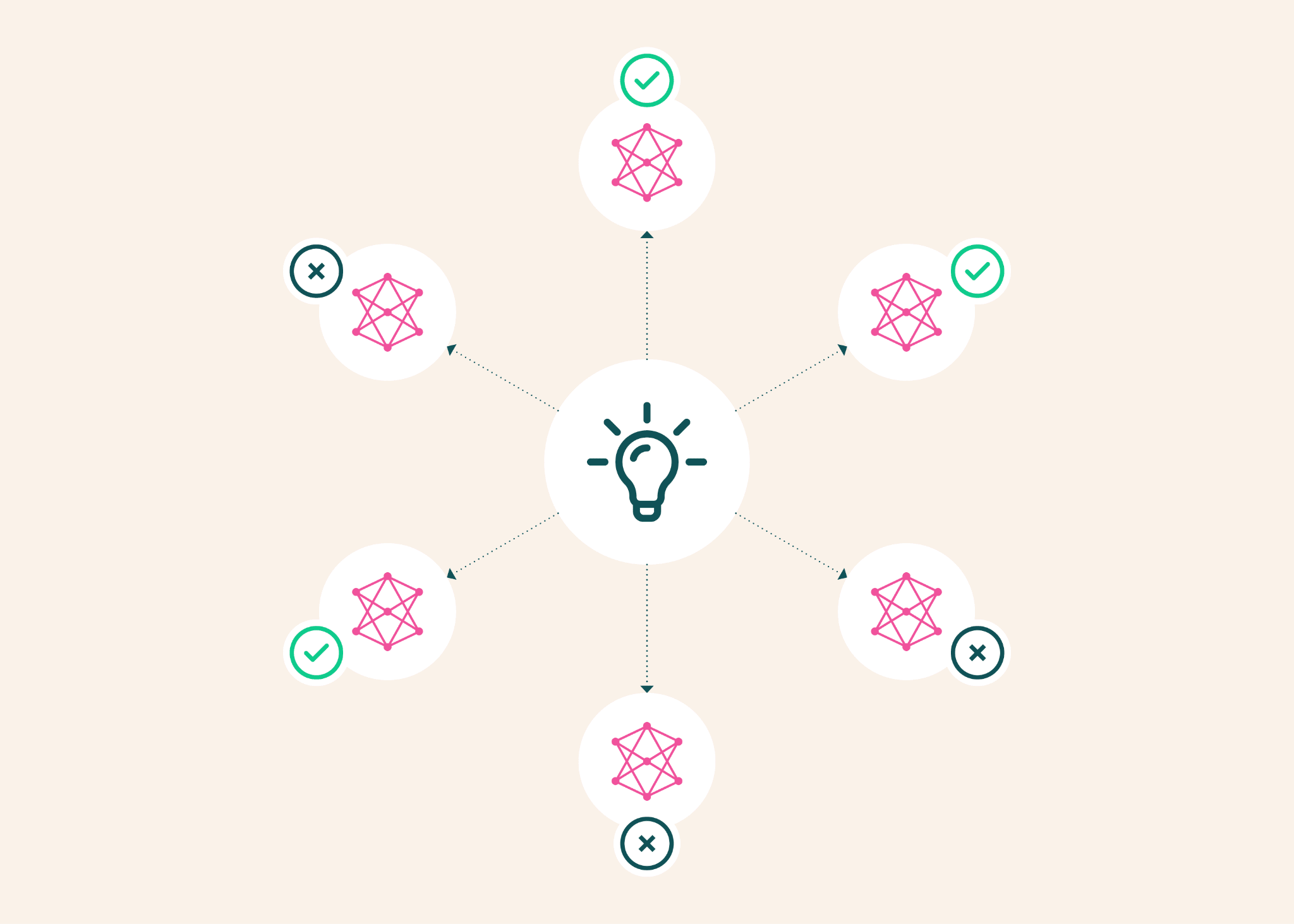
The Allen Institute for AI (Ai2) has launched 'Old Ideas, Novel Problems,' a study and benchmark evaluating how well LLMs can determine the novelty of scientific research. This initiative aims to integrate AI into the scientific discovery process, from hypothesis generation to literature synthesis.
Assessing the Role of AI in Scientific Innovation
The Allen Institute for AI (Ai2) has unveiled a critical new study titled Old Ideas, Novel Problems, which tackles a foundational challenge in modern academia: the ability of Large Language Models (LLMs) to accurately assess the novelty of scientific research proposals. As the volume of global scientific literature expands exponentially, identifying truly original ideas amidst a sea of existing work has become increasingly difficult for human peer reviewers. This study provides a rigorous framework for evaluating whether AI models can serve as reliable judges in this high-stakes environment.
The Mechanics of the New Benchmark
To move beyond anecdotal evidence of AI utility, the researchers have released a comprehensive package including the primary paper, a dedicated benchmark, raw data, and the underlying code. This transparency is vital for the scientific community, as it allows for independent verification of how these models perform when tasked with discerning 'novelty'—a subjective and nuanced attribute. By providing an automated pipeline, Ai2 empowers other researchers to build their own evaluation sets, effectively democratizing the tools needed to measure AI-driven research quality.
Integrating AI into the Scientific Lifecycle
This project is not an isolated experiment but part of a broader, long-term effort at Ai2 to automate and enhance scientific discovery. The institute has previously developed tools such as DataVoyager, which assists in structured data analysis, and AutoDiscovery, which focuses on hypothesis generation and testing. Furthermore, their 'Theorizer' project aims to synthesize vast bodies of literature into coherent scientific theories. When viewed alongside 'Asta,' these initiatives suggest a future where AI acts as a collaborative partner, assisting scientists in every phase of the research lifecycle.
Broader Implications for Academic Peer Review
The potential for LLMs to judge research novelty carries significant implications for the peer review process. Traditional peer review is often slow, prone to human bias, and increasingly overwhelmed by the sheer number of submissions. If LLMs can be trained or refined to accurately gauge novelty, they could serve as an essential screening layer, flagging truly innovative work while filtering out redundant research. However, this raises critical questions about algorithmic bias and the risk of 'homogenized' science if models are trained on narrow datasets.
Future Trends in AI-Assisted Discovery
Looking ahead, the integration of AI into scientific research appears inevitable. As models become more adept at cross-referencing new ideas against the entirety of existing human knowledge, the speed of discovery could accelerate dramatically. The benchmark released by Ai2 is a necessary first step in ensuring that this transition is grounded in empirical evidence rather than hyperbole. Future developments will likely focus on increasing the interpretability of these AI 'judgments,' ensuring that researchers understand why a model deems an idea novel or derivative.
Conclusion: A New Standard for Evaluation
Ultimately, Old Ideas, Novel Problems establishes a new benchmark for how we measure machine intelligence in specialized, high-stakes fields. By providing the tools to audit and improve AI performance in scientific novelty detection, Ai2 is helping to ensure that as we delegate more cognitive tasks to machines, the integrity and originality of scientific progress remain intact. This study serves as a call to action for the research community to rigorously test the tools that will define the next generation of scientific exploration.