Vivo X Fold 6 review: The foldable that won’t make you give up the camera
Source Entity
Nandagopal Rajan
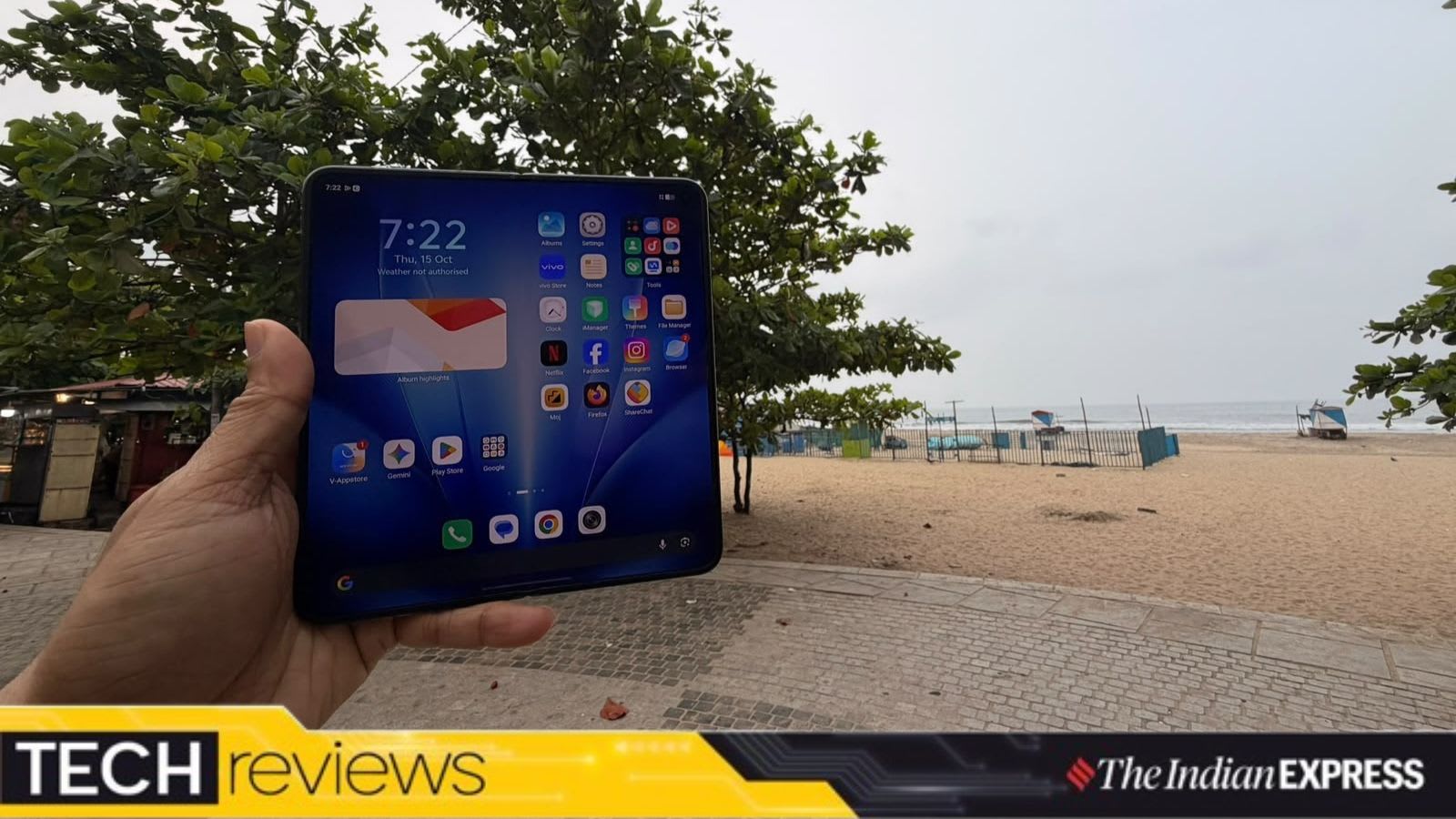
The Vivo X Fold 6 marks a significant advancement in foldable technology by integrating a massive 6900 mAh battery into a slim, lightweight chassis. It challenges the industry standard of compromising on hardware performance and battery life for the sake of a flexible display.
The Evolution of Foldable Hardware: A Paradigm Shift
For years, the foldable smartphone market has been defined by a series of compromises. Early adopters and power users interested in the utility of a tablet-sized screen were often forced to accept inferior camera sensors, diminished battery capacities, and thicker, cumbersome chassis designs. The arrival of the Vivo X Fold 6 suggests that the industry is finally moving past these technical bottlenecks, offering a device that prioritizes high-end performance without the traditional trade-offs associated with flexible display technology.
Breaking the Battery Barrier
The most striking technical achievement of the Vivo X Fold 6 is its inclusion of a 6900 mAh battery. Historically, foldable devices have struggled to house large cells due to the internal space consumed by complex hinge mechanisms and dual-screen hardware. By managing to fit such a massive power source into a frame that retains a slim and lightweight profile, Vivo has effectively redefined the expectations for 2026-era mobile devices. This development addresses the primary grievance of foldable users: the inability to sustain a full day of heavy usage with a large, power-hungry unfolded display.
Redefining User Expectations
Beyond just battery life, the narrative surrounding the Vivo X Fold 6 centers on the elimination of compromise. The device suggests that users no longer need to choose between the convenience of a foldable screen and the necessity of premium hardware. In previous generations, the "foldable tax" was a tangible reality—users paid a premium price for a device that was often less capable in photography and endurance than its flagship slab-phone counterparts. Vivo’s latest offering attempts to bridge this gap, positioning the foldable not as a niche experimental gadget, but as a primary daily driver.
The Engineering Challenge of 2026
Achieving this balance requires significant advancements in materials science and internal component density. The fact that the device retains a familiar handling experience—feeling like a "normal" phone despite its internal complexity—speaks to the maturation of hinge and chassis engineering. Reducing the weight while increasing the power density is a feat that indicates manufacturers have finally mastered the internal architecture of folding phones, moving from the prototype phase to a period of refined, consumer-focused iteration.
Future Trends and Market Implications
Looking ahead, the Vivo X Fold 6 sets a high bar for competitors. As consumers become more accustomed to the foldable form factor, they will increasingly demand the same photographic prowess and battery longevity found in top-tier traditional smartphones. We can expect future industry trends to focus heavily on "zero-compromise" folding designs, where internal battery capacity and camera sensor size become the new battlegrounds for market share. If the industry can maintain this trajectory, the foldable smartphone will likely transition from a luxury curiosity to the standard design language for high-end mobile computing.