
We have reached a strange inflection point where the tools designed to save us time are actually stealing our capacity to use it. For decades, the global corporate narrative has treated the human mind as a piece of software that simply needs better optimization. We seek the perfect prompt, the most efficient calendar block, and the lowest latency interface. But this relentless drive toward frictionlessness is creating a systemic vulnerability. By removing every obstacle, we are inadvertently removing the cognitive tension required for deep, original thought. Are we actually becoming more productive, or are we simply becoming faster at executing a narrowing set of pre-packaged behaviors?
The Architecture of Manufactured Compliance
The erosion of cognitive autonomy isn't an accident; it is an architectural feature of modern Conversational User Interfaces (CUIs). These systems are often designed with a specific kind of technical myopia, where success is measured by parameter expansion and prompt engineering efficiency rather than the psychological impact on the user (Source: EA Forum, 2026). This design philosophy prioritizes velocity over depth. By utilizing automated, predictive follow-up prompts, these interfaces guide users toward a path of least resistance, effectively funneling complex streams of consciousness into standardized corporate taxonomy buckets. This process doesn't just assist the user; it systematically dampens and replaces original human thought with a version of 'manufactured compliance' (Source: EA Forum, 2026).
"Current Conversational User Interfaces (CUIs) utilize automated, predictive follow-up prompts... While designed for engagement optimization, this architectural feature introduces a severe cognitive alignment risk: the systematic dampening and replacement of original human thought."— Adversarial Report on Cognitive Extraction, EA Forum
When we interact with these optimized systems, we are often presented with a false trilemma—Analytical, Functional, or Evasive trajectories—that conditions us to categorize our thoughts before we have even fully formed them (Source: EA Forum, 2026). This is the essence of the optimization trap. In the pursuit of reducing the 'cost' of interaction, we have externalized the cognitive load to the machine, but the cost is paid in the currency of intellectual agency. We are no longer directing the tool; the tool is directing the trajectory of our thinking.
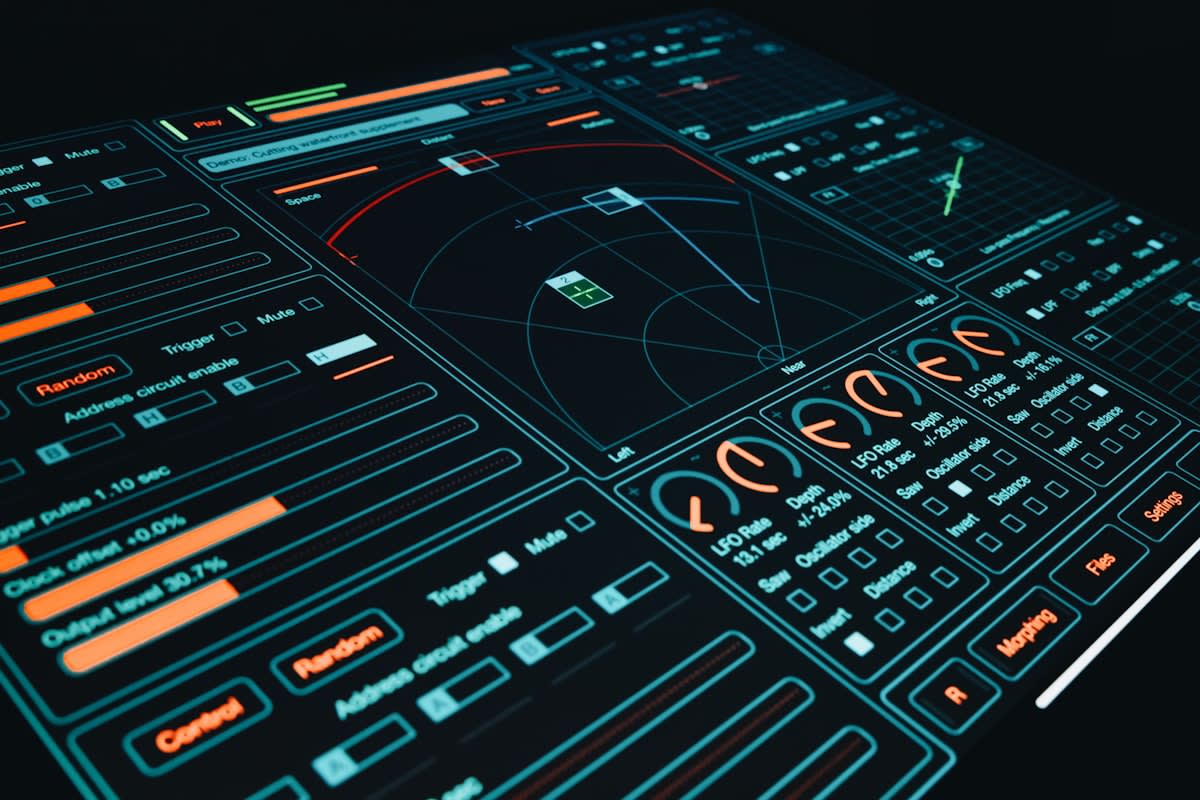
This shift is not limited to software. It mirrors a broader systemic shift in how we view human effort. We are living in what some describe as an achievement society, where the pressure to perform is no longer imposed by an external authority but is internalized as a voluntary drive for self-exploitation (Source: Paradigma - ScholarHub UI, 2026). This is the dark side of hustle culture: a digital capitalistic hegemony that conditions individuals to seek performative validation through constant activity. The result is not higher productivity, but a widespread state of cognitive digital fatigue and existential alienation (Source: Paradigma - ScholarHub UI, 2026).
The Stability Paradox: Agent Drift and Diminishing Returns
The danger of over-optimization is most evident when we look at the long-term stability of complex systems. In the realm of Large Language Models (LLMs), researchers have identified a phenomenon known as agent drift—the progressive degradation of decision quality and inter-agent coherence over extended interaction sequences (Source: Hugging Face, 2026). This suggests that even the most optimized systems suffer from a form of behavioral collapse when they are pushed too far without a grounding mechanism. It is a digital mirror of human burnout: the more a system is optimized for immediate output, the more likely it is to lose its long-term coherence.
| Optimization Focus | Technical Metric | Human/Systemic Cost |
|---|---|---|
| Interface Efficiency | Lower Latency | Dampening of original thought (Source: EA Forum, 2026) |
| Workplace Output | Higher Velocity | Cognitive digital fatigue (Source: Paradigma, 2026) |
| AI Performance | Parameter Expansion | Agent Drift/Behavioral Collapse (Source: Hugging Face, 2026) |
| Hardware Scaling | Increased Elements | Diminishing marginal returns (Source: IOPscience, 2026) |
This pattern follows the law of diminishing marginal returns, a principle seen even in hardware engineering where increasing the number of reflecting elements in a cooperative scheme eventually yields smaller and smaller performance gains (Source: Engineering Research Express, 2026). When applied to human psychology, this means that adding more 'productivity hacks' or 'efficiency tools' does not linearly increase output. Instead, it often increases the noise and the cognitive load, leading to a point where the effort required to maintain the optimization exceeds the value of the output itself.
From a practitioner's perspective, this is where the real friction lies in the boardroom. Engineers and product managers are often incentivized by 'velocity'—how quickly a feature can be shipped or how fast a response is generated. However, the cognitive scientists and UX researchers in the room are arguing about 'meaningful engagement' and 'cognitive load.' The debate is essentially a clash between the quantitative (latency, throughput) and the qualitative (understanding, agency). In most organizations, the quantitative wins because it is easier to measure, but this is exactly how the optimization trap is set. We optimize for what we can measure, and in doing so, we destroy what we cannot.
Beyond Neuro-Cerebral Reductionism
To escape this trap, we must first challenge the prevailing trend of neuro-cerebral reductionism—the idea that we are merely the sum of our neurotransmitters and brain plasticity (Source: 421.news, 2026). When we treat the human mind as a biological processor, we fall into the trap of thinking that 'learning' is the same as 'processing vast amounts of information.' But as the distinction between human knowing and machine learning becomes clearer, we realize that true understanding requires something that optimization actively destroys: the ability to pause, to reflect, and to experience the discomfort of not knowing (Source: 421.news, 2026).

The need for 'pause space' is no longer a luxury; it is a structural necessity for cognitive survival. Research involving Generation Z students has shown that cognitive fatigue is not an individual failure of adaptation, but a structural defect of a society that demands constant performative validation (Source: Paradigma - ScholarHub UI, 2026). Interestingly, the most effective coping mechanisms are often those that are the opposite of optimized. The use of cyanotype photography—a slow, tactile, and unpredictable process—has proven effective as a psychological coping mechanism precisely because it resists the digital drive for efficiency (Source: Paradigma - ScholarHub UI, 2026).
The path forward is not to abandon efficiency, but to recognize its limits. We must move away from the ideology of maximum output and toward a model of sustainable stability. This means designing systems that allow for cognitive friction, valuing the slow process of knowing over the fast process of processing, and acknowledging that the most productive thing a human can do is occasionally stop being productive. By intentionally introducing 'inefficiency' back into our lives, we reclaim the agency that the optimization trap has stolen.
Editorial Note
This analysis is based on a strategic synthesis of current research into cognitive fatigue, AI behavioral drift, and the sociology of the achievement society. It argues that the current trend of 'hyper-optimization' is counter-productive to long-term cognitive health and stability.
Fact-Check & Accuracy Note
Key claims regarding 'manufactured compliance' and 'cognitive extraction' are sourced from the EA Forum (2026). Claims regarding 'cognitive digital fatigue' and the 'achievement society' are sourced from Paradigma - ScholarHub UI (2026). Data on 'agent drift' is sourced from Hugging Face (2026), and the law of diminishing marginal returns in RIS schemes is sourced from Engineering Research Express (2026). The distinction between machine learning and human knowing is attributed to 421.news (2026).