
For decades, the global financial system relied on a simple, lagging logic: if you paid your bills on time in the past, you are likely to do so in the future. This retrospective approach, epitomized by the FICO score in the US or similar credit registries in Europe, treats the borrower as a static entity defined by a trail of receipts. But the industry is quietly pivoting. We are entering the era of behavioral underwriting, where the focus shifts from historical outcomes to predictive patterns. Why wait for a missed payment to signal risk when a change in digital behavior can predict it three months in advance?
This isn't just a software update; it is a fundamental ontological shift in risk management. Traditional scoring measures solvency; behavioral underwriting measures character and stability. By analyzing metadata—everything from how quickly you scroll through a loan agreement to the consistency of your utility payments—lenders are constructing a high-definition psychological profile of the borrower. This allows them to extend credit to the 'invisible' population, those without a formal credit history, while simultaneously tightening the screws on those whose digital habits signal instability.
The Architecture of Invisible Data
Behavioral underwriting feeds on alternative data. In emerging markets, this has become the primary engine of financial inclusion. In Kenya, the success of M-Pesa demonstrated that mobile money velocity and airtime top-up patterns are more accurate predictors of creditworthiness than a formal bank statement (Source: World Bank Global Findex, 2021). Lenders now look at 'digital exhaust'—the trail of data left by smartphone usage. Do you charge your phone regularly? Do you use a variety of apps, or only a few? These seemingly trivial data points correlate with conscientiousness and stability, traits that traditional credit bureaus completely ignore.
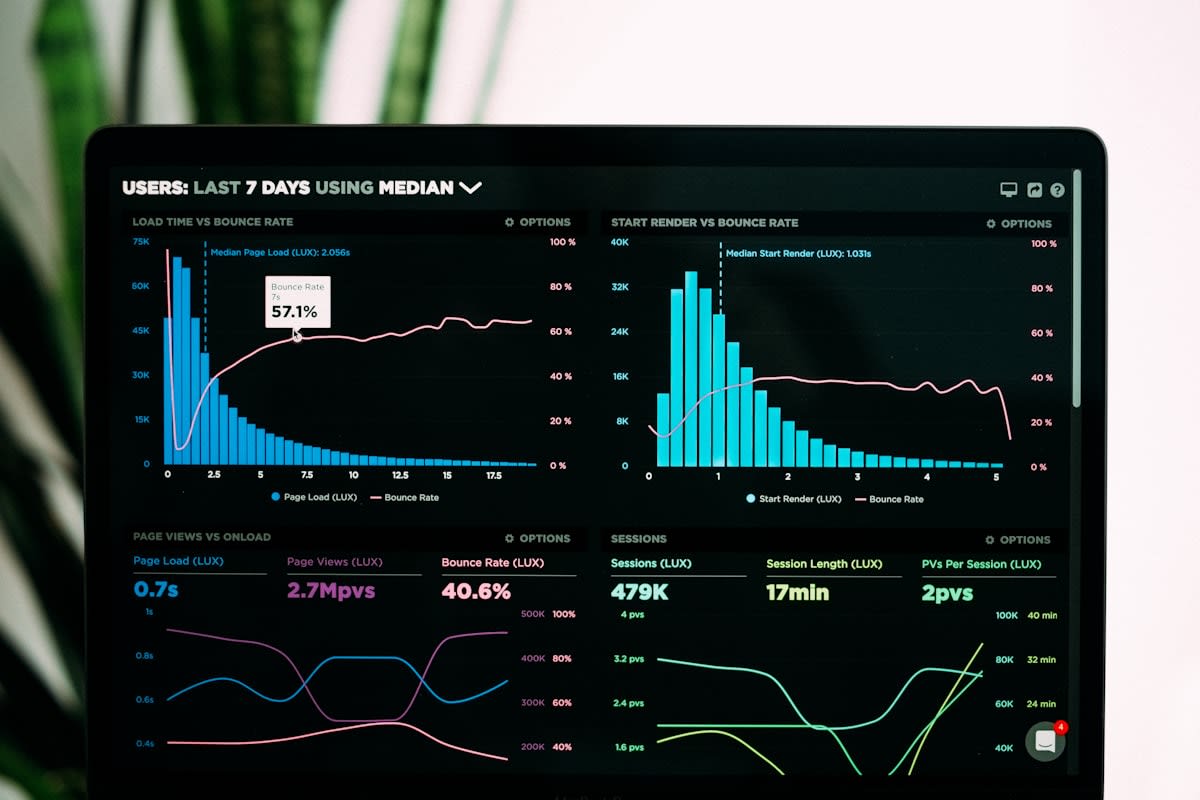
The sophistication of these models lies in their ability to detect 'micro-behaviors.' For example, a borrower who suddenly starts accessing their banking app at 3 AM or begins spending more time on gambling sites may be flagged for an increased risk of default long before they actually miss a payment. This predictive capability transforms the lender from a passive observer of history into an active monitor of current psychological states. It is a move from descriptive analytics to prescriptive risk management.
"The transition to behavioral data is not merely about expanding the pool of borrowers; it is about reducing the cost of uncertainty by capturing the human element of risk that a balance sheet cannot see."— OECD Report on Digital Financial Inclusion, 2023
This shift creates a fascinating paradox for the consumer. While it opens doors for the unbanked in regions like Southeast Asia and Latin America, it introduces a new form of fragility. When your creditworthiness is tied to your behavior, the boundary between your private life and your financial life vanishes. A sudden change in social circles or a shift in app usage patterns could, in theory, trigger a risk alert in a black-box algorithm, leading to higher interest rates or reduced credit limits without the borrower ever knowing why.
Is this a more equitable system or simply a more invasive one? The industry argues that it is more equitable because it rewards positive behavior rather than just existing wealth. However, the lack of transparency in these models remains a systemic vulnerability.
The Practitioner's Friction: Accuracy vs. Explainability
On the ground, the tension between data scientists and compliance officers is palpable. I have sat in rooms where the debate centers on 'feature importance.' The data scientist can prove that a specific behavioral marker—say, the frequency of app updates—increases the model's Gini coefficient (a measure of predictive power). But the compliance officer asks, 'How do we explain to a regulator why a customer was denied a loan because they don't update their apps?' This is the 'Black Box' problem of behavioral underwriting.
Practitioners are currently grappling with 'model drift.' Behavioral patterns change. A behavior that signaled risk in 2019 might signal resilience in 2024. The traditional credit score was slow, but it was stable. Behavioral models are dynamic, requiring constant retraining and a level of oversight that most legacy financial institutions are not equipped to handle. The internal struggle is no longer about finding more data, but about knowing which data is actually causal and which is merely coincidental.
| Dimension | Traditional Credit Scoring | Behavioral Underwriting |
|---|---|---|
| Primary Data Source | Payment History, Debt Levels | Digital Footprints, Psychometrics |
| Temporal Focus | Lagging (What happened?) | Leading (What will happen?) |
| Inclusion Reach | Limited to banked populations | Extends to 'invisible' borrowers |
| Stability | High (Slow to change) | Low (Dynamic/Volatile) |
| Explainability | High (Clear reason for score) | Low (Algorithmic complexity) |
The industry is moving toward a hybrid model to mitigate these risks. By layering behavioral data on top of traditional scores, lenders can create a 'confidence interval' around a borrower. If the traditional score is high but the behavioral signals are plummeting, the lender can proactively offer a restructuring plan before the default occurs. This turns credit management from a punitive process into a preventive one.

Global Divergence and the New Risk Paradigm
The adoption of these tools is not uniform. In China, the integration of social behavior and financial credit reached an extreme early on, creating a systemic loop where social standing influenced financial access. In contrast, the European Union's GDPR framework has forced a more cautious approach, emphasizing the 'right to explanation' (Source: EU General Data Protection Regulation, 2018). This creates a fragmented global landscape where a borrower's 'behavioral value' varies depending on the jurisdiction's privacy laws.
However, the economic incentive for behavioral underwriting is too strong for most regions to resist. The ability to price risk more accurately allows for thinner margins and higher volumes. In Brazil, FinTechs are leveraging open banking data to analyze cash-flow patterns in real-time, bypassing the need for traditional guarantees (Source: Central Bank of Brazil Open Finance Report, 2022). This is not just about efficiency; it is about capturing the market share of the under-served.
As we look forward, the 'Predictive Trap' refers to the risk of creating a self-fulfilling prophecy. If an algorithm decides a certain behavioral pattern is 'risky' and charges that person a higher interest rate, the increased cost of borrowing makes them more likely to default. The behavior didn't cause the risk; the underwriting created it. Breaking this loop requires a shift toward 'resilience scoring'—identifying behaviors that suggest a borrower can recover from a shock, rather than just predicting the shock itself.
Fact-Check & Accuracy Note
Key claims regarding M-Pesa and emerging market trends are sourced from the World Bank Global Findex (2021). Regulatory context regarding the 'right to explanation' is based on the EU GDPR (2018). Data on Brazilian open banking is attributed to the Central Bank of Brazil (2022). The debate regarding 'model drift' and 'feature importance' reflects current industry discourse among risk managers and data scientists in the FinTech sector.