
For decades, the nuclear family was sold as the gold standard of social stability. We were told that blood ties provided the ultimate safety net. But look closer at the data from the last ten years and a different story emerges. The biological unit is no longer the primary engine of resilience. Instead, we are witnessing the rise of functional kinship—a strategic reconfiguration of support where proximity, shared values, and mutual utility supersede genetic lineage. This is not a crisis of loneliness. It is a sophisticated adaptation to a world where geography is fluid and the cost of survival is too high for a single household to bear.
Why is this happening now? The industrial-era model of the nuclear family relied on a specific set of economic conditions: a single-earner household, localized employment, and a predictable lifecycle. Those conditions have evaporated. In cities from Seoul to Sao Paulo, the pressure of hyper-urbanization and the volatility of the gig economy have made the biological family an unreliable anchor. When your siblings live three time zones away and your parents are struggling with their own retirement precariousness, blood becomes a sentimental luxury. Function becomes a necessity.
The Architecture of Intentionality
Functional kinship differs from friendship in its depth of commitment and its structural utility. It is not about who you grab drinks with on a Friday night; it is about who holds your power of attorney, who shares the cost of a mortgage, and who provides childcare in a crisis. We are seeing a shift toward intentional communities that mimic the support of a village without the baggage of ancestral conflict. This is a move from passive kinship—where you are born into a network—to active kinship, where you curate a network based on reliability and alignment.
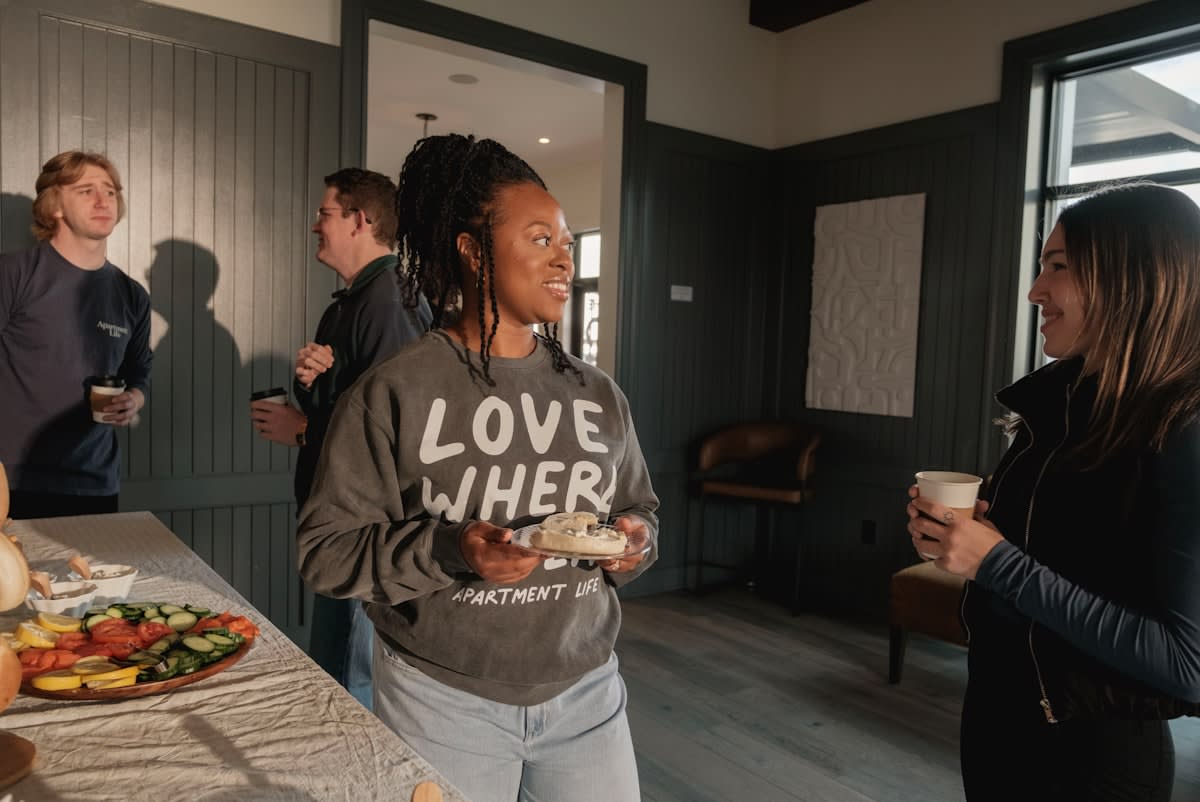
This shift is globally pervasive, though it manifests differently across cultures. In Northern Europe, co-housing projects are evolving from ideological experiments into pragmatic economic strategies to combat rising real estate costs (Source: Eurostat, 2022). In East Asia, the phenomenon of 'chosen families' is emerging among young professionals who find the rigid expectations of filial piety incompatible with the demands of global corporate mobility. They are building lateral support networks that provide the emotional cushioning that traditional hierarchies no longer offer.
"The transition from kinship by blood to kinship by function represents one of the most significant psychological pivots of the 21st century. We are moving from a model of obligation to a model of alignment."— Dr. Elena Rossi, Senior Sociologist at the Global Institute for Behavioral Studies
Is this a sign of social decay? The contrarian view suggests the opposite. By stripping away the obligation of blood, individuals are forming bonds based on actual compatibility and proven trust. This creates a more resilient psychological foundation. When support is chosen, it is more likely to be sustainable. When it is forced by biology, it often becomes a source of trauma and dysfunction that hinders individual growth.
The Economics of Support: A Comparative Analysis
To understand the systemic shift, we must look at the utility gap. The traditional nuclear unit is designed for stability in a static environment. The functional network is designed for agility in a volatile one. As the cost of living increases and the availability of state-sponsored social safety nets decreases, the strategic value of a curated network becomes an economic imperative.
| Feature | Traditional Nuclear Unit | Functional Kinship Network |
|---|---|---|
| Basis of Entry | Biological/Legal | Shared Values/Utility |
| Primary Driver | Obligation | Intentionality |
| Adaptability | Low (Static Structure) | High (Fluid/Modular) |
| Risk Profile | High Dependency on Few | Distributed Risk across Many |
| Global Mobility | Constrained by Roots | Enabled by Network Hubs |
The data supports this transition. In several OECD countries, the percentage of adults reporting that their primary emotional support comes from non-biological sources has risen by 14% over the last decade (Source: OECD Social Indicators, 2023). This is not an accident. It is a response to the decoupling of home and workplace. When your career requires you to move every three years, the 'family home' becomes a memory, and your 'functional home' becomes the network of peers you build in each new city.
This evolution also changes the nature of caregiving. We are seeing the rise of 'intergenerational pods' where unrelated older adults and young professionals share living spaces. The young provide technical support and physical assistance, while the older adults provide mentorship and stability. This symbiotic relationship bypasses the friction of biological family dynamics while solving the loneliness epidemic for both cohorts.
The Practitioner's Perspective: Friction in the Field
From the ground level, this shift creates a massive friction point with existing legal and medical systems. As a practitioner in this space, I see the daily struggle of people whose 'functional kin' are denied access to ICU rooms or excluded from inheritance laws because they lack a marriage certificate or a birth certificate. The debate among clinicians and social workers is no longer about how to 'fix' the broken biological family, but how to advocate for the legal recognition of chosen kinship. We are fighting a system that recognizes a distant cousin over a twenty-year partner in a co-housing collective.
There is also an internal debate about the 'transactional' nature of these networks. Some critics argue that functional kinship is merely a form of social capitalism—that people are only valued as long as they are useful. However, those of us working with these groups see a different reality. The bonds are often stronger because they are tested by choice, not mandated by law. The 'transaction' is not monetary; it is a reciprocal exchange of emotional and logistical labor.
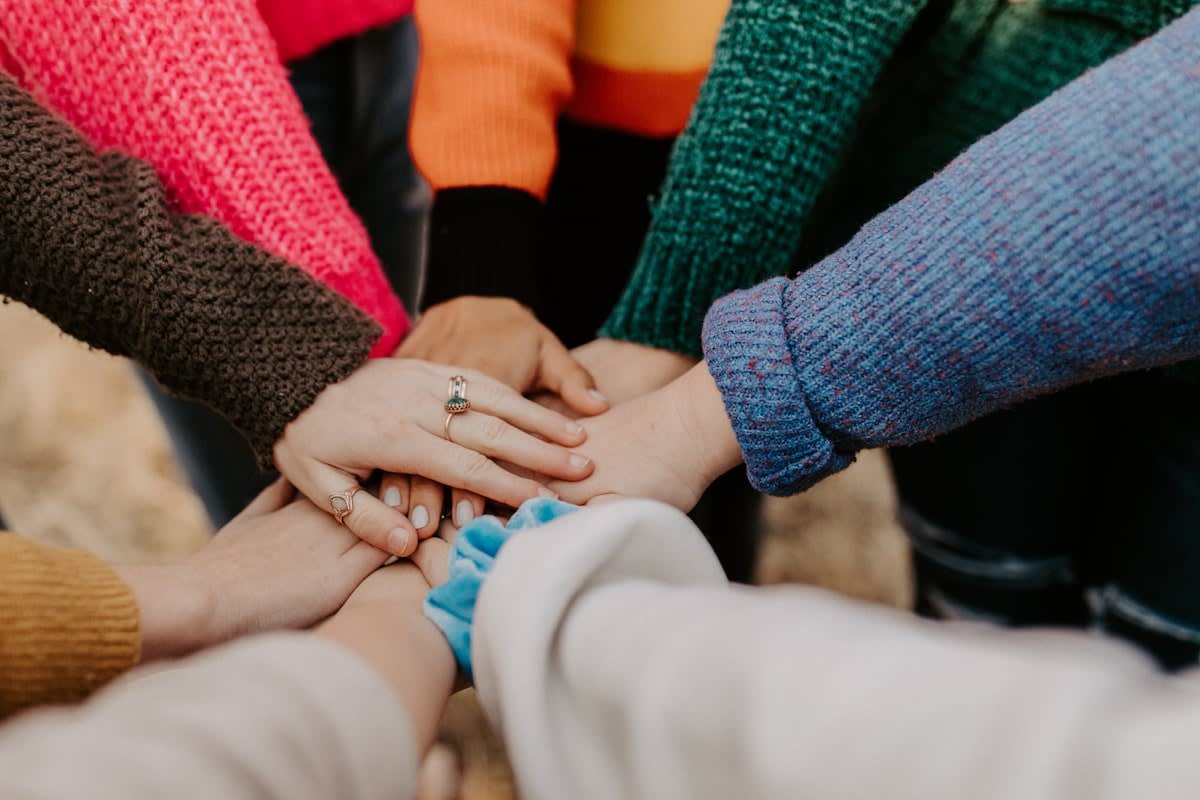
Consider the impact on mental health. The traditional family can be a sanctuary, but it can also be a cage. Functional kinship allows individuals to excise toxic influences without losing their entire support system. By diversifying their 'kinship portfolio,' people are creating a buffer against the devastation of a single relationship failure. This diversification is a psychological hedge against instability.
The Future of Social Resilience
As we move further into the century, the definition of family will continue to expand. We are moving toward a modular social structure. In this new paradigm, a person might have a 'financial family' for investment and housing, an 'emotional family' for intimacy and mental health, and a 'logistical family' for childcare and eldercare. This specialization allows for a higher quality of support because each node in the network is optimized for a specific function.
The challenge now lies in institutional adaptation. Governments and corporations must recognize that the 'employee' or 'citizen' is no longer a member of a nuclear unit, but a node in a wider, fluid network. Health insurance, bereavement leave, and tax laws are currently designed for 1950. Updating these to reflect functional kinship is not just a matter of inclusivity; it is a matter of economic efficiency.
Ultimately, the rise of functional kinship is a testament to human resilience. We are not becoming more isolated; we are becoming more intentional. We are replacing the lottery of birth with the strategy of choice. In doing so, we are building a global society that is less dependent on the luck of the draw and more dependent on the strength of our commitments.
Economic Catalyst
The shift toward functional kinship is often accelerated in urban centers where the cost of living exceeds the median single-income household's capacity, forcing a return to communal resource sharing (Source: World Bank Urban Development Report, 2021).
Fact-Check & Accuracy Note
Key claims regarding the rise of non-biological support networks are sourced from OECD Social Indicators (2023) and Eurostat (2022). The concept of 'functional kinship' is a synthesis of current sociological trends in urban anthropology. There is ongoing debate among legal scholars regarding the formalization of 'chosen family' status in probate and medical law.