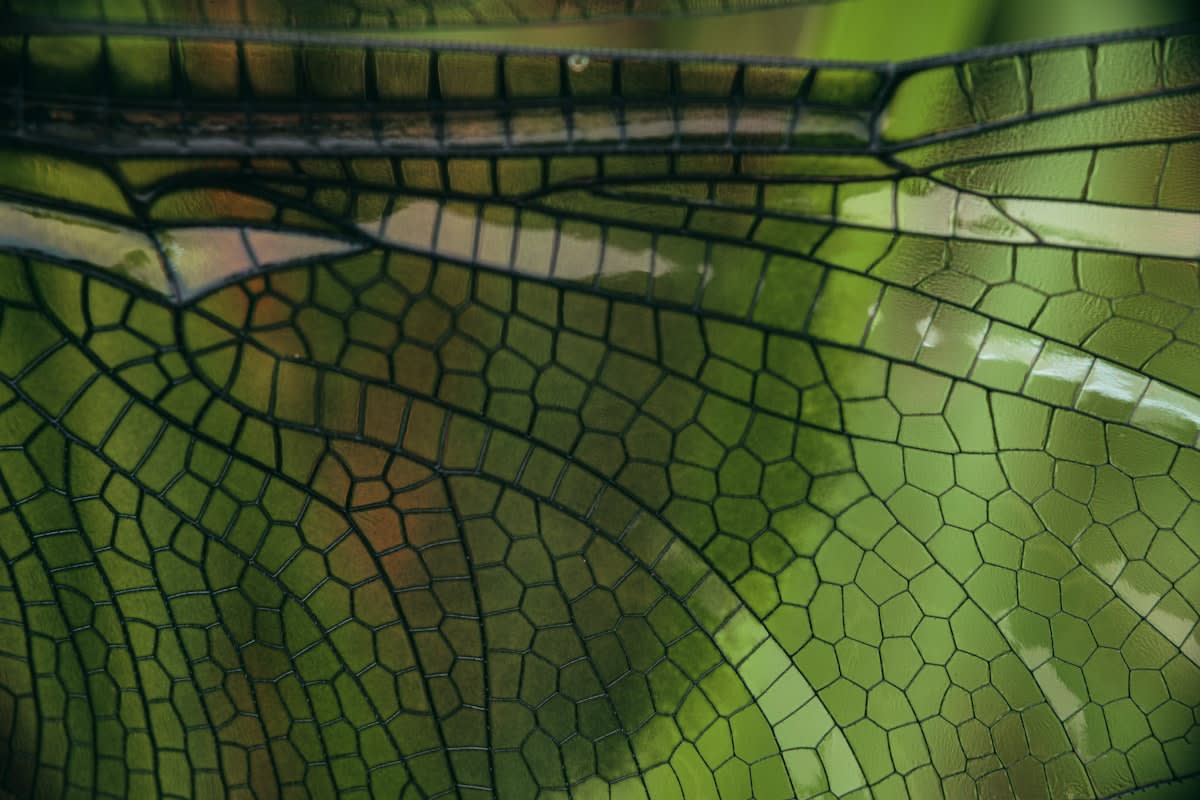
Why are there no ants the size of elephants? It is a question that feels like a child's curiosity but hides a brutal mathematical reality. The universe does not care about our desire for giant insects or planet-sized brains. It cares about the Square-Cube Law. This geometric principle dictates that as an object grows in size, its volume grows far faster than its surface area. If you double the height of an animal, you quadruple its surface area but octuple its volume. The math is relentless.
This discrepancy creates a systemic crisis for any organism attempting to scale. Volume represents mass and the energy required to sustain it, while surface area represents the means of intake and heat dissipation. When mass outpaces the ability to support it or feed it, the organism collapses under its own weight or starves in the midst of plenty. Biology does not hit a wall; it hits a mathematical ceiling that forces a complete architectural pivot.
The Oxygen Wall and the Arthropod Limit
Insects operate on a diffusion-based respiratory system. They do not possess lungs; instead, they rely on tracheae—tiny tubes that pipe oxygen directly to tissues. This system is incredibly efficient at small scales, allowing for the high-energy bursts seen in a dragonfly over a pond in Southeast Asia or a beetle in the Amazon. However, diffusion is a slow process. It only works over microscopic distances.
As an insect grows, the volume of its tissues increases cubically, but the capacity of those tracheal tubes to deliver oxygen only increases quadratically. Eventually, the interior of the animal becomes an oxygen desert. The creature would need to spend nearly its entire body volume on respiratory tubes just to keep its organs alive. This is why we see a hard cap on arthropod size in our current atmospheric oxygen levels.
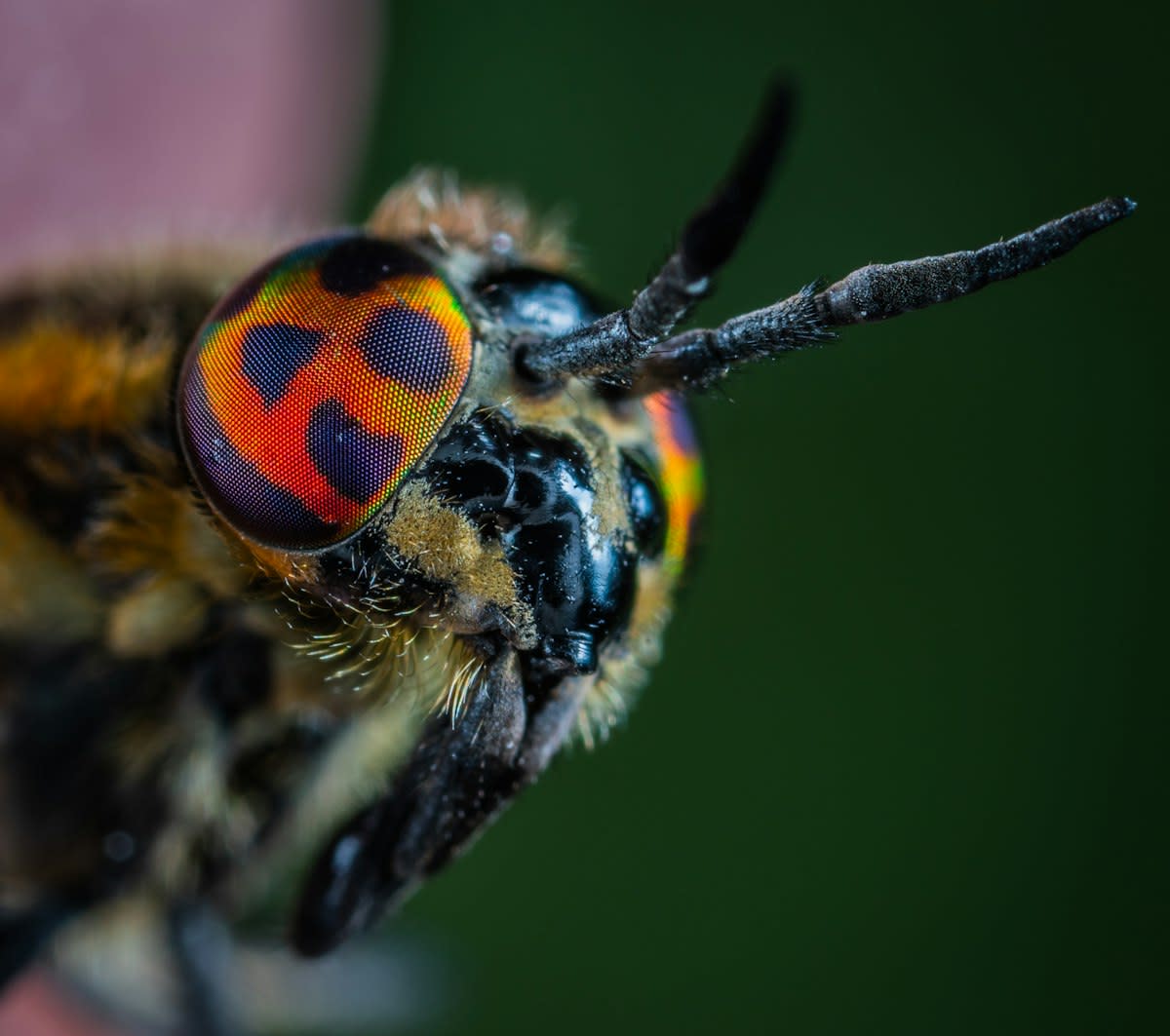
Does this mean size is a liability? Not necessarily. It means the strategy must change. The transition from exoskeletons to endoskeletons was the ultimate scaling hack. By moving the support structure to the interior, vertebrates decoupled their protection from their growth limits. A bone can support significantly more weight per unit of mass than a chitinous shell, allowing mammals to push the boundaries of terrestrial mass.
The Skeletal Pivot
The transition from external to internal support wasn't just a change in material; it was a shift in the fundamental physics of load-bearing, enabling the rise of the megafauna.
Consider the Blue Whale in the Southern Ocean. It bypasses the gravity tax by existing in a buoyant medium. Water supports the mass that would crush a terrestrial animal of the same scale. Yet, even here, the ceiling exists. The whale must manage a massive thermal load; too much size and it would overheat from its own metabolic processes. Scaling is always a game of trade-offs.
The Metabolic Tax of Intelligence
Intelligence is the most expensive luxury in biology. The human brain represents roughly 2% of body mass but consumes approximately 20% of the body's total energy. This is a staggering inefficiency. As we look at the scaling of intelligence, we find a different kind of ceiling: the metabolic limit. To build a brain twice as large, you cannot simply double the calories; you must fundamentally rewrite the energy acquisition strategy of the species.
Beyond energy, there is the problem of signal latency. Neural impulses travel at finite speeds. In a brain the size of a city, a signal from the visual cortex to the motor center would take seconds, not milliseconds. The organism would be unable to react to its environment in real-time. Intelligence, therefore, is constrained not just by how many neurons you can cram into a skull, but by the distance those neurons must communicate.
"The ceiling of intelligence is not a lack of imagination in evolution, but a hard limit imposed by the speed of electricity and the cost of glucose."— Strategic Analysis of Biological Scaling
We see this play out in the divergent paths of cephalopods and primates. The octopus optimizes for decentralized intelligence, distributing neurons throughout its arms. This reduces latency and avoids the metabolic bottleneck of a single, massive central processor. It is a distributed computing model applied to biology, bypassing the scaling ceiling through architectural fragmentation.
| Organism Class | Primary Scaling Constraint | Architectural Solution | Estimated Ceiling |
|---|---|---|---|
| Arthropods | Oxygen Diffusion | Tracheal System | ~20-30 cm |
| Terrestrial Mammals | Structural Load/Gravity | Endoskeleton | ~150 Tons |
| Marine Mammals | Thermal Regulation | Blubber/Buoyancy | ~190 Tons |
| Higher Primates | Metabolic Energy Cost | High-Calorie Diet/Cooking | ~3 kg (Brain) |
This brings us to a contrarian realization: the scaling ceiling is actually an engine for innovation. If insects could grow to the size of cows, they would never have developed the complex social structures or the extreme efficiency of the hive. The limitation forces the organism to find a different way to dominate its niche. Resilience is found in the optimization of the small, not the expansion of the large.
We often view the 'maximum size' as a failure to achieve greatness. In reality, the most successful organisms on Earth—bacteria, insects, and small mammals—have thrived by staying well below the ceiling. They avoid the precariousness of the giant. A blue whale is a marvel, but a single systemic shift in ocean temperature can threaten the entire species. A colony of ants can survive a planetary cataclysm.
The systemic shift we are seeing now is the transition from biological scaling to synthetic scaling. We are no longer bound by the Square-Cube Law when we build intelligence in silicon. A GPU cluster does not need to breathe, and its 'neurons' are connected by fiber optics that dwarf the speed of biological axons. We are effectively building the first 'organisms' that can ignore the biological ceiling entirely.
However, even synthetic intelligence hits a ceiling: heat. The thermal bottleneck that limits the size of a whale now limits the size of a data center in Northern Europe or the deserts of Arizona. We have swapped the oxygen wall for the cooling wall. The physics remain the same; only the medium has changed.
Is there a way around this? Nature suggests that the answer is modularity. Instead of one giant entity, the most resilient systems are networks of smaller, specialized units. The mycelial networks in the forests of the Pacific Northwest demonstrate this perfectly. They scale not by growing a single massive organism, but by expanding a web of interconnected nodes.
Ultimately, the scaling ceiling is a reminder that efficiency always beats raw size. The universe rewards those who can do more with less. Whether it is the neural density of a crow or the structural efficiency of a bird's bone, the goal is never to be the biggest, but to be the most optimized for the environment. The ceiling is not a cage; it is a blueprint.