Gaussian Splats part 3: There's always a bigger scene
Source Entity
Hacker News
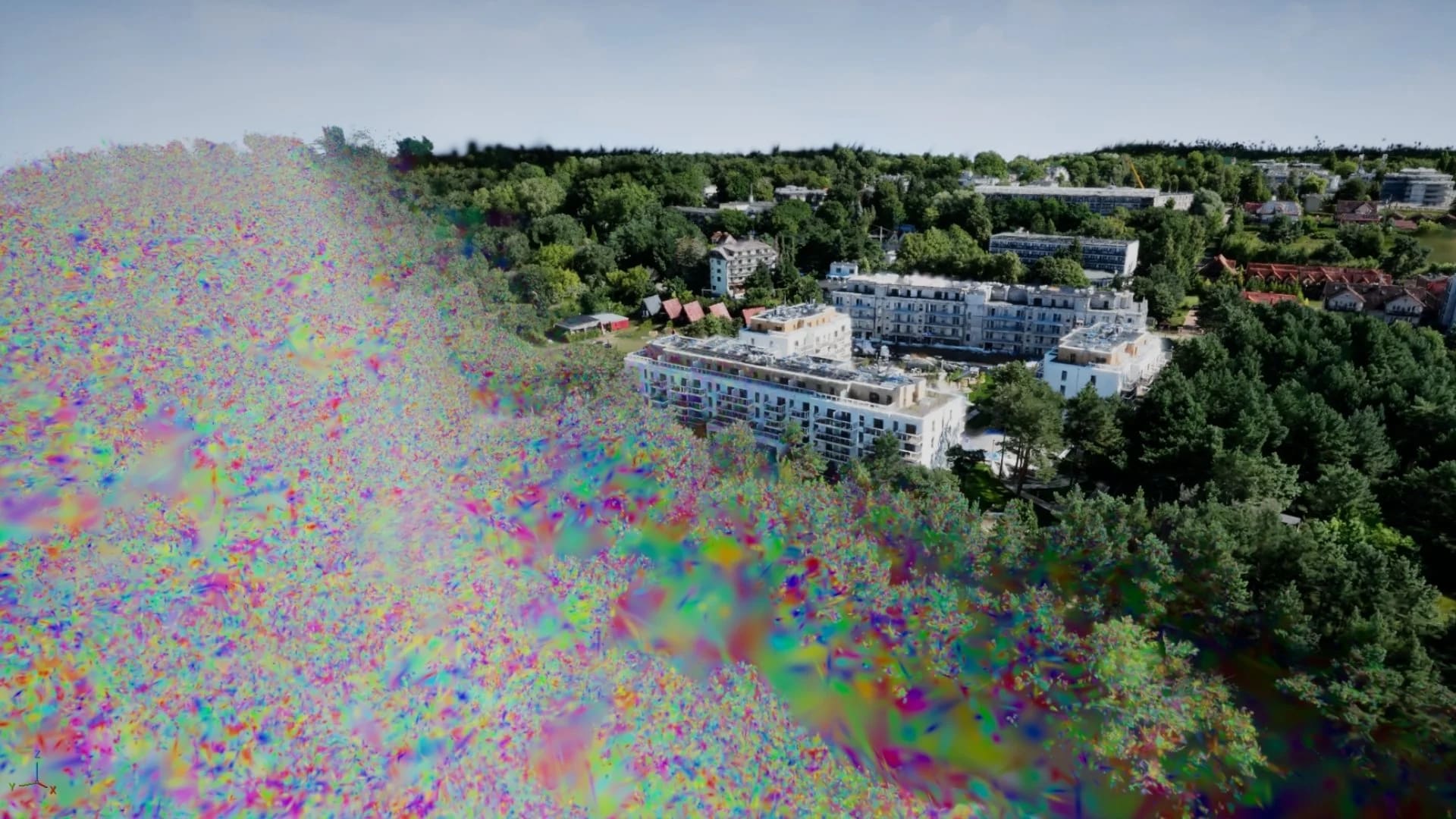
The development of Gaussian Splatting rendering pipelines is evolving toward efficient Level-of-Detail (LOD) systems. Developers are overcoming GPU memory bottlenecks to handle increasingly larger and more complex 3D scenes.
The Evolution of Gaussian Splatting: Managing Scale
The recent breakthroughs in Gaussian Splatting have transitioned from simple rendering techniques to sophisticated pipelines capable of managing vast, complex 3D environments. At the heart of this evolution is the transition toward dynamic, GPU-driven Level-of-Detail (LOD) systems. By allowing the GPU to decide the number of splats drawn per frame at the last possible moment, developers have successfully optimized performance, creating a more responsive and fluid rendering experience.
The Accidental Path to LOD Systems
What began as an attempt to refine rendering performance inadvertently birthed a robust LOD framework. The shift to variable splat counts per frame was not an initial design goal but rather a functional necessity that emerged from the pipeline's growth. This development demonstrates how iterative engineering in computer graphics often leads to architectural improvements that surpass the original scope, providing a more efficient way to handle scene density without sacrificing visual fidelity.
Overcoming the Memory Bottleneck
Despite the success in drawing performance, the industry faces a persistent 'wall' regarding GPU memory capacity. While the pipeline now efficiently handles how many splats are drawn, the challenge remains in how many splats can be stored in GPU memory at any given time. Currently, every splat in a scene must reside in VRAM, which works effectively for smaller environments but becomes a significant limitation as scenes scale toward hyper-realistic, massive-scale digital twins.
The Hubris of Scaling
Engineering teams often experience a cycle of 'hubris' when initial caps—such as instance limits—are lifted, only to be met with immediate, larger constraints. This cycle is characteristic of high-performance graphics development, where solving the bottleneck of processing power often reveals a secondary, equally challenging bottleneck in memory architecture. The current limitation is not just about drawing speed, but about the physical capacity of hardware to hold complex scene data.
Future Trends in Scene Management
Looking forward, the next phase of Gaussian Splatting development will likely focus on intelligent memory paging and out-of-core rendering. To move beyond current capacity constraints, developers must find ways to stream splat data into memory dynamically, similar to how modern game engines handle textures and geometry. As this technology matures, we can expect to see Gaussian Splats become a standard for real-time, high-fidelity 3D visualization, provided the industry can solve the critical issue of GPU memory overhead.