Apple responds to user reports of broken iPhone Duo screens on new foldable phone
Source Entity
US Top News and Analysis
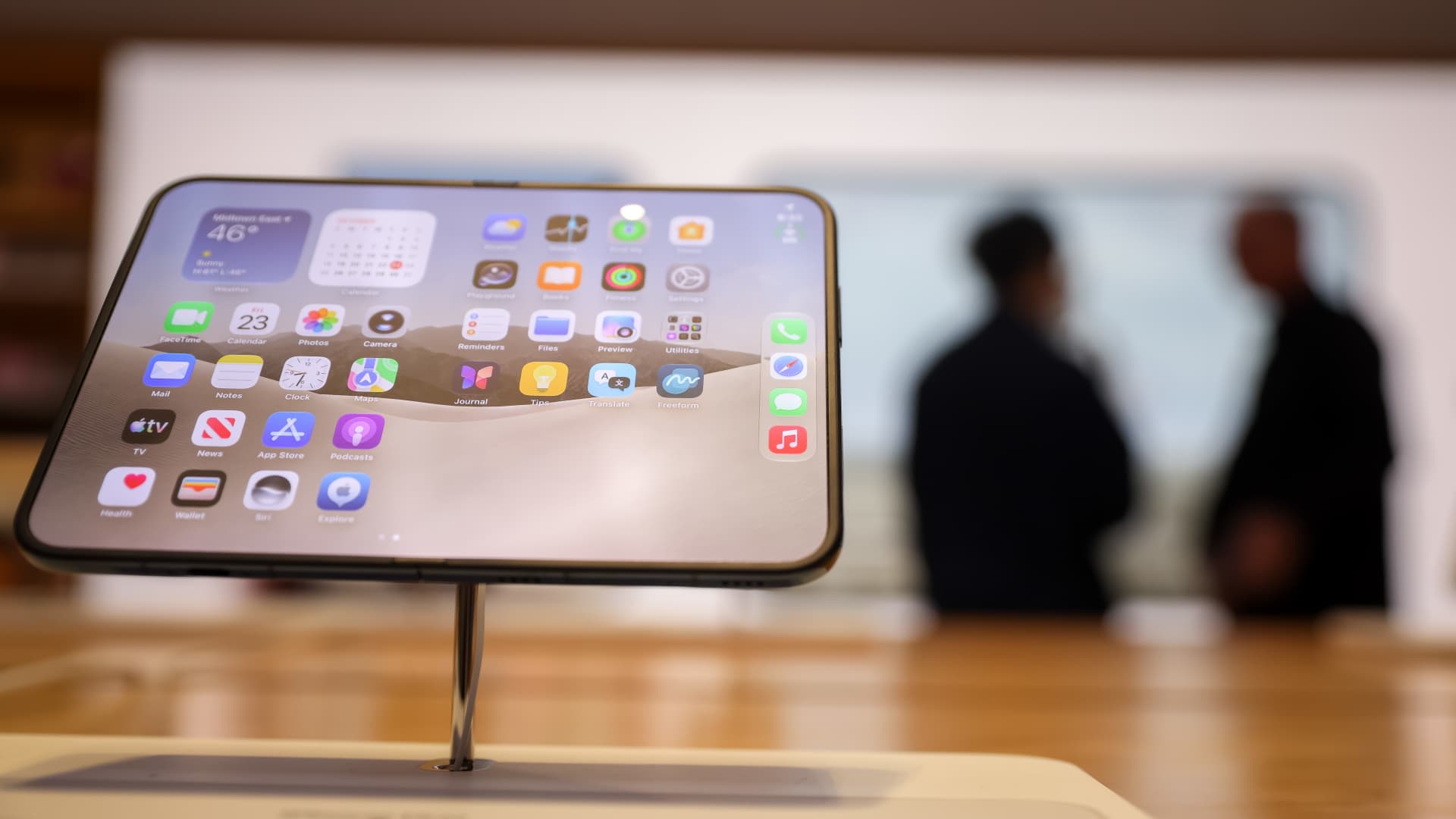
Apple has acknowledged display failures in its new $1,999 iPhone Duo foldable. Users report bright lines and pixel damage, with the company pointing to a hardware flaw in its precision-engineered hinge.
The High-Stakes Debut of the iPhone Duo
Apple’s entry into the foldable smartphone market with the $1,999 iPhone Duo represents a significant shift in the company's product strategy. Historically, Apple has prioritized refinement and reliability over being first to market with experimental form factors. By finally releasing a device that competes with established foldable Android phones, Apple aimed to solve the fundamental tension of modern mobile design: the desire for larger, tablet-like screens that remain pocketable. However, this transition to a dual-screen, folding architecture has proven to be a formidable engineering challenge.
The Engineering Failure: A Hinge in Question
Central to the controversy is the device's "precision-engineered" hinge. While Apple marketed this component as a breakthrough, early user reports suggest a severe hardware flaw. Rather than providing a seamless user experience, the mechanism appears to be actively damaging the delicate OLED internal displays. Within hours or even minutes of use, users are reporting catastrophic failures characterized by bright, vertical lines of dead pixels extending from the center crease to the edges of the screen.
Patterns of Destruction
Technical analysis of the reported defects shows a disturbing level of consistency across affected units. Images circulating online depict OLED panels marred by distinct bands of damaged pixels, frequently originating just below the midpoint of the display. The presence of dead pixels along the crease suggests that the mechanical stress exerted by the hinge during the folding process is compromising the structural integrity of the display layers, leading to the "ugly, bubbly appearance" often associated with early-generation foldable technology.
Apple’s Official Response and Mitigation
Facing mounting public pressure and photographic evidence of widespread failures, Apple has issued a formal statement acknowledging an "issue impacting the inner display" on a "small number of units." By directing affected customers to AppleCare for replacements, the company is attempting to contain the reputational damage. However, the admission confirms that the underlying technology—or at least the implementation of this specific hinge design—has not met the stringent quality standards typically expected of the Apple brand.
Broader Implications for Foldable Tech
This incident highlights the lingering fragility of foldable displays. Despite advancements in flexible materials, the inherent volatility of OLED panels when subjected to repeated physical stress remains a major hurdle. Apple’s struggle underscores that even with massive R&D budgets, the transition to foldable displays is fraught with risks. The failure of the iPhone Duo serves as a cautionary tale for the industry, suggesting that the "precision" required for such devices is currently at the bleeding edge of manufacturing capability.
Future Outlook
Looking forward, Apple faces the difficult task of reconciling its premium brand image with the reality of a flawed product launch. For consumers, the $1,999 price point makes these hardware failures particularly egregious. Future iterations will likely require a complete redesign of the hinge mechanism or a move toward more resilient display substrates. Until then, the iPhone Duo stands as a reminder that foldable technology, while enticing, has yet to achieve the maturity required for mainstream, high-reliability mass adoption.
Multiple Citing Sources