The Myth of the Biological Void
For decades, the prevailing narrative in conservation biology has been one of subtraction. We count the species lost, the forests cleared, and the habitats fragmented, treating the modern metropolis as a sterile void where nature goes to die. This perspective is fundamentally flawed. If we stop viewing the city as a graveyard and start seeing it as a crucible, a different pattern emerges. Cities are not merely destroying biodiversity; they are aggressively filtering it, selecting for traits that would be liabilities in the wild but are superpowers in the street.
This is the Urban Adaptation Paradox. By creating an environment of extreme stress—noise pollution, artificial light, and chemical saturation—humans have inadvertently built the most efficient evolutionary accelerators on the planet. We are witnessing a systemic shift where the pace of adaptation is outstripping the pace of extinction for a specific subset of opportunistic species. Why do some creatures thrive while others vanish? The answer lies in the ability to pivot from specialized survival to generalized resilience.
Strategic Concept
Anthropogenic Selection is the process where human-altered environments act as the primary driver of natural selection, favoring traits that allow organisms to exploit human-made resources or survive human-induced stressors.
Consider the sheer scale of this biological experiment. With over 50 percent of the global population now residing in urban areas, the 'city' is no longer a localized anomaly; it is a global biome. This biome operates on a different clock than the rainforest or the tundra. The selective pressures are more intense, the rewards for adaptation are immediate, and the failures are fatal. We are not just observers of this process; we are the unwitting architects of a new biological order.
To understand how this engineering happens, we must analyze the specific levers of pressure that turn a city into an evolutionary engine.
Selective Pressures of the Grey Jungle
The most pervasive driver of urban evolution is the Urban Heat Island (UHI) effect. Cities, characterized by vast expanses of asphalt and concrete, trap heat far more effectively than rural landscapes, often resulting in temperature differentials of 3 to 10 degrees Celsius. For a cold-blooded insect or a small reptile, this is not a mere inconvenience; it is a fundamental shift in their metabolic reality. Species that cannot tolerate these spikes vanish, while those that can evolve higher thermal thresholds gain a competitive edge, extending their breeding seasons and expanding their active hours.
Chemical saturation provides another layer of pressure. From heavy metals in the soil of industrial hubs like Mumbai to the pesticide-laden lawns of suburban sprawl in North America, the urban chemical cocktail is relentless. This has led to the rapid emergence of metabolic resistance. We see this in the way certain urban bird populations have evolved enzymes to detoxify pollutants that would be lethal to their rural cousins. This is not a slow drift; it is a tactical response to a toxic environment.
| Selective Pressure | Rural Manifestation | Urban Adaptation | Biological Outcome |
|---|---|---|---|
| Thermal Stress | Seasonal cycles | Constant Heat (UHI) | Heat-shock protein upregulation |
| Habitat Continuity | Continuous forest/plain | Isolated patches | Rapid genetic divergence |
| Resource Availability | Specialized forage | Anthropogenic waste | Generalist metabolic flexibility |
| Acoustic Environment | Low-frequency nature sounds | High-decibel traffic | Shift in song frequency/pitch |
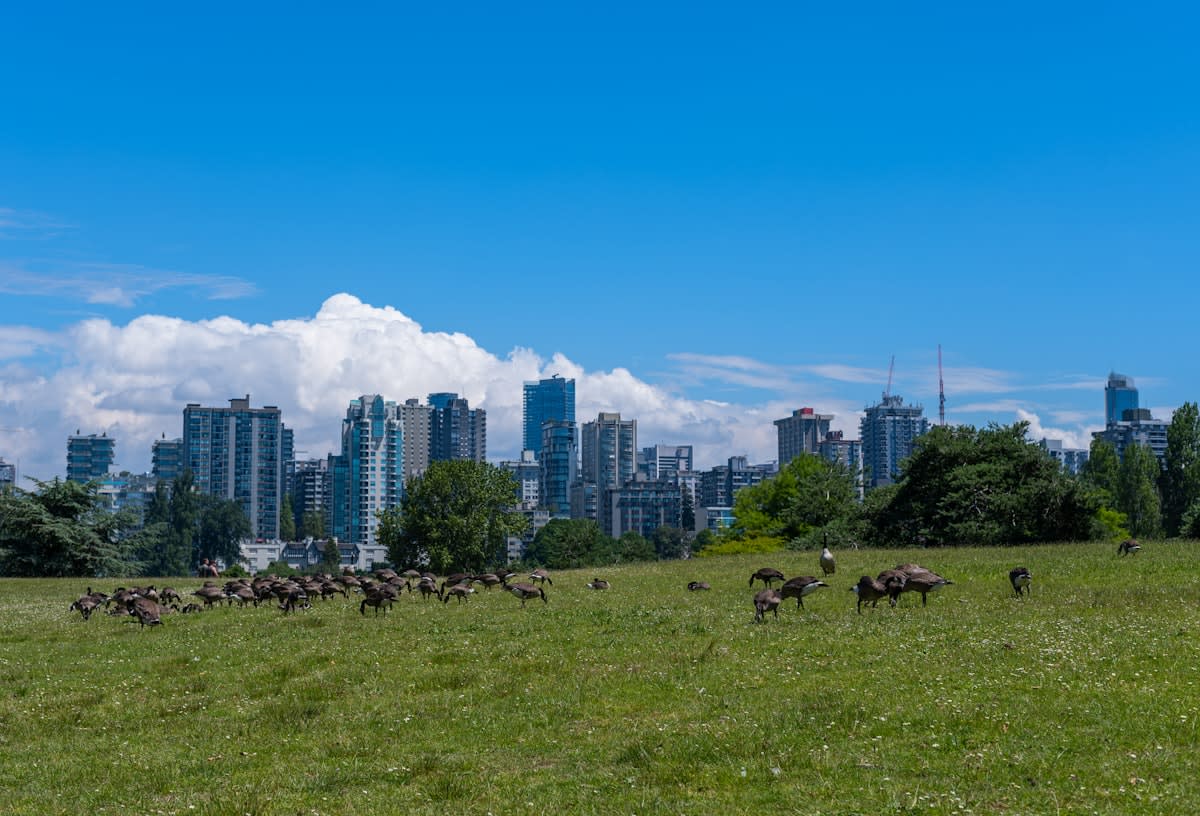
Noise pollution is perhaps the most audible example of this paradox. In cities from London to Tokyo, avian species are altering the pitch and timing of their songs to be heard over the roar of traffic. This is not just a behavioral quirk; it is a reproductive necessity. If a male cannot be heard, he cannot mate. Over time, these acoustic shifts become embedded in the population, potentially leading to pre-zygotic isolation where urban birds can no longer communicate with their rural counterparts. We are watching speciation happen in real-time, triggered by the internal combustion engine.
While physiological changes are critical, the structural layout of the city introduces a different, more systemic evolutionary driver: fragmentation.
The Fragmentation Engine
Urban planning is, by definition, the art of fragmentation. Roads, walls, and skyscrapers act as impassable barriers for many species, turning a single city into an archipelago of isolated biological islands. In a rural setting, gene flow is relatively fluid. In a city, a population of lizards in a small park in Singapore may be completely cut off from another population just three blocks away. This isolation accelerates genetic drift, allowing mutations to fix themselves within a population far more quickly than in a large, connected wild population.
This isolation creates a high-stakes lottery of survival. In some patches, the population crashes; in others, a lucky genetic mutation allows the species to exploit a new urban resource, such as a specific type of waste or a new nesting site in building crevices. The result is a mosaic of highly specialized urban ecotypes. We are no longer dealing with a single species of pigeon or rat, but a network of localized variants, each optimized for their specific neighborhood's pressures.
"The city is not the end of nature, but a new direction for it. We are moving from a world of stable ecosystems to a world of rapid, human-driven iterations."— Strategic Analysis of Urban Biology
Is this a loss of purity? Perhaps. But from a strategic perspective, it is a gain in resilience. The species that survive the urban transition are those with the highest degree of plasticity. They are the ultimate survivors, capable of navigating a world that changes every time a new zoning law is passed or a new highway is built. This plasticity is the most valuable trait in the Anthropocene.
Behavioral Plasticity: The First Line of Defense
Before genetic mutations take hold, behavior pivots. This is the 'soft' side of adaptation. Urban crows and parrots in cities across South America and Asia have demonstrated a level of problem-solving and tool-use that far exceeds their wild relatives. They aren't just finding food; they are hacking the city. They use traffic patterns to crack nuts and exploit human schedules to scavenge. This cognitive flexibility is a prerequisite for the later genetic shifts we observe.
This behavioral shift creates a feedback loop. As animals become more successful at exploiting urban niches, they experience less nutritional stress, which in turn allows for larger populations and more opportunities for genetic mutations to occur. The cognitive leap is the bridge to the biological leap. We see this in the way urban rodents have developed an increased tolerance for human proximity, shifting their fear response to prioritize caloric gain over perceived danger.
If we accept that cities are engineering new species, we must reconsider our entire approach to urban biodiversity.
Redefining the Wild
The traditional goal of urban greening has been to 'bring back' nature—to recreate a sanitized version of the countryside within the city limits. This is a nostalgic fantasy. The nature that returns to the city is not the same nature that left. It is something new, something leaner, and something far more aggressive. The strategic shift we need is to move from conservation—trying to preserve a static past—to co-evolution, where we design cities that support these new, resilient urban specialists.
We must ask ourselves: do we want a city that is a biological desert, or one that is a sanctuary for the future of life on Earth? The urban specialists of today are the prototypes for the species of tomorrow. By studying the genetic markers of urban-adapted populations, we gain a blueprint for resilience that could be applied to broader conservation efforts. The city is not the enemy of evolution; it is its most daring laboratory.
Ultimately, the Urban Adaptation Paradox teaches us that life is stubbornly opportunistic. Even in the heart of the most concrete-heavy megalopolis, biology finds a way to rewrite its own code. The systemic shift is clear: we are entering an era of symbiotic evolution, where the boundary between the built environment and the natural world is permanently blurred. The creatures winning this race are not the strongest or the fastest, but the most flexible.