Why do we treat rice straw as a liability? For decades, the default across Southeast Asia has been the scorched-earth approach: burn the residue, clear the field, move on. It is a wasteful cycle. But in the Mekong Delta, a hard turn is happening. Farmers are no longer seeing straw as waste to be incinerated but as a feedstock for carbon gold. They are trading the open flame for the sealed chamber.
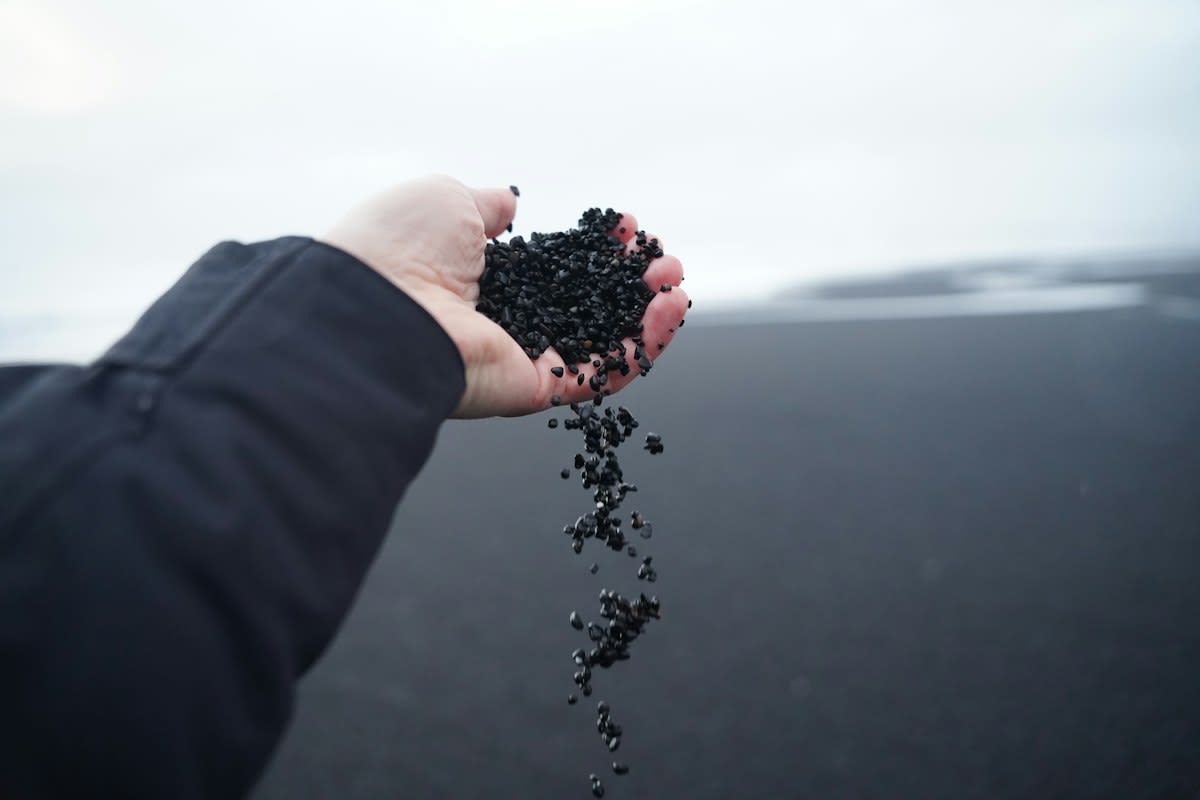
The mechanism is pyrolysis. This process heats biomass under controlled, oxygen-limited conditions to create biochar, a carbon-rich material (Source: Dr. Rimika Kapoor, 2024). It is a clean break from the past. Instead of releasing carbon dioxide and particulate matter into the atmosphere, the carbon is locked into a solid form. The result? A soil amendment that grips nutrients and refuses to let go.
The Industrial Delta: From Artisanal to Scaled
Six months ago, biochar in Vietnam was largely a boutique experiment. Small-scale kilns produced inconsistent charcoal. Today, the trend has shifted toward industrial-scale production. The urgency is driven by the need for traceable supply chains and systematic monitoring, reporting, and verification (MRV) systems (Source: Dr. Rimika Kapoor, 2024). Precision now outweighs volume. The industry is moving toward batch-level quality control to satisfy global carbon markets.
"Biochar producers and other biomass-consuming industries need dependable feedstock supply, appropriate processing infrastructure and consistent quality standards."— Dr. Rimika Kapoor, Biomass Specialist
This transition is not seamless. It is a collision of old-world farming and new-world finance. The friction lies in the 'invisible' gap between the farmer's field and the carbon auditor's spreadsheet. Practitioners know the real struggle: the mechanical failure of low-cost pyrolysis units and the difficulty of maintaining consistent temperatures across massive volumes of wet straw. If the heat fluctuates, the carbon stability drops. The gold becomes lead.
The Chemistry of Yield
The appeal isn't just atmospheric. It is subterranean. Biochar alters the very terrain of the soil. A meta-analysis reveals that biochar application significantly impacts rice yield and nitrogen use efficiency in paddy fields (Source: Liu, Y. et al., 2022). It acts as a sponge. Nitrogen, which usually leaches away or off-gasses, stays put. The plant grows stronger. The soil becomes less brittle.
Compare this to the old method of simply returning straw to the soil. While straw return is better than burning, it is inefficient. Recent data suggests that crop residue biochar provides a short-term synergism between grain production, carbon sequestration, and the reduction of greenhouse gas emissions that raw straw return simply cannot match (Source: Xia, X. et al., 2024). It is a superior suture for the damaged earth.
| Method | Carbon Stability | Nitrogen Efficiency | Emission Profile |
|---|---|---|---|
| Open Burning | Low (Released) | Poor | High CO2/Particulates |
| Straw Return | Moderate | Moderate | Moderate Methane |
| Biochar Pyrolysis | High (Sequestered) | High | Low/Negative |
Does this work everywhere? The web of biochar application is complex. In Denmark, researchers are examining the environmental risks associated with contaminants during production (Source: P. Godlewska, 2025). Not all biochar is created equal. If the feedstock is contaminated or the process is sloppy, you risk introducing toxins into the food chain. The precision of the burn is everything.
A Global Web of Biomass
Vietnam is not alone in this chase. In Canada, the UBC Faculty of Forestry is advancing the Community Bioenergy and Food Sovereignty Demonstration Hub in Williams Lake, BC. They are integrating community-scale biomass energy to grow food year-round (Source: Tree Frog Forestry, 2026). The goal is the same: turn waste wood and biomass into energy and soil health. It is a global pattern of adaptation.
The interaction between biochar and plants is deeper than mere fertilization. Biochar-plant interactions actually enhance non-biochar carbon sequestration within rice paddy soils (Source: Liu, Z. et al., 2023). This creates a feedback loop. The biochar doesn't just stay there; it encourages the soil to hold more carbon naturally. It is a force multiplier for the earth.
The economic grip of this trend is tightening. Carbon project developers now assess feedstock availability and methodology eligibility to ensure projects are bankable (Source: Dr. Rimika Kapoor, 2024). This turns a farmer into a carbon miner. The straw is the ore; the pyrolysis plant is the refinery. The carbon credit is the currency.
But we must ask: who owns the carbon? The tension between the smallholder farmer and the industrial aggregator is the new frontier of rural politics. If the aggregator owns the pyrolysis plant, do they own the credit? This is where the system frays. Without fair contracts, the 'carbon gold' only benefits those with the machinery.
Fact-Check & Accuracy Note
The efficacy of biochar is heavily dependent on the feedstock. While rice straw is effective for paddy soils, the nitrogen cycle response varies across different crop types (Source: Zhang, L. et al., 2022). Most verified data focuses on the short-to-medium term; the century-long stability of this carbon is still a subject of academic debate.
Editorial Note
This report avoids the typical 'climate crisis' narrative. Instead, it focuses on the mechanical and economic opportunities presented by biochar. The focus is on the delta between traditional waste management and the emerging carbon economy.
The trajectory is clear. The smoke is clearing, and the carbon is staying. Vietnam's move toward industrial pyrolysis represents a broader shift in how we view agricultural 'waste.' It is no longer about disposal. It is about capture. The terrain has shifted from a linear path of destruction to a circular web of value.