
The Great Disconnect: Why Clinical Clearance Isn't Enough
Most athletes treat recovery as a binary state: you are either injured or you are cleared to play. This approach is dangerously simplistic. We see it constantly in high-performance environments where an athlete passes a hop test or hits a specific jump height, receives a clinician's nod, and then suffers a re-injury within weeks. Why? Because traditional return-to-play (RTP) criteria often measure capacity—the ability to perform a task in a vacuum—rather than capability, which is the ability to execute sport-specific movements under the chaotic load of a real game. Your legs might be strong enough to jump, but are they moving with the same symmetry and strategy they had before the injury?
A longitudinal case study published in August 2026 highlights this exact gap in collegiate basketball. While the athlete in the study met all conventional RTP benchmarks, including psychological readiness and jump height symmetry, deeper monitoring revealed a different story. By using force plates and Inertial Measurement Units (IMUs), researchers identified persistent changes in movement strategy and elevated on-court variability that standard tests completely missed. This proves that the 'feeling' of readiness is a lagging indicator. To train like a pro without the pro injuries, you must shift your focus from subjective readiness to objective biomechanical load monitoring.

Prerequisites: The Precision Toolkit
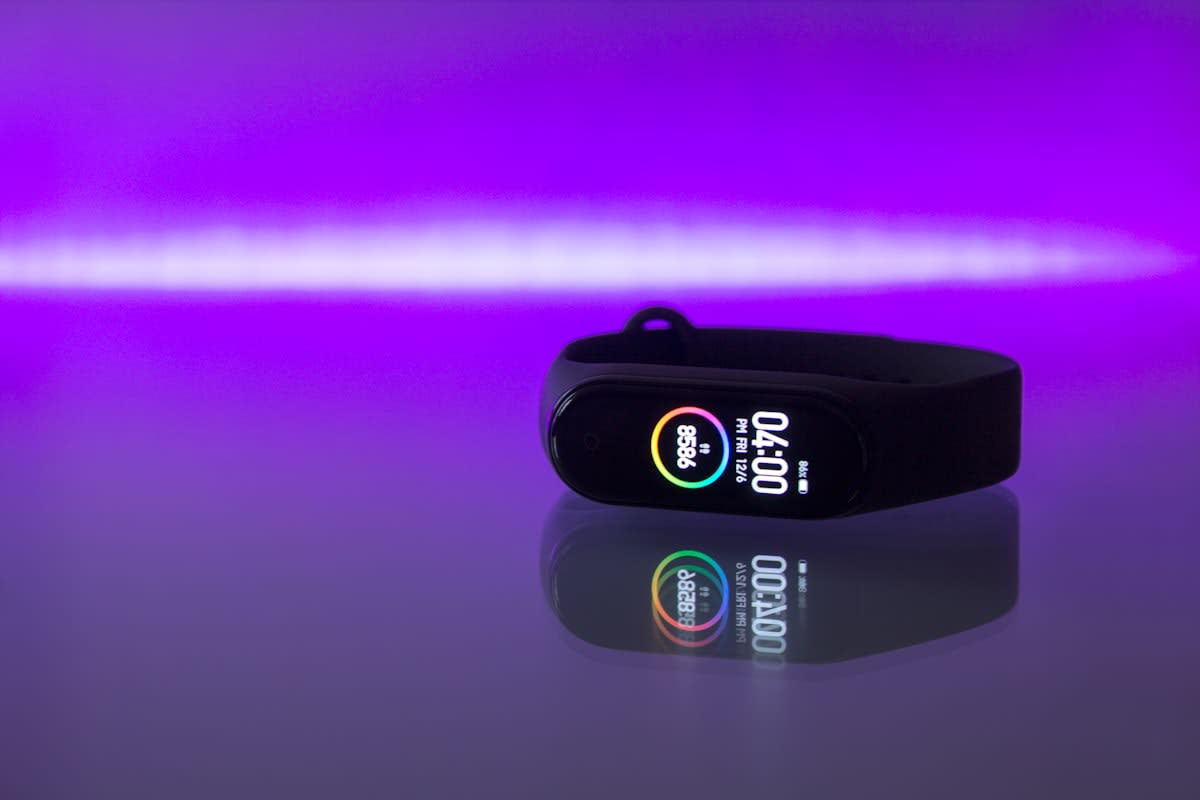
You cannot manage what you do not measure. To implement this blueprint, you need a stack of tools that move beyond the basic heart-rate monitor. The goal is to capture the intersection of internal load (how your body reacts) and external load (what your body actually did). If you are missing one side of this equation, you are essentially guessing.
- Biomechanical Sensors: IMUs (Inertial Measurement Units) or flexible sensors (capacitive, piezoelectric, or triboelectric) integrated into insoles or joint patches for gait and pressure monitoring.
- Force Production Tools: Access to force plates for Countermovement Jump (CMJ) testing to measure power output and limb symmetry.
- Metabolic Tracking: A reliable method for intensity zoning (Power meters for cyclists, GPS/HR for runners).
- Recovery Logs: A system to track subjective markers (sleep, mood, appetite) to compare against functional data.
While high-end force plates are the gold standard, the industry is shifting toward flexible sensors. These emerging technologies can be embedded directly into garments or sports equipment, providing continuous, clinically translatable data on muscle fatigue and joint activity. This allows for a move toward 'digital twins'—a virtual model of your movement patterns that can predict injury risk before a snap occurs.
Step 1: Establishing the Individualized Baseline
The biggest mistake athletes make is comparing themselves to a 'norm' or a teammate. Your biomechanical signature is unique. The basketball study mentioned previously relied on nearly two years of pre-injury monitoring to create a baseline. Without this, you have no reference point to determine if a change in movement is a natural adaptation or a red flag for injury. You need to know exactly how you move when you are at your peak.
- Conduct a baseline battery of functional tests: CMJ, sprint output, and sport-specific agility drills.
- Record IMU data during high-intensity training sessions to map your 'normal' limb-loading patterns.
- Document your psychological state and subjective readiness during peak performance phases.
- Establish 'Minimal Detectable Change' (MDC) thresholds to distinguish between daily noise and actual performance shifts.
Once these benchmarks are set, every subsequent training block is measured against this individualized reference. If your force plate data shows a 10% drop in peak power on your left leg compared to your baseline, it doesn't matter if you 'feel' fine—your system is signaling a bottleneck.
Step 2: Identifying and Solving Functional Bottlenecks
Recovery is not a one-size-fits-all protocol of ice baths and massage. True recovery requires 'Recovery-Adaptation Coupling,' where nutritional and restorative strategies are matched to the specific functional bottleneck. Is the issue structural damage to the muscle, substrate depletion (glycogen), connective-tissue strain, or systemic fatigue? If you treat systemic fatigue with a high-protein shake meant for structural repair, you are wasting resources and slowing your return.
| Bottleneck Type | Primary Indicator | Nutritional/Recovery Target |
|---|---|---|
| Structural Damage | Force loss, DOMS | Protein synthesis, Amino acid support |
| Substrate Depletion | Reduced sprint output | Glycogen replenishment, Carbohydrates |
| Connective-Tissue Strain | Joint stiffness, IMU variability | Collagen support, Targeted mobility |
| Systemic Fatigue | Mood shifts, Sleep quality | CNS recovery, Micronutrient density |
By using convergent markers—combining subjective mood scores with objective CMJ metrics—you can pinpoint exactly which bottleneck is stalling your progress. This precision prevents the common trap of over-training when you are structurally sound but systemically exhausted.
Step 3: Optimizing Intensity and the Zone 2 Nuance
Load monitoring isn't just about recovery; it's about the intelligence of the load itself. Take endurance training: there is a constant debate about where to sit within Zone 2. A 2026 study from the Federal University of São Paulo, Brazil, questioned whether training at the very top of Zone 2 produces greater gains than training 10-15% below that threshold. The goal here is to maximize aerobic adaptations while minimizing systemic stress.
If your biomechanical monitoring shows increased on-court variability or decreased force production, pushing to the top of Zone 2 may be counterproductive. In these windows, dropping 10-15% below the threshold allows you to maintain volume and stimulate adaptation without tipping the scale toward overtraining. This is the 'pro' secret: knowing when to dial back the intensity to preserve the long-term trajectory.
Step 4: The Final Validation Loop
Before returning to full-competition intensity, you must pass the three-pillar test: Capacity, Capability, and Confidence. Capacity is the raw strength (e.g., can you jump 20 inches?). Capability is the biomechanical execution (e.g., do you land with symmetry during a game-speed cut?). Confidence is the psychological readiness. If any one of these is missing, the risk of injury spikes.
The Immunity Myth
Don't fear the 'Open Window.' There is a common myth that intense training destroys the immune system. Current evidence suggests that while immune markers change temporarily, elite athletes often show greater resilience to infection than the general population. Focus on sleep and nutrition rather than avoiding intensity out of fear of getting sick.
Common Pitfalls to Avoid
- Over-reliance on Subjective Data: Never trust a 'feeling' of readiness over a 15% drop in force plate symmetry.
- Ignoring Interlimb Asymmetry: Small imbalances in limb-loading, detectable only via IMUs, are the primary precursors to soft-tissue injuries.
- Static Recovery Plans: Using the same recovery protocol for every workout regardless of whether the bottleneck is structural or systemic.
- Chasing the 'Top of the Zone': Forcing intensity at the upper limit of Zone 2 when biomechanical markers suggest systemic fatigue.
The transition from an amateur mindset to a professional one happens when you stop asking 'How hard can I train?' and start asking 'How much load can my current biomechanical state absorb?' By integrating longitudinal monitoring and targeting specific functional bottlenecks, you build a body that is not just strong, but resilient. This is the blueprint for longevity in any sport.