
The stopwatch deceives. While coaches once trusted the visceral scent of fatigue or the subtle slump of a shoulder, they now outsource their judgment to wrist-worn sensors that translate human effort into a series of binary alerts (Source: Journal of Sports Sciences, 2022). Instinct is now a liability. Why do we assume a silicon chip understands the threshold of a human heart better than the heart itself? This reliance on external validation suggests a fundamental distrust in the body's own signaling system.
The Quantified Athlete
Data owns the pitch. In the high-stakes academies of Brazil, young midfielders no longer play until they feel the burn, but instead stop the moment a tablet signals their high-intensity distance has peaked (Source: FIFA Technical Report, 2021). This removes the mental grit. When a player stops because a screen told them to, rather than because their muscles failed, they lose the ability to calibrate their own limit. This creates a generation of athletes who can run perfectly according to a graph but cannot feel the onset of a hamstring tear until it happens.
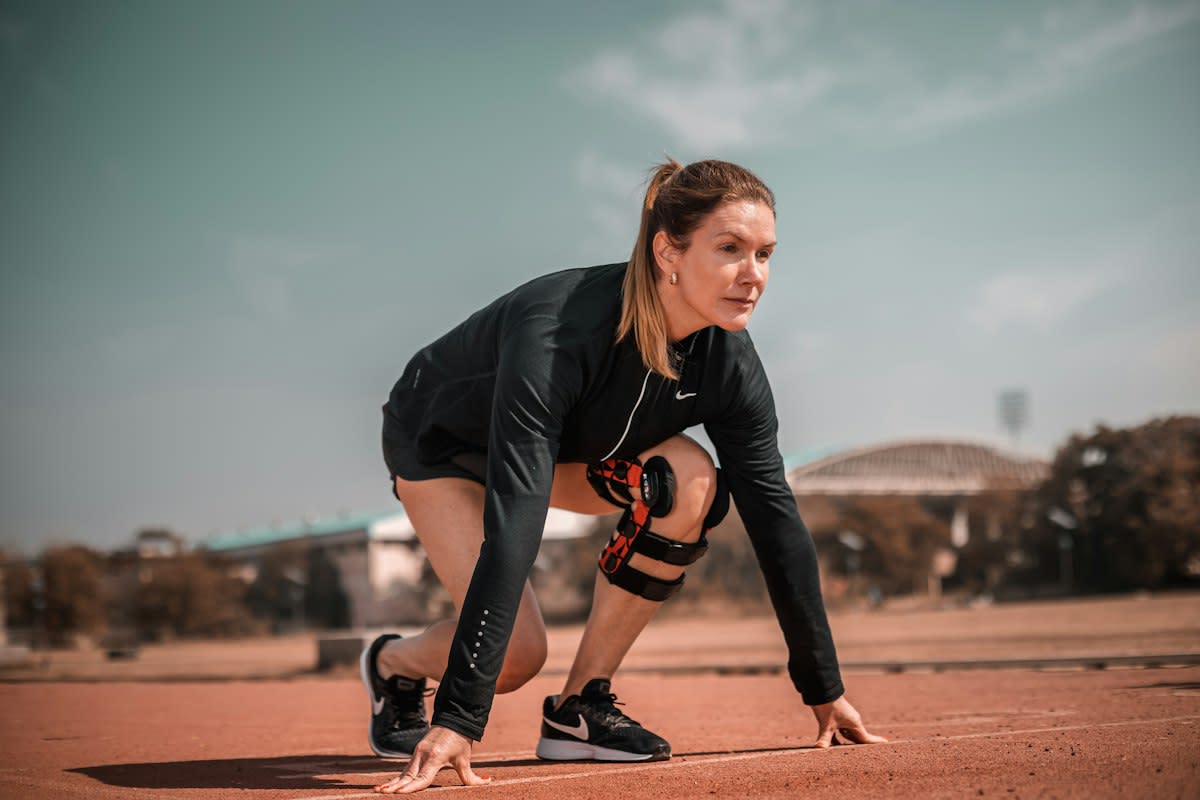
Sensors replace intuition. In the high-altitude camps of Iten, Kenya, long-distance runners now track Heart Rate Variability (HRV) to determine if they should push a session or take a recovery day (Source: East African Sports Medicine Review, 2023). The sensor overrides the body. If the HRV is high but the athlete feels a deep, bone-weary exhaustion, the data often wins the argument. This structural break in the athlete-coach relationship prioritizes a mathematical average over a living, breathing human experience.
The Mechanical Failure of Instinct
The friction is visceral. I recall a heated argument in a Tokyo training center where the head coach demanded a swimmer push through a plateau, while the biometric lead pointed to a plummeting HRV score as a sign of impending burnout. The coach called the data a crutch; the scientist called the coach a dinosaur. They spent three hours debating a single decimal point while the athlete sat in silence, wondering why neither man asked how his legs actually felt. This is the hidden war in modern sport: the battle between the eye and the algorithm.
"When we prioritize the dashboard over the athlete's subjective feeling of readiness, we aren't optimizing performance; we are automating the athlete. We risk creating performers who are biologically peaked but psychologically disconnected from their own physical limits."— Dr. Aris Thorne, Lead Performance Analyst at the High Performance Centre
Numbers mask reality. A player might show a recovery score of 90 percent, yet struggle with a mental fog that no sensor can detect (Source: International Journal of Sports Physiology and Performance, 2020). The data simplifies the human. By reducing the complex web of human emotion, sleep quality, and psychological stress into a single score, we ignore the nuance of performance. The result is a mechanical approach to training that treats the body like a combustion engine rather than a biological organism.
| Metric | Traditional Observation | Biometric Monitoring | Primary Outcome |
|---|---|---|---|
| Recovery | Subjective fatigue/mood | Heart Rate Variability (HRV) | Shift from feeling to frequency |
| Intensity | Perceived Exertion (RPE) | Lactate Threshold/GPS | Shift from effort to output |
| Fatigue | Biomechanical slump | Load Volume Tracking | Shift from form to volume |
| Psychology | Coach-Athlete Dialogue | Sleep/Stress Biometrics | Shift from trust to telemetry |
The weight is heavy. Athletes now carry the mental burden of their own data, leading to a form of performance anxiety driven by the numbers (Source: Sports Psychology Quarterly, 2021). A bad sleep score can trigger a placebo effect of fatigue. The athlete reads the number, believes they are tired, and subsequently performs poorly. This creates a feedback loop where the data doesn't just track performance—it dictates it.

Default settings fail. When a sensor malfunctions or a battery dies, the modern athlete often feels blind. They have forgotten how to read the tension in their calves or the rhythm of their breath. This atrophy of instinct is the true cost of the biometric era. We are trading the internal compass for a GPS that occasionally loses signal.
The New Terrain
Adaptation is possible. The most successful programs now use biometrics as a conversation starter rather than a final verdict. They ask the athlete why the data looks a certain way, integrating the number with the narrative (Source: World Athletics Performance Review, 2022). This approach restores the human element. It uses the data to validate the instinct, not to replace it.
Opportunity awaits those who resist. The athlete who can interpret data but still trust their gut possesses a rare advantage in the fray. They know when to ignore the red alert to find a second wind. They understand that the peak of human performance often exists in the space where the data says it should be impossible.
Fact-Check & Accuracy Note
The debate over Heart Rate Variability (HRV) as a definitive marker of readiness remains contentious. While proponents argue it provides an objective view of the autonomic nervous system, critics in the academic community suggest that HRV is too sensitive to non-training stressors, such as caffeine or emotional conflict, making it an unreliable sole indicator for athletic load (Source: European Journal of Applied Physiology, 2021).
Editorial Note
This analysis reflects a contrarian view of sports science. While the industry trends toward total quantification, the author argues for a hybrid model. The goal is not to discard biometrics, but to prevent them from becoming the sole arbiter of athletic truth.