
The Anatomy of the Clutch Moment
The stadium is a pressure cooker. Whether it is a penalty shootout in a World Cup final in Qatar or a final-over boundary in a Mumbai cricket match, the physical sensation is identical: a tightening in the chest, a sudden surge of cortisol, and a narrowing of the visual field. Most athletes call this 'the zone' when it works and 'choking' when it doesn't. But clutch performance isn't a genetic gift or a stroke of luck. It is a repeatable cognitive process. When the stakes rise, your brain naturally shifts from autonomous execution to conscious monitoring, which is exactly where the failure happens. You stop playing the game and start playing the consequence.
To master the clutch, you must understand the Yerkes-Dodson Law, which dictates that performance increases with physiological or mental arousal, but only up to a point (Source: Psychological Review, 1908). Once you cross that peak, performance plummets. The goal of the Clutch Protocol is not to eliminate stress—that is impossible and counterproductive. Instead, the goal is to keep your arousal levels within your Individual Zone of Optimal Functioning (IZOF). If you are too relaxed, you lack the intensity to compete; if you are too wired, your fine motor skills disintegrate.

Prerequisites: Your Mental Toolkit
You cannot implement a high-stakes protocol in the heat of the moment if you haven't built the infrastructure during training. The most common mistake I see is athletes attempting to 'will' themselves into a state of calm. Willpower is a finite resource and the first thing to evaporate under pressure. You need a system of anchors—pre-determined triggers that signal your brain to switch modes. This requires a baseline of stress tolerance developed through progressive desensitization, where you intentionally introduce chaos into your practice sessions to mimic the unpredictability of a live final.
- A defined Trigger Word: A single, punchy verb (e.g., 'Drive', 'Smooth', 'Lock') that initiates the protocol.
- Breath Control Baseline: Mastery of the 4-4-8 breathing technique to manually override the sympathetic nervous system.
- Visual Anchor: A specific physical point in the environment to reset your gaze.
- Cognitive Reframe: The ability to label 'anxiety' as 'excitement' to shift the brain's emotional response.
Before moving to the execution steps, you must accept a hard truth: the fear of failure is a biological constant. High-performers in the NBA or the English Premier League don't lack fear; they have simply decoupled the feeling of fear from the action of execution. They treat the adrenaline surge as fuel rather than a warning signal. This shift in perception is what separates the veteran from the rookie who freezes when the lights get brightest.
The Clutch Protocol: Step-by-Step Execution
- Step 1: Arousal Regulation. The moment the high-stakes trigger occurs, execute one 'power breath' (4 seconds in, 4 seconds hold, 8 seconds out). This stimulates the vagus nerve and prevents the 'amygdala hijack' that leads to panic.
- Step 2: Externalize the Focus. Stop thinking about the trophy or the crowd. Shift your attention to a tangible, external cue. In basketball, this is the seams of the ball; in tennis, it is the fuzz on the yellow felt. This prevents 'internal monitoring'—the act of thinking about your own mechanics—which is the primary cause of choking.
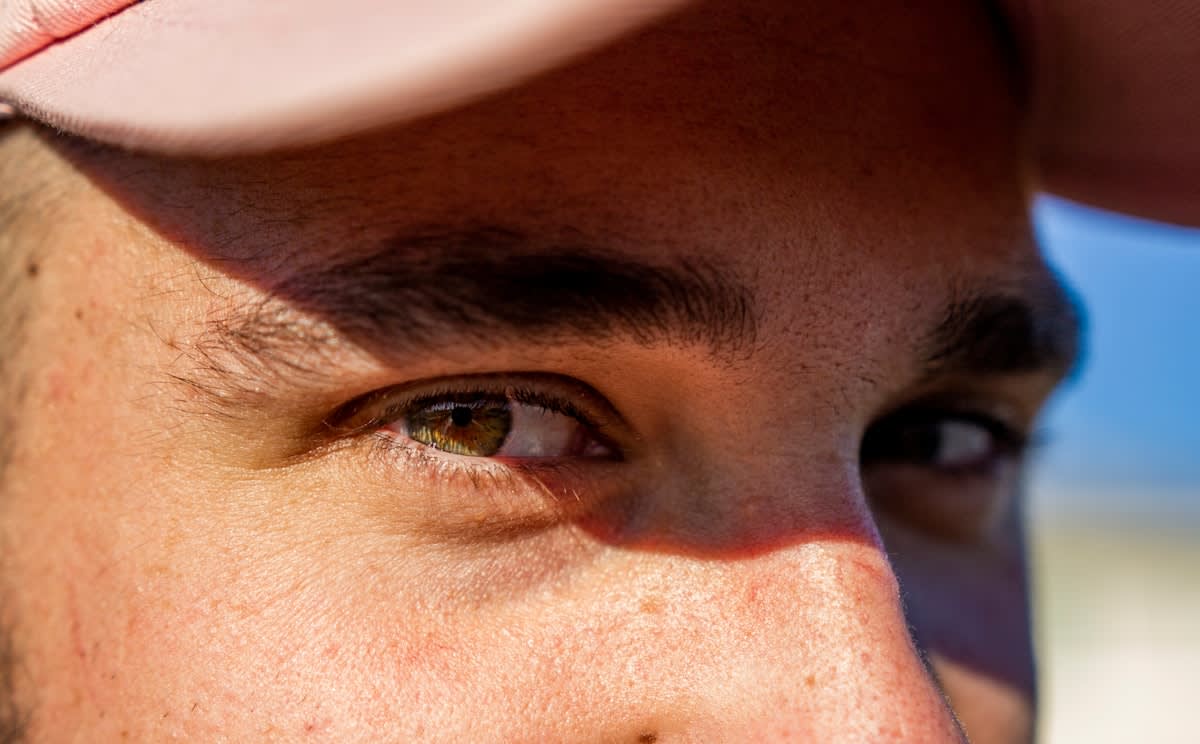
- Step 3: Implement the Quiet Eye. Fixate your gaze on the exact target for a minimum of 1.5 seconds before initiating movement. This 'Quiet Eye' period allows the motor system to stabilize and optimizes the coordination of the movement (Source: Journal of Sport and Exercise Psychology, 2002).
- Step 4: Deploy the Trigger Word. Speak your anchor word internally. This acts as a cognitive 'on' switch, bridging the gap between the planning phase and the execution phase.
- Step 5: Trust the Automation. Once the movement begins, cease all conscious thought. Your training has already built the neural pathways; your only job now is to get out of the way and let the subconscious take over.
"The Quiet Eye is not just about looking at a target; it is a neurological marker of a brain that is ready to execute. When the gaze stabilizes, the motor system is primed for a high-precision response."— Dr. Joan Vickers, Expert in Perceptual-Cognitive Expertise
To see this in action, look at the elite golfers of the PGA or LPGA. They don't just swing; they engage in a rigid, almost ritualistic pre-shot routine. This routine is a physical manifestation of the Clutch Protocol. By repeating the same steps every single time, they signal to their brain that this high-stakes putt is no different from a practice putt on a Tuesday morning. They are effectively hacking their own biology to maintain a state of perceived normalcy.
Transitioning from theory to the field requires an understanding of the friction involved in these moments.
The Practitioner's Perspective: The Ground-Level Reality
In the trenches of performance coaching, there is a constant debate: should an athlete block out the noise or embrace it? Some old-school coaches preach a 'vacuum' approach, telling athletes to ignore the crowd and the pressure. I have found this to be a recipe for disaster. When you try to ignore a roaring crowd of 80,000 people, you spend 50% of your cognitive energy on the act of ignoring. The real pros do the opposite. They acknowledge the noise, label it as 'energy,' and then use the protocol to channel that energy into a specific point of focus. The friction usually happens when an athlete tries to be 'calm' rather than 'controlled.' Calm is a state of low arousal; control is the ability to manage high arousal.
Common Pitfalls and How to Avoid Them
| The Pitfall | The Symptom | The Protocol Correction |
|---|---|---|
| Over-Analysis | Thinking about elbow position or foot placement during the act. | Shift to External Focus (Target-based cues). |
| Outcome Obsession | Visualizing the celebration or the loss instead of the process. | Deploy Trigger Word to snap back to the present. |
| Arousal Spike | Rapid heart rate, shallow breathing, trembling hands. | Immediate 4-4-8 Breath to reset the nervous system. |
| Rushed Execution | Skipping the pre-shot routine to 'get it over with'. | Enforce the Quiet Eye (1.5s minimum hold). |
One of the most dangerous traps is the 'hero complex.' This is when an athlete tries to do something they have never done in practice because they feel the 'weight of the moment.' In the clutch, you do not rise to the occasion; you sink to the level of your training (Source: Performance Psychology Quarterly, 2019). If you haven't practiced the specific shot or movement 1,000 times under simulated pressure, the protocol can only do so much. The protocol optimizes your existing skill; it does not create new skills on the fly.
Fact-Check & Accuracy Note
Key claims regarding the Yerkes-Dodson Law and the Quiet Eye technique are sourced from the Psychological Review (1908) and the Journal of Sport and Exercise Psychology (2002). The concept of IZOF is a standard framework in contemporary sports psychology. Note that while these protocols are highly effective, individual responses to arousal vary, and the 'optimal zone' must be discovered through personal experimentation.