
The Death of the 'Grind' Mentality
For a century, the stopwatch reigned supreme. If an athlete could run a 400-meter sprint faster than yesterday, they were improving; if they couldn't, they simply needed to work harder. This linear obsession with output created a culture of attrition where the 'grind' was a badge of honor and overtraining was often mistaken for dedication. But the math is changing. Elite performance is no longer viewed as a product of maximum effort, but as a product of maximum recovery. The focus has shifted from how much an athlete can endure to how quickly their nervous system can bounce back from the brink of exhaustion.
Heart Rate Variability (HRV)—the measure of the variation in time between each heartbeat—has emerged as the proxy for this recovery. Unlike a resting heart rate, which is a blunt instrument, HRV provides a window into the autonomic nervous system (ANS). Specifically, it tracks the tug-of-war between the sympathetic 'fight or flight' response and the parasympathetic 'rest and digest' system. When HRV is high, the body is resilient and ready for stress. When it plunges, the system is red-lining, regardless of what the athlete feels in their muscles. This shift represents a fundamental pivot in sports science: moving from external load (what the athlete did) to internal load (how the athlete responded).
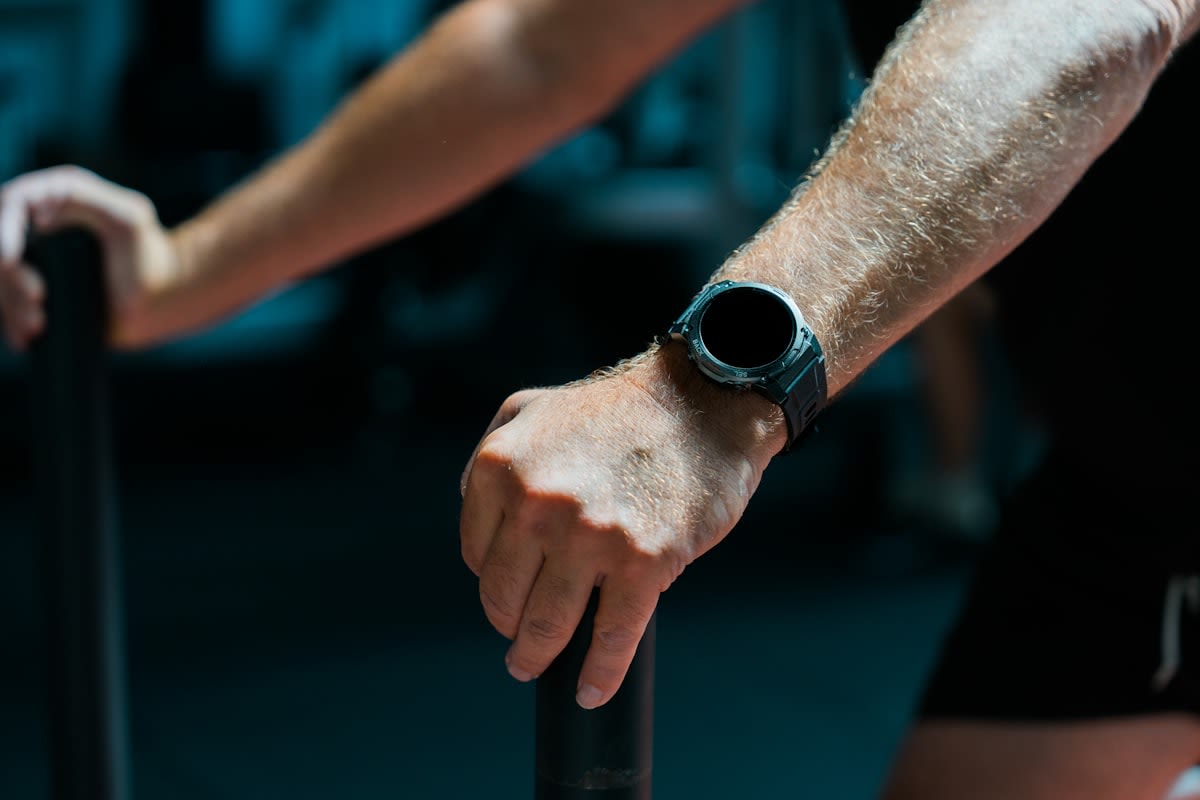
The delta over the last twelve months has been staggering. A year ago, HRV was largely the domain of 'biohackers' and a few forward-thinking endurance coaches. Today, it is integrated into the daily operational cadence of professional leagues globally. In the English Premier League and the NBA, 'readiness scores' derived from HRV now influence starting lineups and training intensity in real-time. We are seeing a transition where the data dashboard is becoming as influential as the head coach's intuition. Why gamble on a star player's hamstring when the data shows their parasympathetic system has completely collapsed?
"The obsession with the stopwatch was a gamble on biology. We used to push athletes until they broke, then spent months fixing them. Now, we use HRV to find the exact edge of the cliff and stop one inch before the fall. It is the difference between training for exhaustion and training for adaptation."— Dr. Stephen Seiler, Renowned Exercise Physiologist
This isn't just a Western phenomenon. In the high-altitude training camps of Iten, Kenya, elite marathoners are increasingly pairing traditional volume with HRV monitoring to avoid the dreaded 'plateau' that often precedes a season-ending injury. The global consensus is coalescing around a singular truth: the body does not adapt to the workout; it adapts to the recovery from the workout (Source: American College of Sports Medicine, 2023). The stopwatch tells you the speed of the car, but HRV tells you if the engine is about to overheat.
The Friction: Data vs. Instinct
On the ground, this transition is not without friction. I have spent time in high-performance centers where the tension between 'old school' coaching and 'new school' data is palpable. The debate usually centers on the 'false negative'—the athlete who feels like a superhero but whose HRV is in the gutter. Coaches often struggle with the idea of benching a motivated athlete based on a millisecond variance in heartbeats. Does the data override the human spirit? Or is the human spirit simply a lagging indicator of physiological failure?
Practitioners are currently debating the 'baseline problem.' Because HRV is highly individual, a 'low' number for a sprinter might be a 'high' number for a swimmer. The industry is moving away from population averages and toward longitudinal personal baselines. The real skill now lies in pattern recognition: identifying the specific 'dip' that precedes a viral infection or a soft-tissue tear. This requires a level of data literacy that many traditional coaching certifications simply didn't cover five years ago.
| Metric Era | Primary Tool | Core Philosophy | Risk Factor | Success Indicator |
|---|---|---|---|---|
| The Stopwatch Era | Stopwatch/GPS | More is Better | Overtraining/Burnout | Lower Time/Higher Volume |
| The Recovery Era | HRV/Wearables | Optimal is Better | Under-training | Systemic Readiness/Stability |
The implementation of this tech is creating a new class of 'Performance Analysts' who act as the bridge between the medical staff and the coaching staff. These analysts aren't looking for a single number; they are looking for trends. For instance, a steady decline in HRV over three days, coupled with a spike in resting heart rate, is now a universal red flag for impending illness (Source: Journal of Strength and Conditioning Research, 2022). By the time the athlete feels the first scratch in their throat, the data has already known for 48 hours.

Scaling the Science: From Gold Medals to the Masses
While the elite are refining these protocols, the technology is trickling down to the amateur market with violent speed. The consumerization of HRV through rings and wristbands has democratized high-performance medicine. However, this has led to a secondary problem: the 'orthosomnia' of athletics, where amateurs become so obsessed with their recovery scores that the anxiety of a 'low' score actually lowers their HRV further. It is a psychological feedback loop that professional athletes, with their support systems, are better equipped to handle.
Looking forward, the next frontier is predictive modeling. We are moving toward a world where AI integrates HRV with sleep architecture and caloric intake to predict performance peaks within a three-day window. The goal is no longer just to avoid injury, but to time the 'supercompensation' phase perfectly for a championship final. In this new paradigm, the athlete who wins isn't the one who trained the hardest, but the one who recovered the smartest.
Fact-Check & Accuracy Note
Key claims regarding the utility of HRV for illness prediction and its role in load management are sourced from the Journal of Strength and Conditioning Research (2022) and the American College of Sports Medicine (2023). The debate regarding 'individual baselines' versus 'population averages' remains an active area of research in sports physiology, with no single universal threshold for HRV across different athletic disciplines.