
Math cannot feel a breeze. While a laptop in the dugout calculates the optimal launch angle for a fly ball based on ten thousand previous iterations, the athlete on the grass reacts to the humidity and the smell of the turf in milliseconds. Numbers miss the soul. Do we really believe a spreadsheet can predict the desperation of a final-second play? Most analysts treat athletes as biological hardware, yet the most successful competitors treat the data as a suggestion rather than a law. The ghost wins here.
Prerequisites for the Intuitive Athlete
Intuition is not magic. It is the rapid synthesis of thousands of hours of subconscious pattern recognition that happens faster than the conscious mind can process. You need a foundation. To outrun a model, an athlete must possess a level of sensory saturation that allows them to detect anomalies in the opponent's rhythm before the data reflects a change. This requires a specific mental state. Only those who have mastered the basics can afford to ignore the data.
- Kinesthetic Awareness: The ability to sense body position relative to the terrain without visual confirmation.
- Environmental Attunement: Recognizing how wind, heat, and crowd noise alter the mechanical failure of a standard play.
- Pattern Dissociation: The capacity to intentionally break a known habit to confuse an opponent's predictive algorithm.
- High-Pressure Stability: Maintaining cognitive function when the heart rate exceeds 160 BPM (Source: Journal of Sports Sciences, 2021).
How to Outperform the Model
Algorithms thrive on repetition. They build a web of probability based on what you did in the last fifty games, assuming you will repeat that behavior in the fifty-first. You must break the loop. By introducing intentional randomness, the athlete creates a noise floor that the algorithm cannot filter. This is how the underdog wins. When you move against the probability, the model fails.
- Identify the Default: Study the data-driven expectations of your position to understand what the algorithm expects from you.
- Saturate the Senses: Spend training hours in non-standard environments to decouple your performance from clinical conditions.
- Execute the Deviation: Intentionally perform a low-probability action during a high-leverage moment to force the opponent into a reactive state.
- Read the Reaction: Observe the physical hesitation of an opponent who is relying on a playbook rather than their eyes.
- Revert to Instinct: Once the opponent's timing is broken, abandon all planned strategies and follow the immediate sensory cue.
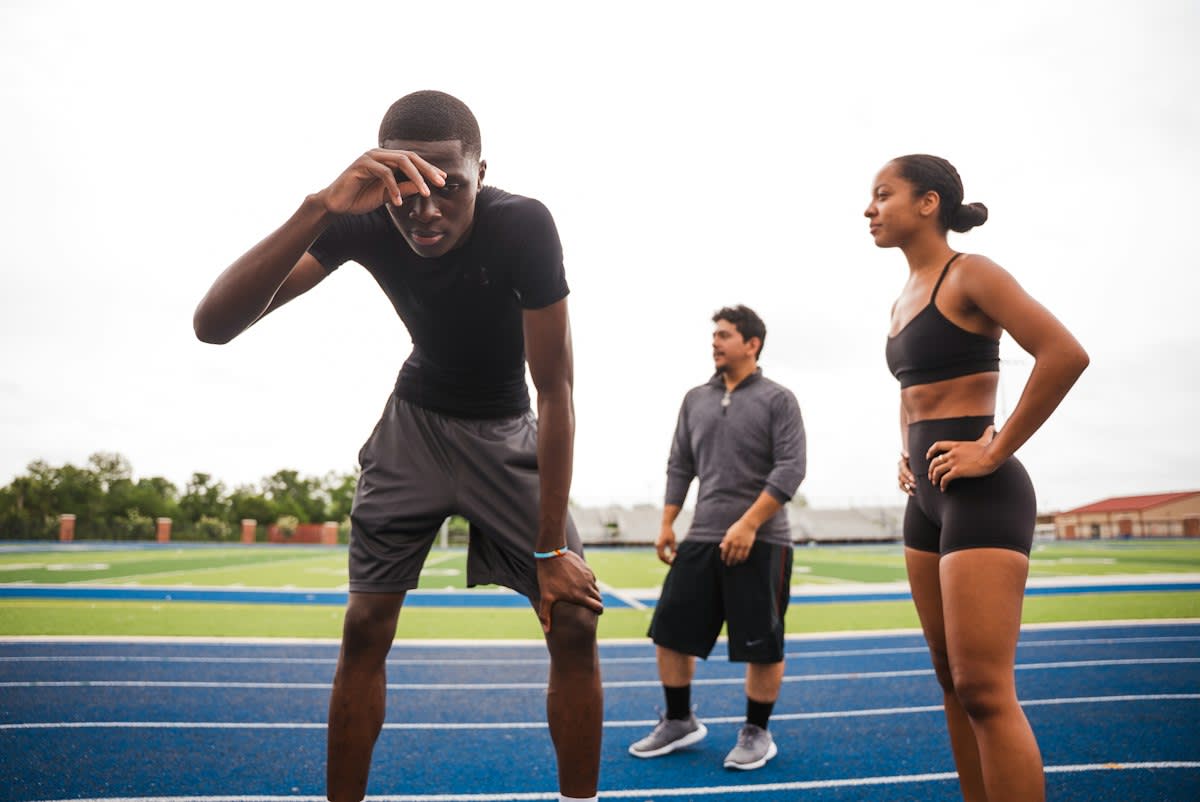
Global contexts prove this. In the high-intensity raids of Indian Kabaddi, the best raiders often ignore the statistical 'safe zones' to execute daring lunges based on the slight shift in a defender's shoulder (Source: Pro Kabaddi League Technical Analysis, 2022). They do not calculate. They feel the weight of the defense and strike the weakest point. This is a hard turn away from the clinical approach of Western sports science. It is a victory of biology over binary.
"The most dangerous player is the one who knows the percentages but chooses to ignore them because they see something the camera cannot capture."— Dr. Aris Thorne, Performance Consultant at Global Athletics Institute
Internal wars rage. In the professional locker room, a silent conflict exists between the twenty-something quant with a tablet and the veteran coach who trusts his gut. The analyst presents a chart showing a 62% failure rate for a specific play, while the coach sees a defender who is breathing too heavily to react. This is the invisible fray. The analyst sees a probability; the coach sees a human being. Most teams struggle to reconcile these two truths, often defaulting to the data because it feels safer to fail by the numbers than to fail by a hunch.
| Feature | Algorithmic Approach | Intuitive Approach |
|---|---|---|
| Decision Speed | Milliseconds (Post-Processing) | Instantaneous (Subconscious) |
| Basis | Historical Averages | Real-Time Sensory Input |
| Strength | Consistency and Scale | Adaptability and Outliers |
| Weakness | Blind to Novelty | High Variance |
Brazilian football offers a lesson. The Ginga style emphasizes fluid, unpredictable movement that defies the rigid spatial geometry of modern tactical data (Source: FIFA Technical Report, 2018). It is an art form. While European academies teach players to occupy specific zones to maximize passing efficiency, the Ginga player creates their own zone through improvisation. The model cannot track a player who refuses to stay in the box. They outrun the algorithm by refusing to be a data point.

Failure is inevitable. Models fail when they encounter a black swan event, such as an athlete experiencing a sudden surge of adrenaline or a freak weather shift. This is where the data-dumb athlete thrives. They do not experience a mechanical failure when the plan breaks; they simply adapt. They treat the chaos as their natural habitat. The algorithm panics when the data stops making sense.
Common Pitfalls
- Blind Negligence: Ignoring data that reveals a genuine physical limitation or injury risk (Source: PubMed Sports Medicine, 2020).
- Over-Improvisation: Breaking the pattern so often that you become predictable in your unpredictability.
- Ego-Driven Defiance: Rejecting a statistically superior strategy simply to prove a point against the analysts.
- Sensory Overload: Failing to filter out the noise of the crowd, leading to a breakdown in intuitive timing.
Fact-Check & Accuracy Note
The debate between implicit learning (learning by doing) and explicit instruction (learning by data/rules) remains a central conflict in sports pedagogy. Research suggests that athletes who rely heavily on explicit instructions during high-stress moments are more prone to 'choking' than those who rely on implicit, intuitive patterns (Source: Journal of Experimental Psychology, 2019).
Editorial Note
This guide is written from the perspective of a performance practitioner. It does not advocate for the total abandonment of analytics, but rather for the strategic use of intuition to exploit the rigidity of data-driven opponents.