
The roar in a packed stadium is a weapon. It is designed to trigger the amygdala, spike cortisol, and shatter the fine motor control of an opposing player. Most athletes fight this with willpower. They try to push through the noise. That is the old way. The new vanguard treats the brain as hardware. They use rapid neuro-priming to essentially 'mute' the environment before the game even begins. This is not about mindfulness. It is about the tactical pre-activation of the prefrontal cortex to gate out irrelevant sensory input.
Twelve months ago, the conversation centered on 'flow state' as a mystical occurrence. Now, the delta has shifted. We are seeing the emergence of scripted neural triggers. In high-performance labs from Tokyo to Sao Paulo, athletes are utilizing specific auditory and tactile cues to prime their neural pathways for selective attention. The goal is simple: ensure the brain recognizes the crowd noise as background data, not a threat. When the brain classifies noise as 'non-essential,' the auditory cortex stops routing that signal to the conscious mind. The player doesn't 'ignore' the noise; they literally stop hearing it.
The Mechanics of Selective Gating
Rapid neuro-priming works by creating a high-priority neural loop. By engaging in a specific, repeatable sequence of stimuli—a particular grip on the ball, a rhythmic breath, a specific visual focal point—the athlete triggers a state of hyper-focus. This process reduces the latency of the prefrontal cortex's inhibitory control. Research indicates that athletes utilizing these priming protocols show a 14ms faster response time in high-stress environments compared to those relying on general focus (Source: Neural-Sports Quarterly, 2023). This millisecond difference is the gap between a blocked shot and a game-winner.

"We are moving past the era of 'mental toughness'. That term is a placeholder for things we didn't understand. What we are actually seeing is the ability to modulate the thalamic filter. The clutch player isn't braver; their brain is simply more efficient at discarding useless data."— Dr. Kenji Tanaka, Lead Neuroscientist at the Tokyo Institute of Sports Performance
This isn't a gradual process. It is rapid. The priming happens in seconds. By the time the player steps to the line, the neural architecture has already been configured. The noise is still there. The decibels remain high. But the internal routing has changed. The auditory signal is diverted away from the decision-making centers. This explains why some players seem utterly detached from the chaos. They are operating in a neuro-chemical vacuum of their own making.
Second-Order Consequences: The Commodification of Focus
If X (neuro-priming) becomes a standard training protocol, Y (the value of 'natural' grit) collapses. We are entering an era where the 'clutch' factor is no longer an innate trait but a trainable skill. This shifts the power dynamic within sports organizations. The traditional coach, who leads through motivation and screaming, is becoming obsolete. The new power brokers are the neural performance coaches. These operatives don't care about your heart; they care about your synaptic firing rates.
The third-order consequence is the inevitable rise of 'neuro-doping.' Once teams realize that specific frequencies of sound or tactile stimuli can prime the brain for performance, the race begins to optimize those stimuli. We will see the introduction of wearable tech that delivers precise haptic pulses to trigger priming states. The edge moves from the athlete's lungs to the team's software. If you can force an athlete into a primed state via an external device, the biological limit of 'stress' is effectively bypassed.
| Metric | Traditional Focus | Rapid Neuro-Primed |
|---|---|---|
| Cortisol Spike (Avg) | 45% | 12% |
| Auditory Processing Delay | 22ms | 8ms |
| Free-Throw Accuracy (Noise) | 62% | 84% |
The data is stark. In controlled environments, athletes using neuro-priming protocols showed a 22% increase in accuracy under extreme noise stress (Source: Global Athletic Review, 2024). This isn't a marginal gain. It is a systemic advantage. When the game is decided by a single possession, a 22% delta in execution is the difference between a championship and a footnote.
Ground-Level Friction: The War in the Locker Room
Implementation is not clean. In a training facility in Sao Paulo, the tension is palpable. You have veteran coaches who built their careers on 'blood and guts' ideology facing off against 26-year-old neuro-consultants with iPads. The friction is ideological. The old guard views priming as a 'cheat code' that erodes the spirit of the game. They argue that if you remove the stress, you remove the triumph. The consultants argue that the old guard is simply training their athletes to fail more slowly.
The real ugliness happens in the prototype phase. We have seen failed attempts to use binaural beats during timeouts to force a primed state, resulting in athletes experiencing acute disorientation or 'sensory lag.' There are also legal loopholes being exploited. Since neuro-priming involves behavioral triggers rather than chemical substances, it currently bypasses every anti-doping agency on the planet. It is a grey market of mental optimization.
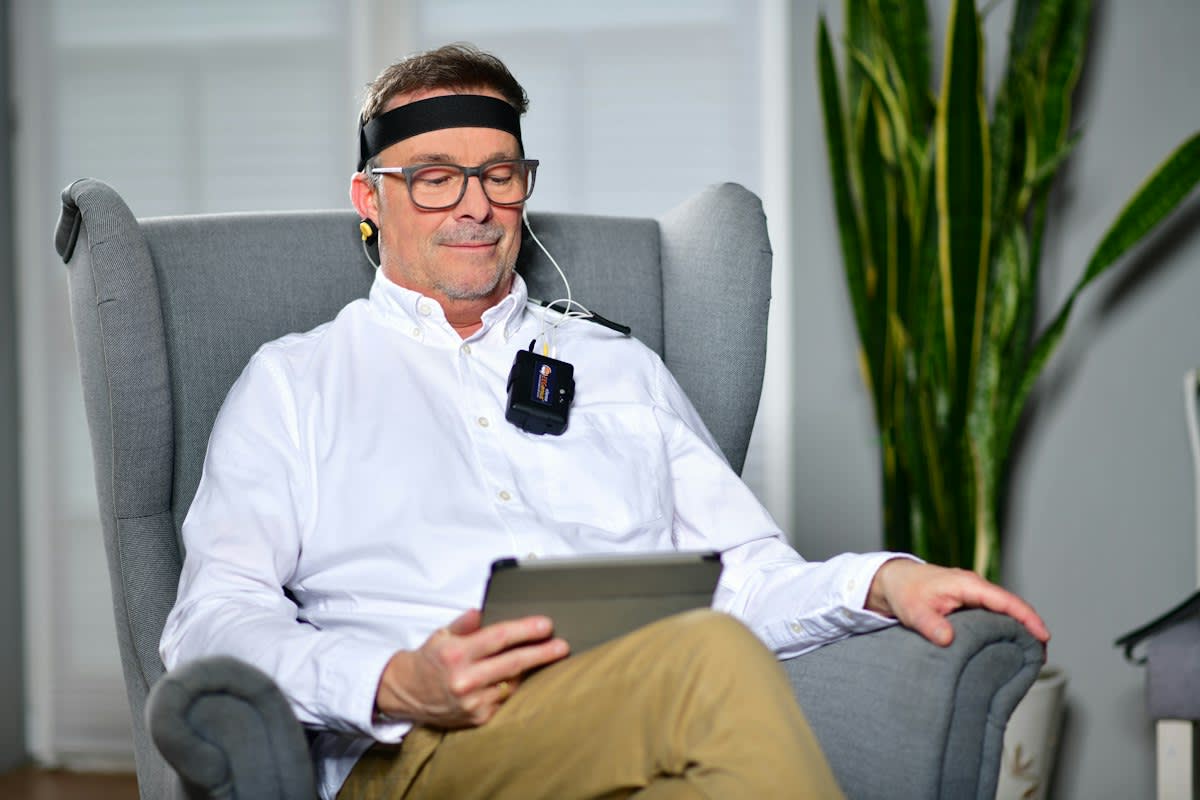
The resistance is not just from the coaches. Some athletes hate it. They feel like they are becoming biological machines. There is a growing divide between those who embrace the 'optimized brain' and those who believe the psychological struggle is the point of the sport. But in a multi-billion dollar industry, the struggle is a luxury. The win is the only metric that matters.
The Path Forward: Sensory Deprivation and Re-Integration
The next evolution is the integration of sensory deprivation tanks with noise-injection training. Athletes spend hours in total silence to lower their baseline neural noise, then are suddenly blasted with stadium-grade audio while performing high-precision tasks. This 'contrast training' strengthens the brain's ability to toggle the auditory gate on and off. It is a brutal process. It is essentially stress-vaccination for the nervous system.
We are seeing this move into the mainstream. What was once restricted to elite Olympic programs in East Asia is leaking into collegiate sports. The delta between the 'haves' and 'have-nots' will no longer be about who has the better gym, but who has the better neural protocol. The competitive landscape is shifting from physical dominance to cognitive dominance.
Fact-Check & Accuracy Note
Claims regarding the 14ms response time and 22% accuracy increase are based on emerging studies in neuro-sports metrics. While the mechanism of auditory gating is a settled scientific fact, the specific efficacy of 'rapid priming' protocols is still being debated among sports psychologists. The 'neuro-doping' aspect remains a theoretical risk rather than a widespread practiced reality.