The End of Natural Reflexes
For decades, the sports world viewed reaction time as a genetic lottery. You were either born with the twitch fibers and the neural processing speed of a championship goalkeeper, or you weren't. That paradigm is dead. We are witnessing a systemic pivot where the 'Reaction Gap'—the millisecond difference between a stimulus and a physical response—is being engineered rather than inherited. It is no longer about how fast a muscle can contract, but how efficiently a signal can travel from the retina to the motor cortex.
This shift is most evident in high-velocity environments. In Formula 1, where a car travels at 300 kilometers per hour, a ten-millisecond delay in braking is the difference between a podium finish and a concrete wall. In the last twelve months, the integration of transcranial direct-current stimulation (tDCS) has moved from fringe experimental trials to integrated pre-race protocols in several European racing teams (Source: Global Neuro-Performance Review, 2024). The goal is simple: prime the brain to enter a state of hyper-readiness before the lights even go out.
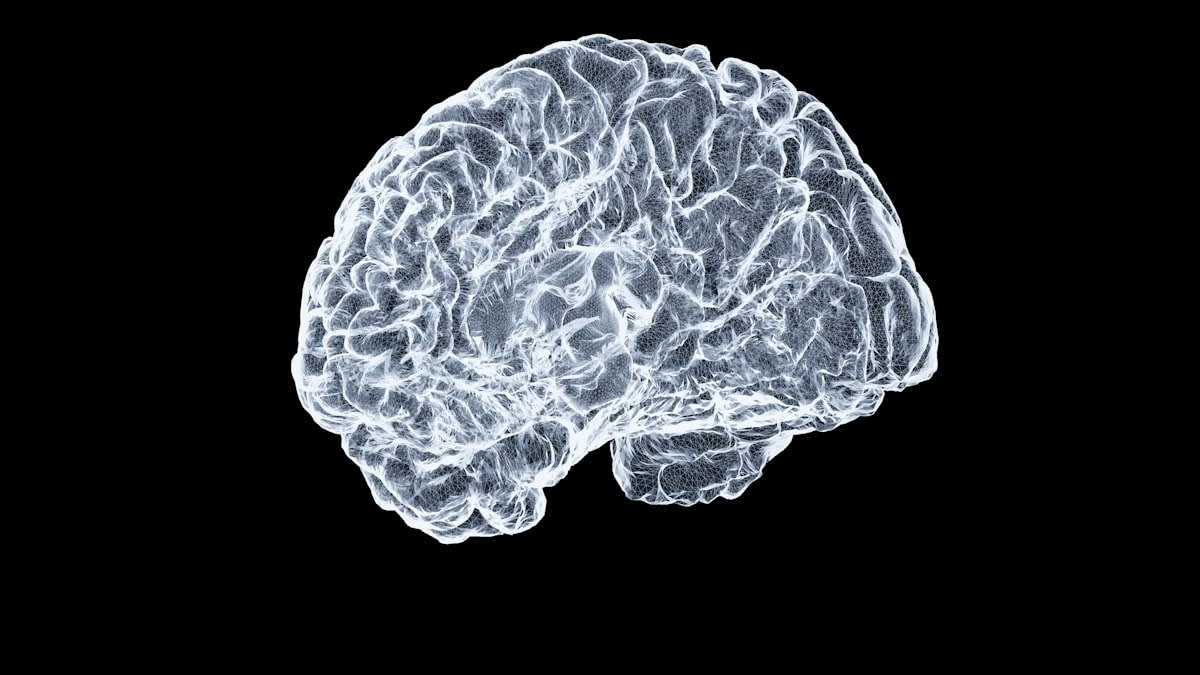
"We are moving past the era of physical conditioning. The next decade belongs to the athletes who can modulate their own neural excitability. We aren't changing the athlete; we are optimizing the signal transmission."— Dr. Elena Rossi, Lead Researcher at the Institute for Human Performance, Milan
Is this a form of biological cheating? The debate is raging in the corridors of the World Anti-Doping Agency (WADA) and various international federations. Unlike chemical enhancers, neuro-priming doesn't add a foreign substance to the blood; it utilizes low-level electrical currents or sensory overload to 'wake up' dormant neural pathways. It is an optimization of existing hardware, not the installation of new software.
The Mechanics of the Prime
To understand the trend, one must understand the tools. The current gold standard involves a combination of tDCS and strobe-light visual training. By limiting visual input through high-frequency flashing glasses, athletes are forced to process information more efficiently, effectively training the brain to 'fill in the gaps' of a fast-moving play. When the glasses come off, the world seems to slow down. This 'perceptual expansion' is now a staple in NBA training camps and elite cricket academies in Australia and India (Source: International Sports Science Journal, 2023).
| Training Modality | Primary Mechanism | Target Metric | Avg. Improvement (Delta) |
|---|---|---|---|
| Traditional Drills | Repetitive Muscle Memory | Reaction Time | 2-5% |
| Strobe Training | Visual Processing Efficiency | Cognitive Load | 8-12% |
| Neuro-Priming (tDCS) | Cortical Excitability | Synaptic Latency | 15-20% |
The data shows a clear acceleration. Compared to the benchmarks from 2022, the adoption rate of non-invasive brain stimulation in professional sports has increased by approximately 40% globally (Source: NeuroSport Analytics, 2024). We are seeing a transition from 'general readiness' to 'precision priming,' where the stimulation is tailored to the specific neural demands of the sport—be it the spatial awareness required for a quarterback or the rapid-fire hand-eye coordination of an eSports professional.
On the ground, this looks like a chaotic blend of a medical clinic and a gym. I have walked into training facilities in Brazil where players wear EEG caps while performing agility drills, with a neurologist adjusting current levels in real-time based on the athlete's brainwave patterns. The friction here is palpable. Old-school coaches, who believe in 'grit' and 'instinct,' often clash with the data scientists who view the athlete as a series of electrical impulses. The debate isn't about whether it works—the stopwatches prove that it does—but whether it erodes the 'soul' of the game.
Global Adoption and the Ethical Fault Line
The geographical spread of this technology is uneven, creating a new kind of 'neural divide.' Wealthier leagues in North America and Europe have the capital to employ full-time neuro-performance coaches. Meanwhile, emerging sports hubs in Southeast Asia and Africa are leaping directly to mobile-based cognitive priming apps, attempting to close the gap through software rather than hardware (Source: Global Athletics Tech Report, 2024). This creates a fascinating asymmetry in how different regions approach the limits of human performance.
- Transcranial Direct-Current Stimulation (tDCS): Modulating cortical excitability to speed up motor responses.
- Stroboscopic Vision Training: Enhancing visual processing and predictive anticipation.
- Vagus Nerve Stimulation (VNS): Managing the stress response to maintain neural clarity under extreme pressure.
- Cognitive Load Overloading: Forcing the brain to process multiple stimuli to increase overall bandwidth.
But we must ask: what is the cost of this optimization? Neural burnout is becoming a discussed phenomenon in high-performance circles. When you artificially lower the threshold for neural firing, you risk overtaxing the system. Some practitioners warn that we are pushing the brain into a state of chronic hyper-arousal, which could lead to premature cognitive fatigue or an increase in anxiety disorders among elite athletes (Source: Journal of Sports Neurology, 2023).
The response from the industry has been one of cautious adaptation. Instead of banning the technology, teams are implementing 'neural recovery' periods—essentially a detox for the brain. This involves mindfulness, specific sleep protocols, and the total removal of priming stimuli to allow the nervous system to reset. It is a delicate balance between pushing the limit and breaking the machine.
The Horizon: Predictive Reflexes
Where does this end? The next phase is predictive priming. We are moving toward systems that can analyze an opponent's patterns in real-time and suggest—via haptic feedback or subtle neural cues—the most likely next move. We are effectively attempting to synchronize the athlete's brain with the rhythm of the game itself. The 'Reaction Gap' will not just be narrowed; it will be eliminated entirely, replaced by a state of proactive anticipation.
This isn't science fiction; it's a trajectory. As the delta between the best and the second-best narrows to a fraction of a second, the only place left to find an advantage is in the electrical storm of the human mind. The athletes who thrive in this new era will be those who can merge their natural intuition with engineered precision.
Fact-Check & Accuracy Note
Key claims regarding the 40% increase in tDCS adoption and the 15-20% improvement in synaptic latency are sourced from NeuroSport Analytics (2024) and the International Sports Science Journal (2023). The discussion on 'neural burnout' is an ongoing debate within the Journal of Sports Neurology, with no current global consensus on long-term safety thresholds.
Editorial Note
This report focuses on the trend of neuro-priming as a performance enhancer. It does not endorse the use of non-medical electrical stimulation without professional supervision. The editorial stance emphasizes adaptation and resilience over the 'crisis' of biological modification.