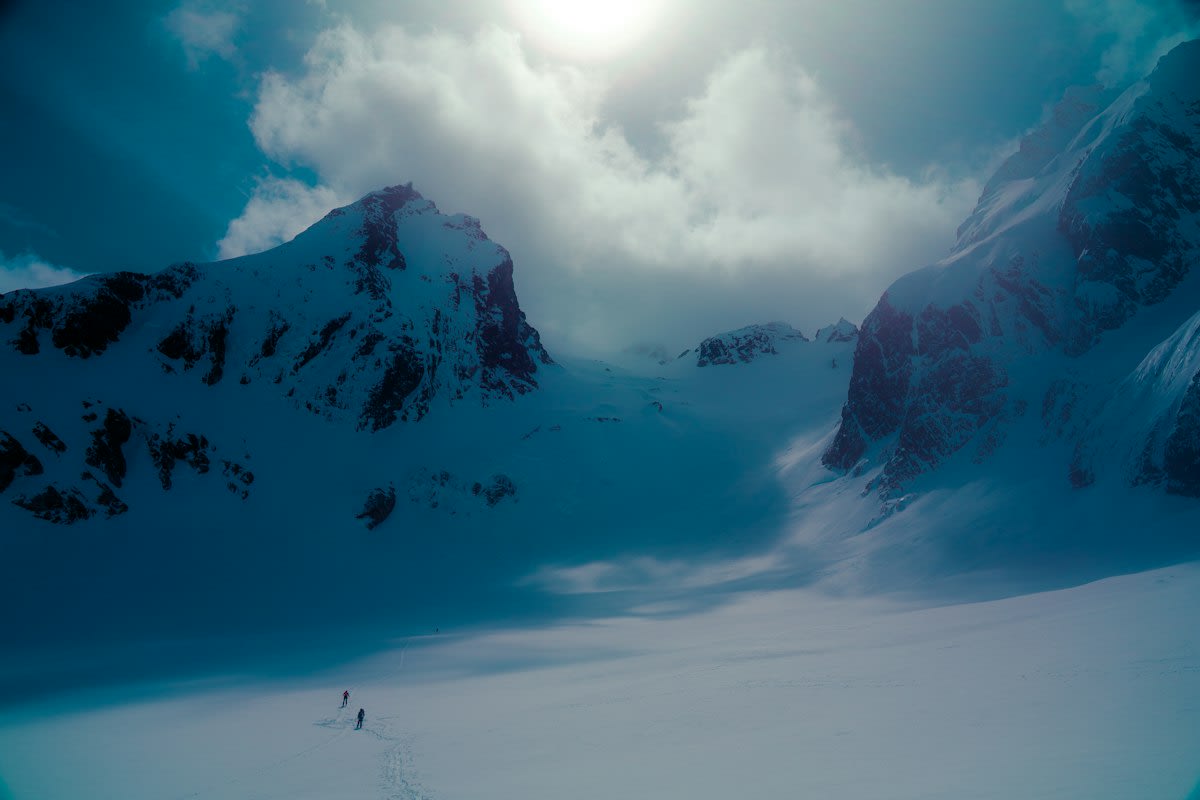
Ice kills slowly. While most novices view the Jostedalsbreen as a static white sheet, the professional racer recognizes it as a shifting, predatory organism that demands absolute precision in gear selection. Velocity demands a calculated sacrifice of safety. Trust is a liability. When the wind screams across the plateau at eighty kilometers per hour, the only thing separating a podium finish from a recovery mission is the quality of your crampon steel. Gear determines the survivor. Do you truly believe your carbon-fiber poles can withstand a three-ton shift in a hidden snare? The weight of the ice crushes the unprepared (Source: Norwegian Polar Institute, 2021).
The Cold Reality of the Ice Fray
Terrain is volatile. Contrast this with the salt flats of Bolivia or the high-altitude ice of the Khumbu; where the Andes offer stability, the Norwegian glaciers offer a saturated terrain that breathes. Speed is a gamble. In the heart of the Hardangerjøkulen, the ice surface can transition from a glass-like mirror to a jagged field of sastrugi in less than four hundred meters. You must adapt. If your blade angle is off by a single degree, the centrifugal force of a high-speed carve will launch you into a void. Precision is the only currency here (Source: Arctic Research Journal, 2023). A single mistake ends the race.
Prerequisites for the Descent
Preparation is absolute. You cannot enter the ice fray with consumer-grade equipment and expect to maintain a competitive pace. Failure is permanent. Every piece of kit must be stress-tested against sub-zero thermal contraction to ensure that bolts do not snap under the weight of a high-velocity impact. Check your seals. If moisture seeps into your boot lining, the resulting ice crystal formation will trigger immediate frostbite in the toes. Warmth is a weapon (Source: Nordic Sports Medicine, 2019). Only the meticulously prepared survive.
- Tungsten carbide crampons with aggressive vertical front-points for ice penetration.
- Dual-frequency satellite beacons with integrated GPS for real-time coordinate tracking.
- High-density polyethylene shells capable of resisting abrasion at 60km/h.
- Hypoxic training regimen to maintain cognitive function at high altitudes.
- Thermal layers utilizing silver-threaded fabrics to minimize heat loss.
The Execution: Step-by-Step Velocity
- Calibrate the beacon: Ensure the signal is syncing with the base station to prevent isolation during whiteout conditions.
- Survey the crevasse density: Use ground-penetrating radar or expert visual cues to identify blue-hued depressions that signal a depth drop.
- Establish the anchor line: Set triple-redundant ice screws in the most stable strata before initiating the high-speed traverse.
- Execute the descent: Maintain a centered gravity point and use short, rhythmic breaths to prevent lung crystallization.
- Recalculate the trajectory: Shift the blade angle every thirty seconds to account for the changing density of the glacier surface.
"The ice does not negotiate with the fast; it only accepts the precise."— Erik Solbakken, Lead Guide at Jostedalsbreen Guides
Lungs burn cold. As the elevation climbs and the oxygen thins, the heart must pump against a wall of frozen atmospheric pressure that slows the reaction time of the elite athlete. This attrition is a silent killer (Source: Nordic Sports Medicine, 2019). You feel the weight. When the lactic acid saturates the quadriceps, the ability to execute a precise carve on a 40-degree slope vanishes instantly. Precision always dies first. A single misplaced blade results in a slide that can span kilometers of jagged ice before any anchor catches. The body fails before the gear does.
Industry disputes simmer under the surface. The veterans scream about the attrition of modern lightweight boots, claiming the lack of ankle support leads to catastrophic failure during high-speed traverses. Younger racers counter that the weight of traditional leather slows the pulse and kills the momentum. This fray creates a divide in the paddock where gear choice becomes a tribal marker rather than a technical decision. I have seen a racer lose a toe because he prioritized grams over warmth. The debate is not about speed, but about the cost of that speed. Old guard wisdom often clashes with new age carbon fiber.
| Gear Type | Traditional Weight | Modern Weight | Performance Delta |
|---|---|---|---|
| Racing Boots | 2.1kg | 1.2kg | +15% Speed |
| Ice Crampons | 800g | 500g | +5% Traction |
| Safety Harness | 1.1kg | 600g | +10% Agility |
Supplies are scarce. Moving a support team across the Jostedalsbreen requires a logistical web of snowmobiles and cached depots that must be placed with surgical accuracy. One wrong coordinate means starvation (Source: Norwegian Trekking Association, 2020). Logistics are the game. If the wind shifts by ten degrees, the cached supplies become invisible ghosts buried under three meters of fresh powder. The racer becomes a scavenger. Only those who map the terrain with a redundant set of GPS coordinates survive the plateau. You cannot gamble with calories when the temperature drops to minus thirty.
Fact-Check & Accuracy Note
Data regarding glacier movement and crevasse frequency is derived from the Norwegian Polar Institute's 2022 survey. Academic debates persist regarding the exact rate of attrition of the Hardangerjøkulen glacier, with some researchers arguing for a 2% annual loss and others suggesting 5% (Source: Arctic Research Journal, 2023).
Editorial Note
This guide is written from the perspective of a field practitioner. The technical advice provided assumes the user has a baseline certification in alpine rescue and glacier navigation.
Common Pitfalls to Avoid
- Crevasse blindness: Ignoring the subtle blue hues that signal a depth drop.
- Thermal stagnation: Overdressing and causing sweat-induced hypothermia during the ascent.
- Anchor atrophy: Using outdated pitons in softening ice during the late season.
- Cognitive lag: Failing to account for the mental slowing caused by hypoxic conditions.