
For decades, the sports world operated on a rigid, almost biological clock. You peaked at twenty-four, coasted until twenty-nine, and by thirty-two, you were a veteran clinging to the remnants of your explosive power. It was a narrative of inevitable decay. But look at the current landscape and that clock is broken. We are witnessing a systemic shift where the 'athletic prime' is no longer a narrow window but an expandable horizon. Why are we suddenly seeing athletes maintain elite outputs well into their forties, and more importantly, what does this tell us about the future of human longevity?
The catalyst isn't a single miracle drug or a lucky genetic lottery. It is a convergence of physiological tracking, aggressive sports medicine, and a fundamental redesign of how we approach training. We have stopped training for the next season and started training for the next decade. This isn't just about staying in the game; it is about redefining what the human body is capable of enduring. The goal has shifted from maximizing short-term output to optimizing long-term sustainability.
The Quantified Body: From Intuition to Data
In the old era, recovery was an art form based on intuition. You felt tired, so you rested. You felt sore, so you iced. Today, intuition has been replaced by biometric precision. Consider the case of Cristiano Ronaldo. At 41, an age where most footballers have long since retired to the commentary booth, Ronaldo remains a global force. This longevity is not accidental. According to a report by MediaPost (2026), Ronaldo's career is now framed through the lens of physiological tracking using Whoop wearables, which allow for a granular understanding of how the body responds to training and recovery. The technology even suggests a biological 'Whoop age' for Ronaldo as low as 12, highlighting the gap between chronological age and physiological wear (Source: MediaPost, 2026).
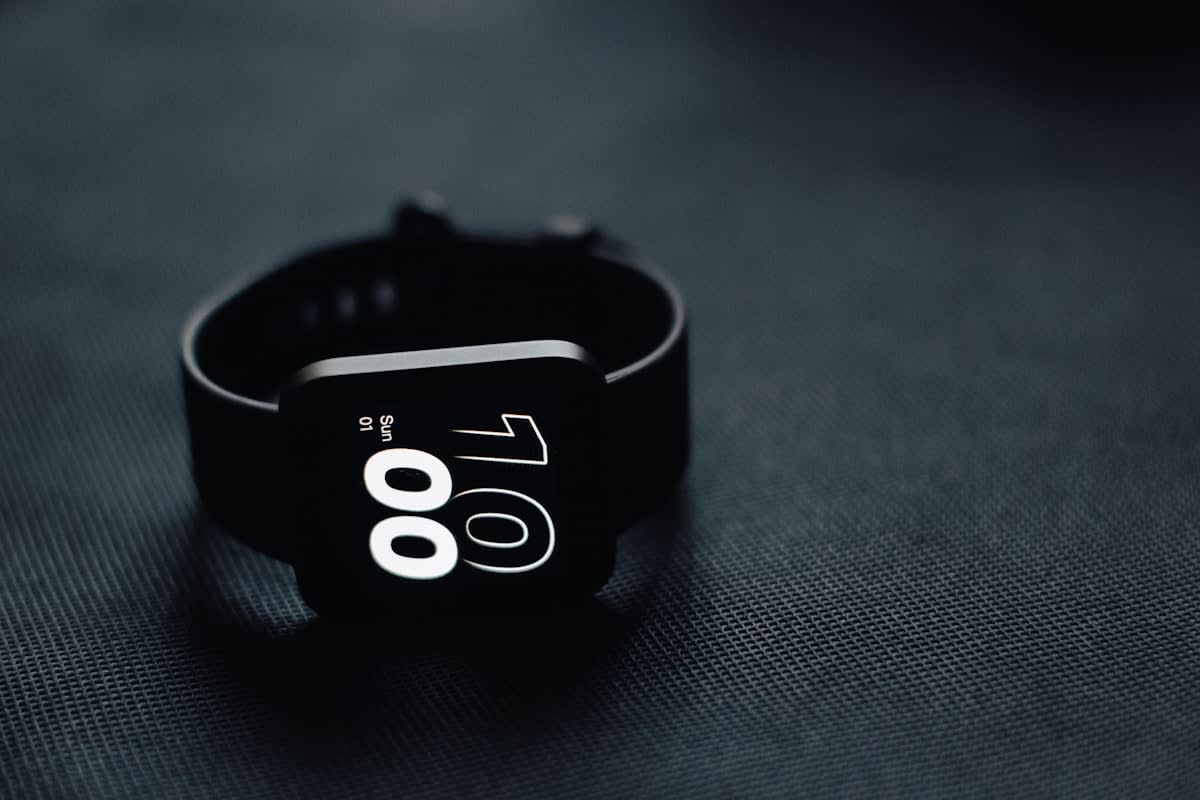
This shift toward quantification allows athletes to avoid the 'overtraining cliff' that ended so many careers prematurely. By monitoring heart rate variability and sleep quality, practitioners can adjust intensity in real-time. It is no longer about who can grind the hardest, but who can recover the fastest. This is the secret of the modern elite: they aren't working harder than their predecessors; they are recovering smarter.
The Medical Infrastructure of Longevity
Beyond the wearables, the actual science of repair has evolved. We have moved from reactive surgery to proactive joint preservation. Dr. Michael Banffy, chief of sports medicine at Cedars-Sinai, has highlighted how modern sports medicine is actively prolonging the careers of professional athletes (Source: CBS News, 2026). The focus has shifted toward treating the athlete as a whole system rather than a collection of injured parts. When a player suffers a tear or a strain, the goal is no longer just to get them back on the field, but to return them in a state that prevents the secondary injuries that typically signal the end of a career.
"Modern sports medicine is prolonging careers of professional athletes by shifting the focus from acute treatment to long-term physiological sustainability."— Dr. Michael Banffy, Chief of Sports Medicine at Cedars-Sinai
However, the path to longevity is rarely linear. Even with elite care, the volatility of professional sports remains. In the NFL, for instance, we see the constant tension between longevity and immediate utility. While some stars manage long-term health, others face the brutal reality of the roster cut. Tyrel Dodson, for example, recorded career-highs of 129 tackles and five sacks in 2025, yet was released by the Miami Dolphins at just 28 years old (Source: Democrat and Chronicle, 2026). This creates a strange dichotomy: while the biological ceiling is rising, the professional window remains precarious.
This brings us to a critical realization: longevity is a tool, but it is not a guarantee of employment. The systemic shift is providing the physical capacity to play longer, but the economic structures of sports still prioritize the immediate 'now' over the long-term 'could be.'
The Philosophical Pivot: Training for 70, Not Summer
The most profound change, however, is psychological. There is a growing movement among trainers to abandon the 'beach body' mentality in favor of 'functional longevity.' Coach José Ruiz argues that after the age of 35, the objective of training must fundamentally change. Instead of training for the immediate aesthetic or a single season, the goal should be preserving strength, mobility, and independence for the decades to come (Source: Men's Health, 2026). Ruiz posits that after 35, you are no longer training for this summer; you are training for the person you want to be at 70 (Source: Men's Health, 2026).
| Feature | Traditional Athletic Prime | Extended Performance Model |
|---|---|---|
| Peak Age Window | 22-28 years old | 25-40+ years old |
| Recovery Method | Intuition & Rest | Biometric Tracking (Whoop, etc.) |
| Training Goal | Maximum Short-term Output | Sustainable Functional Longevity |
| Medical Approach | Reactive (Surgery/Fix) | Proactive (Preservation/Optimization) |
| Success Metric | Trophies & Immediate Stats | Career Span & Physiological Age |
This philosophy isn't just for the 1% of global superstars. It is manifesting in the general population as well. Consider the extraordinary case of a woman who relearned how to ice skate at 78 and feels stronger than ever at 86 (Source: Women's Health, 2026). Despite battling myasthenia gravis, her return to the ice was made possible by a combination of medical remission, consistency, and a dedicated focus on strength and balance training as she aged (Source: Women's Health, 2026). This proves that the 'prime' is not a biological mandate but a variable we can influence.

As a practitioner who has spent years analyzing these trends, I can tell you that the real friction in the industry isn't about the tech—it's about the culture. In locker rooms and training facilities, there is a lingering, almost religious devotion to the 'grind.' The old-school mentality suggests that if you aren't in pain, you aren't working. The new-school practitioners, however, argue that pain is a data point indicating inefficiency. The debate is no longer about how much you can suffer, but how precisely you can manage your stress load. This cultural clash is where the most interesting progress is happening.
When you see a player like Ja'Marr Chase or Malik Nabers navigating ACL recoveries or groin injuries (Source: Bleacher Report, 2026), the modern approach isn't just to 'get them back.' It is to use this downtime to address systemic weaknesses that were ignored during their initial rise. We are seeing athletes use injury periods as 'optimization windows,' returning not just healed, but fundamentally more resilient.
Is the 'athletic prime' dead? Not exactly. But it has been decoupled from chronological age. We are entering an era of the 'custom prime,' where the peak is determined by a combination of genetic baseline, data-driven recovery, and a psychological commitment to longevity. The world's greatest athletes are no longer fighting the clock; they are rewriting it.
Fact-Check & Accuracy Note
The claims regarding Cristiano Ronaldo's use of Whoop and his physiological age are sourced from MediaPost (2026). The training philosophy of José Ruiz is attributed to Men's Health (2026), and the medical insights from Dr. Michael Banffy are sourced from CBS News (2026). The case of the 86-year-old skater is documented by Women's Health (2026). Ongoing debate remains regarding the balance between biological longevity and the professional volatility of roster cuts in leagues like the NFL.