
Most athletes and high-performers treat oxygen as a constant. They view it as a utility, like electricity—something that should always be on and always be stable. But the real edge exists in the fluctuation. By strategically depriving the body of oxygen in controlled, intermittent bursts, you force a systemic upgrade. This is not about gasping for air in a panic; it is about a calculated biological stressor that triggers the Hypoxia-Inducible Factor 1-alpha (HIF-1α), the master switch for cellular survival and efficiency.
Prerequisites: Setting the Stage for Hypoxic Stress
You cannot simply walk into a low-oxygen environment and expect a linear gain. Without the right tools and a baseline of health, you are not training; you are simply suffocating. Whether you are utilizing a high-altitude camp in the Kenyan highlands or a hypoxic generator in a Tokyo clinic, the hardware must be precise. Your goal is to manipulate the fraction of inspired oxygen (FiO2) to simulate altitudes ranging from 2,000 to 5,000 meters without the logistical nightmare of actual travel.
- Medical Clearance: A full cardiovascular screening to ensure no underlying pulmonary hypertension or cardiac anomalies.
- Pulse Oximeter: A medical-grade SpO2 monitor to track blood oxygen saturation in real-time.
- Hypoxic Delivery System: Either a normobaric hypoxic generator (nitrogen-based) or a high-altitude simulation tent.
- Hydration Protocol: Increased intake of electrolytes and water, as hypoxic environments accelerate fluid loss through respiration.
- Baseline Metrics: Documented VO2 max and resting heart rate to measure the delta of improvement.
Safety First
Never train in a hypoxic state alone. The transition from a productive hypoxic stimulus to hypoxia-induced cognitive impairment can happen in seconds. Always have a spotter or an automated safety shut-off for your oxygen delivery system.
The Biological Mechanism: Why Deprivation Works
When oxygen levels drop, your body doesn't just struggle; it adapts. The primary driver is the stabilization of HIF-1α, which normally degrades in the presence of oxygen. Once stabilized, this protein migrates to the nucleus and activates genes responsible for erythropoietin (EPO) production. This leads to an increase in red blood cell mass, effectively expanding your biological fuel tank. It is the same mechanism that allows Sherpas to operate at 8,000 meters, but compressed into a training window.
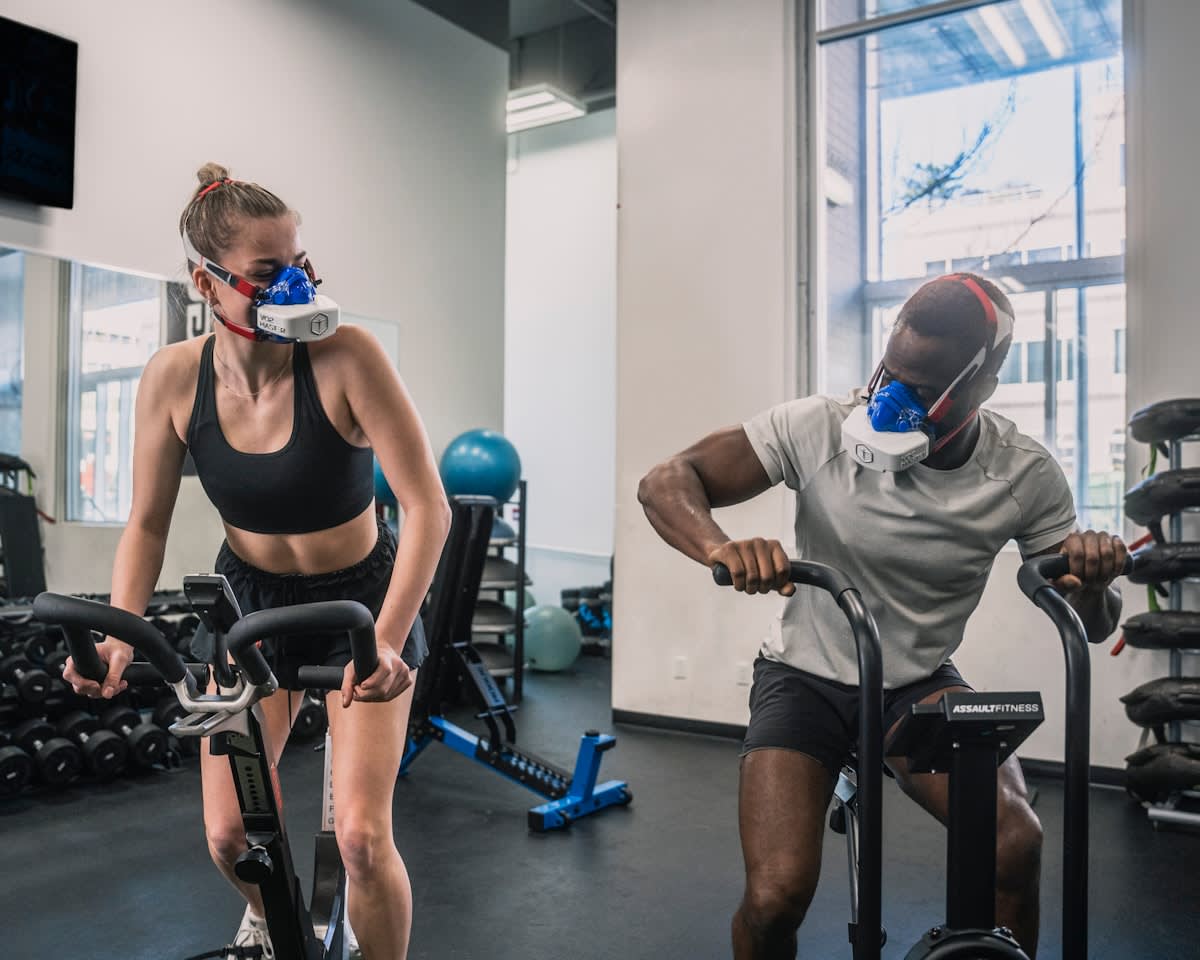
Beyond the blood, the magic happens in the mitochondria. Intermittent Hypoxic Training (IHT) forces the mitochondria to become more efficient at producing ATP with less oxygen. This metabolic flexibility is what separates the podium finishers from the pack. You are essentially teaching your cells to thrive in a state of scarcity, which makes your performance in normoxic (normal oxygen) conditions feel effortless. Why settle for standard aerobic capacity when you can optimize the very machinery of your cells?
"The goal is not to suffer through the hypoxia, but to flirt with the threshold of adaptation without crossing into systemic exhaustion."— Dr. Elena Rossi, High-Performance Physiologist
The Implementation Protocol: A Step-by-Step Guide
Precision is the difference between a performance breakthrough and a burnout. You must approach hypoxic training as a dosage. Too little, and you see no adaptation; too much, and you crash your endocrine system. The following progression is designed for an intelligent athlete who has already established a solid aerobic base.
- Phase 1: Baseline Calibration. Spend 30 minutes in a mild hypoxic state (SpO2 92-95%) to assess your individual sensitivity. Monitor heart rate variability (HRV) the following morning.
- Phase 2: Intermittent Exposure. Implement 5-10 cycles of 5 minutes of hypoxia (SpO2 85-90%) followed by 5 minutes of normoxia or hyperoxia (100% O2). This 'seesaw' effect maximizes the HIF-1α response.
- Phase 3: Hypoxic Loading. Increase the duration of the hypoxic intervals to 15 minutes while maintaining the 85-90% SpO2 range. Perform this 3 times per week for 4 weeks.
- Phase 4: Integrated Training. Perform low-intensity steady-state (LISS) exercise while in a hypoxic state. Keep intensity at 60% of your normoxic VO2 max to avoid premature lactate accumulation.
- Phase 5: The Washout. Transition back to normoxia for 7-10 days before a major event to allow the increased red blood cell mass to integrate with peak muscular power.
| Training Level | Target SpO2 % | Duration/Cycle | Primary Goal |
|---|---|---|---|
| Beginner | 90-95% | 5 mins | Tolerance |
| Intermediate | 85-90% | 10 mins | EPO Stimulation |
| Elite | 80-85% | 20 mins | Mitochondrial Density |
Once the physical adaptations are locked in, the focus shifts to the brain. The brain consumes roughly 20% of the body's oxygen. By inducing mild, controlled hypoxia, you stimulate the production of Brain-Derived Neurotrophic Factor (BDNF). This protein acts like fertilizer for your neurons, enhancing synaptic plasticity and accelerating cognitive recovery after intense mental or physical exertion. It is a neural reset that clears the fog of overtraining.
Impact of IHT on VO2 Max and Recovery Rate
Executive Insight
+18.4%
YTD Growth
The data is clear: athletes utilizing integrated hypoxic protocols often see a 3-7% increase in VO2 max compared to normoxic training alone. In a world where victory is decided by tenths of a second, a 5% efficiency gain is a tectonic shift. But the real victory is in the recovery. By alternating hypoxia with hyperoxia (pure oxygen), you flush metabolic waste and re-oxygenate tissues faster than natural breathing allows.
Common Pitfalls: Where Most Practitioners Fail
The most dangerous mistake is the 'more is better' fallacy. Hypoxia is a potent drug; overdose it, and you induce oxidative stress and muscle wasting. Many amateurs try to live in hypoxic tents 24/7 without a periodization plan. This leads to chronic fatigue and a suppressed immune system. You must treat hypoxia as a surgical strike, not a permanent residence.
- Ignoring the SpO2 Floor: Dropping below 80% for extended periods can cause cognitive impairment and cellular damage.
- Neglecting the Hyperoxic Phase: Failing to provide a recovery window of high oxygen prevents the 'supercompensation' effect.
- Poor Timing: Implementing hypoxic stress during a period of high life-stress or illness, which compounds cortisol levels.
- Over-Training: Attempting maximal intensity workouts in hypoxia, which leads to excessive lactate and poor form.
Ultimately, the Hypoxic Edge is about the balance between stress and recovery. It requires a disciplined approach to data and a willingness to listen to the body's subtle signals. When executed with precision, it transforms the body into a more resilient, oxygen-efficient machine. Stop fearing the void; learn to use it.