
The Shift in the Professional Clock
The traditional arc of a professional athlete used to be a steep climb followed by a precipitous drop. We are now witnessing a flattening of that curve. Take Klay Thompson, who has spent 15 years competing at the highest echelon of professional basketball. His journey—spanning 13 seasons with the Golden State Warriors and four NBA championships—was not a product of luck. It represents a broader trend where longevity is no longer viewed as a genetic gift but as a calculated output of physical and mental management.
Why are we seeing this now? The delta between today's approach and the strategy of just twelve months ago lies in the move from general recovery to precision maintenance. Athletes are no longer just 'resting'; they are optimizing. Thompson describes basketball as his 'place of peace,' suggesting that the psychological sanctuary found in the sport acts as a buffer against the intense pressure and serious injuries that typically end careers prematurely.

The Bio-Symmetry Mandate
The most critical frontier in this new era is the battle against asymmetry. In sports like badminton, tennis, and fencing, the body is pushed into unilateral dominance. While some bilateral asymmetry is normal and not always linked to poor performance, the risk manifests when the imbalance becomes extreme. When one limb carries a disproportionate load, the weaker side becomes a liability, unable to withstand normal strength requirements, while the dominant side risks overuse injuries.
This isn't just about muscle size; it's about joint survival. Asymmetrical ground reaction forces during landing have been prospectively linked to an increased risk of ACL injuries in healthy individuals. Even more concerning is the long-term trajectory: asymmetrical loading is directly attributed to the progression of knee osteoarthritis. The goal of 'Bio-Symmetry' is to neutralize these imbalances before they trigger a degenerative cascade.
"The beauty of racquet sports—tennis, padel, pickle, all of those—is that they’re everything in one."— Vonda Wright, MD, Orthopedic Sports Surgeon
| Load Type | Primary Risk Factor | Long-term Outcome |
|---|---|---|
| Asymmetric (Unmanaged) | Inter-limb strength disparity | Increased ACL risk & Osteoarthritis |
| Symmetric (Optimized) | Balanced joint distribution | Extended joint viability |
| Position-Dependent | Role-specific fatigue | Tailored recovery efficiency |
Is the pursuit of perfect symmetry a myth? Perhaps. But the data suggests that prioritizing limb loading improves symmetry during dual-tasking, especially for those recovering from ACL reconstruction. By forcing the body to distribute weight evenly, clinicians are effectively 're-teaching' the brain to protect the joints.
Position-Specific Precision in Global Football
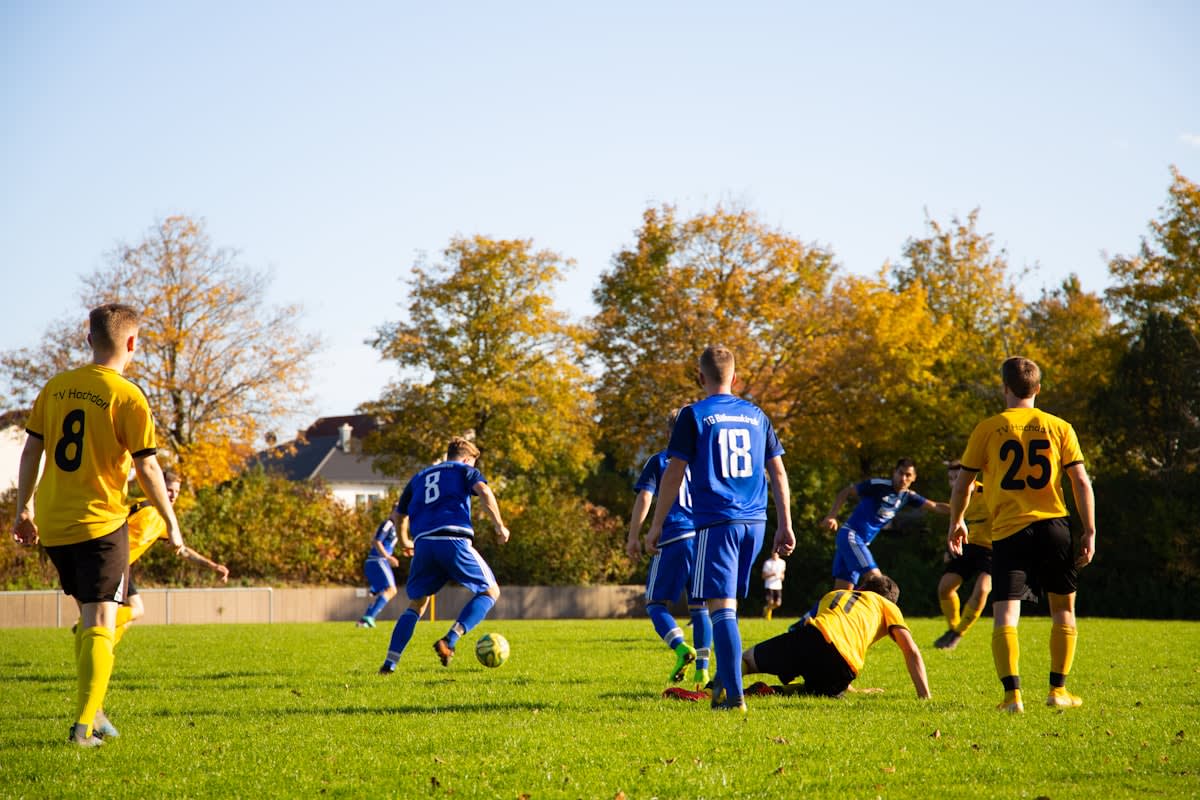
In European elite football, the 'one size fits all' training regimen is dead. The current trend is Position-Dependent External Load Management. A center-back and a winger do not experience the same biomechanical stress; therefore, their training loads must be proportional to their specific competitive demands. This ensures that every player is sufficiently stimulated without crossing the threshold into overtraining.
Technical staffs are now designing training tasks that are game-specific and aligned with the physiological requirements of each role. By tailoring the load, clubs can reduce the variance in weekly biomechanical load variables, which has historically been a primary driver of soft-tissue injuries. It is a transition from managing a team to managing a collection of individual biological systems.
The Paradox of the Perfect Body
However, the quest for longevity has a dark side: the obsession with hyper-optimization. Tech entrepreneur Bryan Johnson, who transformed his body into a measured anti-aging experiment, recently expressed doubts about his extreme approach. Despite extensive health testing, Johnson was diagnosed with gastritis—an autoimmune condition where the immune system attacks the stomach lining. This diagnosis serves as a cautionary tale for the professional sports world.
The lesson here is stark. You can measure every calorie, every heartbeat, and every millimeter of joint movement, yet still be blindsided by an incurable autoimmune response. The 'Bio-Symmetry' movement must therefore balance high-tech data with biological intuition. Over-optimization can create a blind spot where the pursuit of a metric replaces the reality of health.
The Optimization Warning
The Bryan Johnson case highlights a critical gap: extensive biometric testing does not always detect autoimmune conditions, reminding athletes that data is a tool, not a total solution.
The Racquet Sport Blueprint for Lifespan
If we look beyond the professional arena to general longevity, racquet sports emerge as the gold standard. Tennis, padel, and pickleball are not just games; they are comprehensive longevity tools. According to Dr. Deborah Kado of the Stanford Longevity Center, the goal isn't merely adding years to life, but ensuring those years are high-quality. Racquet sports achieve this by demanding a multitude of faculties simultaneously.
These sports require a blend of cognitive agility, rapid reaction times, and multi-directional physical movement. This holistic demand prevents the stagnation often seen in linear exercises like running or cycling. By engaging multiple systems—cardiovascular, neuromuscular, and cognitive—racquet sports provide a protective effect that extends far into the geriatric years.
The intersection of these trends—the precision of soccer's load management, the balance of bio-symmetry, and the holistic demand of racquet sports—is creating a new class of athlete. They are no longer sprinting toward a cliff; they are building a bridge to a sustainable, decades-long career.
Impact of Managed vs. Unmanaged Asymmetry on Joint Longevity
Executive Insight
+18.4%
YTD Growth
Ultimately, the Longevity League is defined by a shift in mindset. Whether it is Klay Thompson finding peace in the game or a football club tailoring loads to a specific position, the focus has moved from maximum output to maximum sustainability. The athletes who survive the next decade will not be the strongest or the fastest, but the most symmetrical.