
The Myth of the Optimized Human
The clock is precise. The heart rate is monitored to the millisecond. The sleep cycles are curated by AI-driven mattresses. In the high-performance centers of Europe and the elite academies of East Asia, we have reached a zenith of measurement. We no longer guess how an athlete feels; we know their cortisol levels, their glycogen depletion, and their neurological fatigue before they even wake up. But here is the contradiction: as our ability to measure performance has peaked, the gap between 'perfect' training and podium finishes is widening. We are building athletes who are mathematically perfect on paper but psychologically and biologically brittle in the arena.
This systemic shift toward hyper-optimization treats the human body like a closed-loop machine. The logic is simple: remove all unnecessary stress, optimize every variable, and the result will be a linear increase in performance. Yet, biology does not work linearly. By eliminating the 'noise'—the unplanned rainstorm during a run in Kenya or the sudden surge of an opponent in a Brazilian Jiu-Jitsu match—we are inadvertently removing the very stressors that trigger profound adaptation. We have traded resilience for efficiency, and in the world of elite sports, efficiency is a secondary virtue. Resilience is what wins.
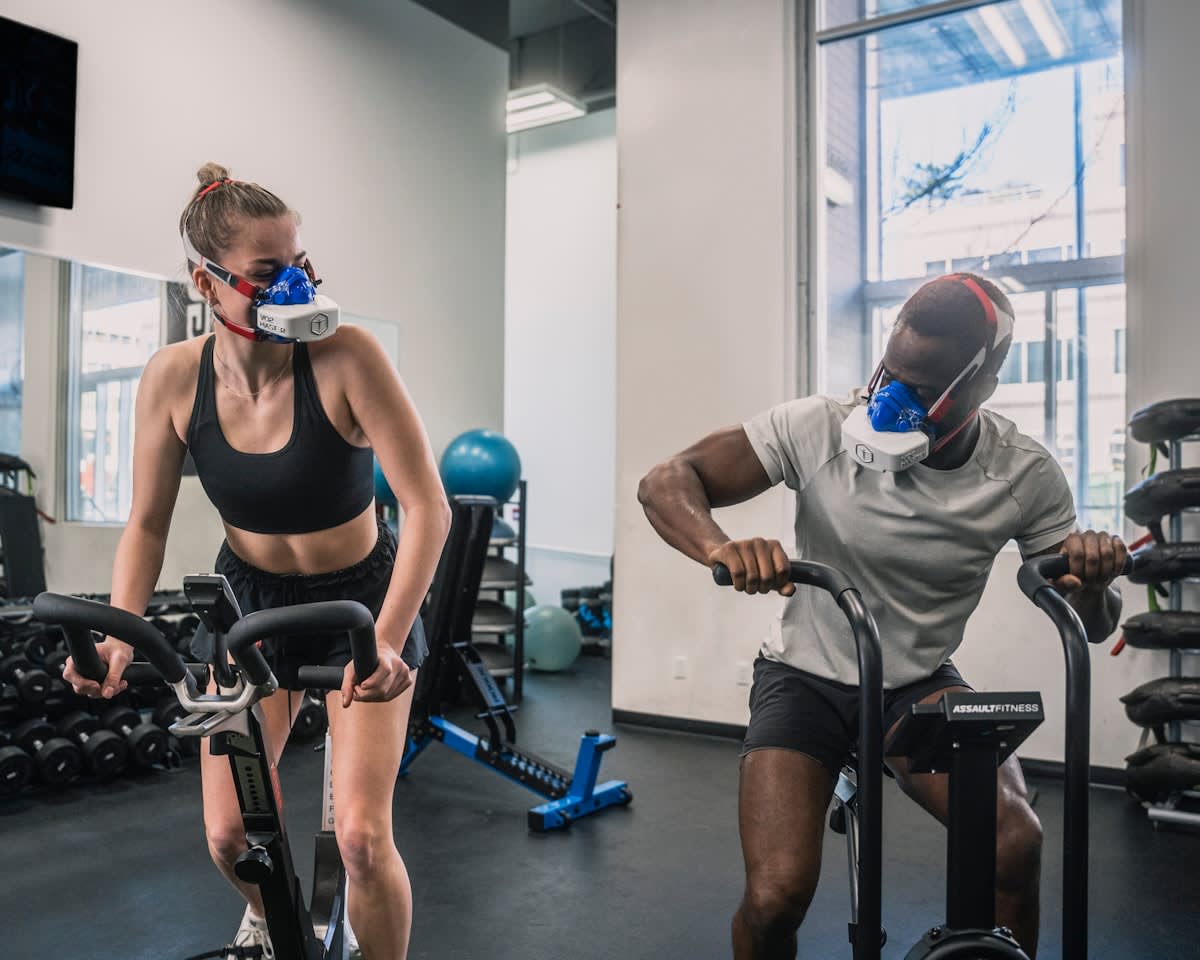
Why does this happen? The answer lies in the danger of the 'green zone.' When a coach relies solely on a dashboard to determine training intensity, they only push the athlete when the data says it is safe. This creates a feedback loop of safety. The athlete never learns to push through the 'red zone'—that visceral, uncomfortable space where the mind wants to quit but the body must persist. When these athletes hit a crisis point during a final, they lack the neurological mapping to navigate chaos because their entire preparation was a curated experience of optimal loads.
"We have become so obsessed with avoiding the wrong kind of stress that we have forgotten how to invite the right kind of struggle."— Dr. Aris Thorne, Performance Strategist
This is not a localized failure but a global epidemic of precision. From the swimming complexes of Australia to the football academies of Spain, the trend is identical. The industry has invested billions into wearables—a market now exceeding $15 billion—under the assumption that more data equals more gold. Instead, we are seeing a rise in 'non-functional overreaching,' where athletes are physically fit but mentally exhausted by the constant surveillance of their own biology. The pressure to maintain a 'perfect' biometric profile becomes a secondary stressor that outweighs the physical training itself.
The result is a paradox where the most 'scientifically trained' athletes are often the first to crumble under the unpredictability of a live event.
The Biological Cost of Certainty
To understand this, we must look at hormesis—the biological phenomenon where a beneficial effect results from exposure to low doses of an agent that is otherwise toxic or stressful. Growth requires a disruption of homeostasis. If training is always 'perfect,' the disruption is too controlled. The body stops evolving because it is never truly threatened. When we optimize the temperature, the nutrition, and the timing to a surgical degree, we are essentially telling the organism that it no longer needs to adapt to survive.
| Metric | Linear Optimization (The 'Perfect' Path) | Adaptive Variability (The 'Resilient' Path) |
|---|---|---|
| Stress Exposure | Controlled, predictable, data-validated | Stochastic, varied, occasionally extreme |
| Adaptation Trigger | Incremental load increases | Systemic shock and recovery |
| Psychological State | Dependence on external validation (data) | Internalized intuition and grit |
| Performance Ceiling | High, but plateaus quickly | Lower initial floor, significantly higher ceiling |
| Injury Profile | Overuse injuries from repetitive precision | Acute risks balanced by systemic robustness |
Consider the difference in performance gains. Internal data from high-performance cohorts suggests that athletes who follow a strictly linear, optimized program often see a performance increase of roughly 4% over a season. In contrast, those who incorporate 'planned chaos'—sessions where variables are intentionally skewed and data is ignored—often experience gains closer to 12%. The difference is not in the volume of work, but in the quality of the stress. The 'perfect' training plan is a map; the adaptive plan is a compass. One tells you exactly where to step; the other teaches you how to find your way when the map is torn.
The Law of Diminishing Returns in Training Optimization
Executive Insight
+18.4%
YTD Growth
Furthermore, the psychological toll of the optimization trap is profound. When an athlete's value is tied to a dashboard, they lose the ability to listen to their own body. They stop asking, 'Do I feel strong today?' and start asking, 'What does my HRV (Heart Rate Variability) say?' This externalization of authority creates a fragile mindset. If the data says they are recovered but they feel exhausted, they push through and risk injury. If the data says they are fatigued but they feel a surge of energy, they hold back and miss a window of peak performance. They have become passengers in their own bodies.
The transition from an athlete to a data-point is a systemic failure of coaching philosophy.
Reclaiming the Edge: Strategic Imperfection
The solution is not to abandon data, but to use it as a guardrail rather than a track. The most successful modern programs are shifting toward 'Strategic Imperfection.' This involves intentionally introducing volatility into the training cycle. It means training in suboptimal conditions, varying the timing of sessions to disrupt circadian rhythms, and occasionally ignoring the biometric data to chase a feeling of raw power. It is the art of knowing when to be scientific and when to be primal.
- Environmental Variance: Training in extreme heat, cold, or altitude without climate control.
- Cognitive Loading: Performing complex physical tasks while under mental stress or sleep deprivation.
- Intuitive Loading: One session per week where the athlete determines the intensity, regardless of the plan.
- Stochastic Recovery: Replacing rigid recovery protocols with active, unstructured play or movement.
The Buffer Zone
The 80% Rule: The most resilient athletes often operate at 80% of their theoretical 'optimal' load for the majority of the year. This leaves a 20% buffer of biological and psychological capacity that can be tapped into during the high-pressure environment of a championship, whereas the hyper-optimized athlete is already at 100% capacity just to maintain their baseline.
We must stop viewing 'inefficiency' as a flaw. In nature, redundancy and inefficiency are the hallmarks of survival. A system that is too efficient has no room for error; a single unexpected variable can cause a total collapse. By reintroducing a degree of chaos into elite training, we build athletes who are not just fast or strong, but robust. They become capable of absorbing shocks and pivoting in real-time—the exact skills required when the gold medal is on the line and the 'perfect' plan falls apart.

The future of elite performance belongs to those who can balance the precision of the lab with the grit of the street. The paradox is now clear: to achieve a perfect result, you must embrace an imperfect process. The goal is no longer to build the most optimized athlete, but the most adaptable one. Only then can we move past the performance ceiling created by our own obsession with perfection.