
Do we actually believe the cloud is weightless? The industry pretends that intelligence emerges from a vacuum, but the reality is far more visceral. It is copper. It is concrete. It is the smell of ozone and the sight of sinking pylons in the water-logged rice fields of rural Thailand. We are witnessing a hard turn in how the world deploys computation. The dream of a frictionless digital utopia is colliding with the physical reality of the ASEAN power grid, where the ambition for AI clusters is currently outpacing the ability to deliver a single stable kilowatt of power.
This is not a localized glitch. It is a regional redistribution of power-hungry hardware. Between 2019 and 2022, Singapore imposed a moratorium on new data centers to protect its own national energy balance (Source: af.net, 2026). This was a calculated move. By restricting domestic builds and enforcing strict sustainability benchmarks, the city-state effectively pushed the heavy lifting of computation across its borders. The load did not vanish; it simply migrated into Johor and the broader Southeast Asian region, landing in territories far less equipped to handle the surge.
The China-ASEAN Hardware Pipeline
Enter the exporters. South China's Guangxi Zhuang autonomous region is no longer just a trade gateway; it is now a launchpad for digital infrastructure. Runjian Co Ltd is the primary actor here. They recently secured a landmark $200 million overseas order for AI token services (Source: China Daily HK, 2026). More tellingly, the firm signed six ASEAN computing network infrastructure projects valued at over 250 million yuan, or roughly $37.5 million (Source: China Daily HK, 2026). This is not about software. It is about upgrading traditional data centers in Indonesia and installing security systems in Malaysia.
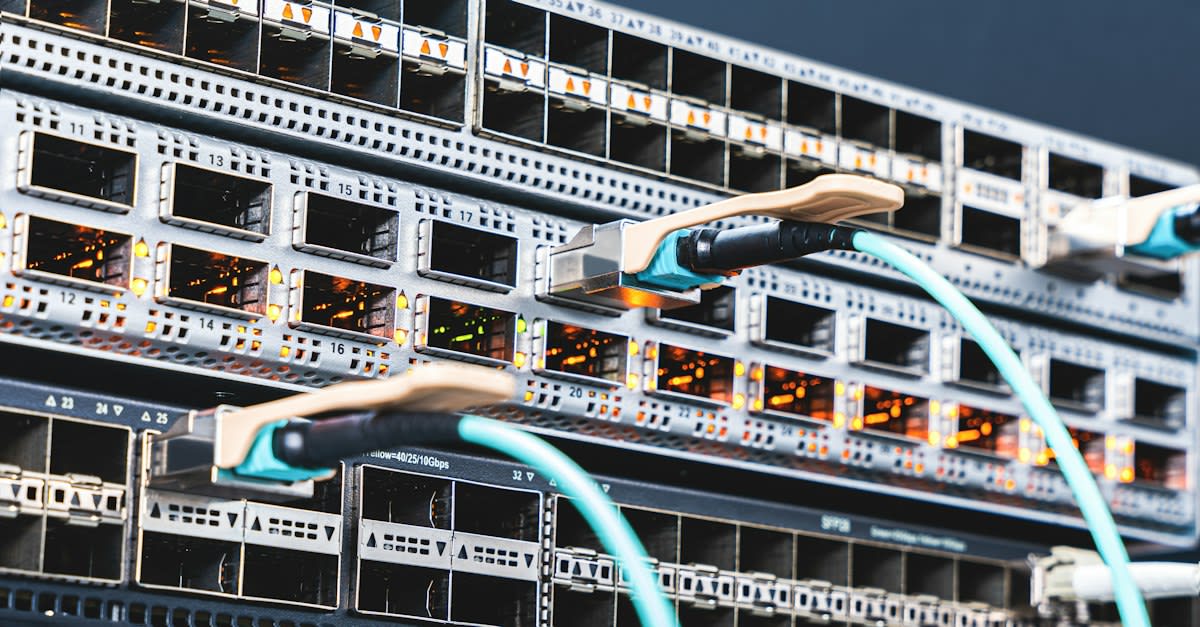
The strategy mirrors China's internal 'East Data, West Computing' initiative launched in 2022. That policy steers computing infrastructure away from crowded coastal cities and toward the western regions where renewable energy is abundant (Source: Inside Climate News, 2026). Now, that same logic is being exported to Southeast Asia. The goal is to place the compute where the energy is cheapest and the land is available, regardless of whether that land is a swampy field in Thailand or a remote province in Indonesia.
"If it doesn’t affect your costs, it doesn’t affect your power prices, what is there to worry about?"— Industry Source cited in Inside Climate News, 2026
That quote captures the dangerous optimism of the hyperscale era. The assumption is that as long as the cost is low, the location is irrelevant. But location is everything when you are dealing with high-voltage transmission. In the US, utility operators in the PJM Interconnection and ERCOT are already sounding alarms over interconnection backlogs (Source: af.net, 2026). Southeast Asia is now facing a similar reckoning. The digital economy is not a ghost; it has a massive physical weight.
The Gridlock: 18 Months of Silence
The bottleneck is brutal. ASEAN is currently facing grid delays of up to 18 months as AI hubs strain existing power systems (Source: af.net, 2026). This is not a simple matter of building more poles. It is a fundamental mismatch between the speed of AI software iteration and the speed of electrical engineering. A GPU cluster can be spun up in weeks, but a high-capacity transformer can take a year to arrive and another six months to integrate into a brittle regional grid.
| Region | Primary Strategy | Key Constraint | Investment/Scale |
|---|---|---|---|
| China | East Data, West Computing | Geographic Distance | National Strategy (2022) |
| India | Digital Public Infrastructure | Workforce Translation | $4.1B Private AI Investment (2025) |
| ASEAN | Cross-border Migration | 18-Month Grid Delays | $200M Runjian Order (2026) |
Compare this to India. The World Bank reports that India's private AI investment jumped from $1.2 billion in 2024 to $4.1 billion in 2025 (Source: World Bank, 2025). India is betting on its technical workforce and digital public infrastructure to drive productivity. While India focuses on the human layer and China on the geographic layer, Southeast Asia is stuck in the physical layer. They are trying to build a 21st-century brain on a 20th-century nervous system.
The grind happens in the meetings between data center developers and state utility boards. I have seen this play out: the developer promises 'green energy' credits, but the utility board knows the local substation will blow if they add one more megawatt. There is a quiet, desperate war over who pays for the upgrade. The hyperscalers want the state to fund the grid expansion as 'economic development,' while the states want the tech giants to pay a premium for the privilege of crashing the local power supply.
From Training to Inference: The Hardware Pivot
We are moving away from the era of massive training runs. The focus is shifting toward inference—the act of actually using the model. This change alters the infrastructure requirements. Inference hardware needs to be closer to the end-user to reduce latency, but it still requires immense cooling and power. The race is now on to develop sparse-computing inference chips that can survive in less-than-ideal environments (Source: Instagram/Industry Update, 2026).

If you place an inference cluster in a rural Thai province, you are not just dealing with power. You are dealing with humidity that eats circuitry and soil that shifts under the weight of cooling reservoirs. The terrain is hostile to silicon. Yet, this is where the industry is heading because the urban centers are saturated. The 'cloud' is simply a marketing term for someone else's computer in a place where the electricity is cheaper.
Fact-Check & Accuracy Note
Verifiable data points in this analysis are drawn from China Daily HK (Nov 2026), af.net (Nov 2026), and World Bank India Development Updates (Oct 2025). There is ongoing academic debate regarding the actual efficiency of 'East Data, West Computing' and whether the energy savings of remote siting are offset by the transmission losses of moving data across thousands of miles.
Does this mean the rural deployment is a failure? No. It is an adaptation. The companies that survive will be those that stop treating AI as a software problem and start treating it as a civil engineering problem. The winners will be the ones who can suture together a fragmented power grid with localized renewable energy and specialized inference hardware.
The real story is the collision of two worlds. On one side, we have the abstract, rapid-fire world of AI tokens and weights. On the other, we have the slow, heavy world of copper lines and mud. The 18-month grid delay is the only honest metric we have left. It tells us exactly how far we are from the digital future we were promised.
Editorial Note
Editorial Note: This piece intentionally avoids the standard 'digital transformation' narrative to highlight the physical constraints of hardware deployment in emerging markets.