Stop pretending that algorithmic efficiency is the primary driver of AI progress. It is a comforting lie told by researchers who do not have to sign the electricity bills. The industry has hit a structural break where the limiting factor is no longer the elegance of the transformer architecture or the size of the dataset. It is the grid. We are witnessing a hard turn where the ability to train a frontier model depends less on your PhDs and more on your proximity to a high-voltage substation. If you cannot secure gigawatts of power, your model is dead on arrival.
Why are we still debating parameter counts when we should be debating power purchase agreements? The real game is energy arbitrage. This means locating compute where the delta between energy production cost and AI value creation is widest. Look at the global terrain. While the West struggles with aging grids and regulatory deadlock, new power hubs are emerging in regions capable of rapid, massive energy scaling. The goal is simple: find a place where the sun shines or the wind blows in excess and plug a data center directly into the source.
The Gigawatt Moat
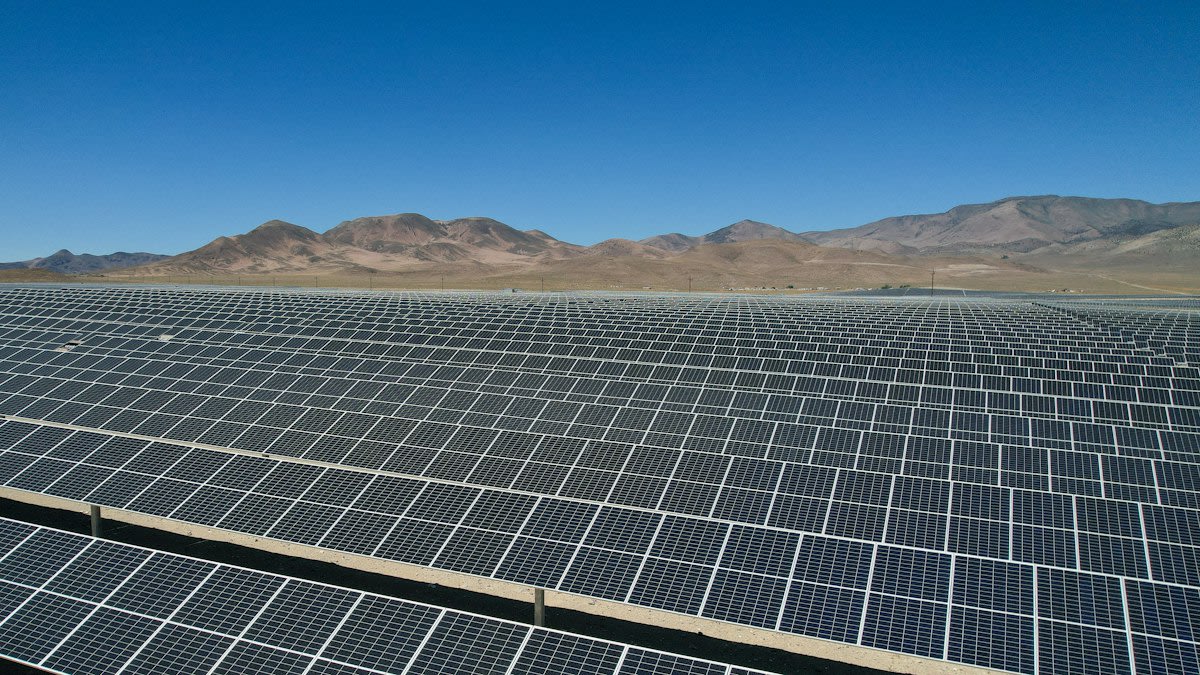
The scale of this shift is visible in the raw numbers coming out of Asia. In India, the energy infrastructure is scaling to meet a demand that transcends traditional industry. Avaada Electro recently secured an ALMM listing for 7.117 GW of TOPCon capacity (Source: Energetica India, 2026). This is not just a win for green energy; it is the creation of a massive energy reserve that can be leveraged for high-intensity compute. When you have G12 cells hitting a maximum efficiency of 26.8 percent (Source: Energetica India, 2026), the cost per kilowatt-hour drops, and the viability of training massive models in that region spikes.
"India's clean energy future cannot depend only on how much solar power we install."— Vineet Mittal, Chairman and Whole-time Director at Avaada Electro
This capacity creates a gravitational pull. If you can run a cluster in a region with 7.117 GW of dedicated solar capacity, you aren't just saving money; you are insulating your training run from the volatility of urban grids. The arbitrage is clear: move the compute to the energy, not the energy to the compute. This is the playbook for the next five years. The winners will be those who treat electricity as a raw material, like silicon or data, rather than a utility bill.
But this movement creates a new set of frictions. As compute migrates to energy-rich rural areas, a disconnect emerges between the hardware and the humans. In the United States, for instance, there is a growing gap in rural AI skills (Source: University of Phoenix, 2026). We are building the most complex machines in history in places where the local workforce lacks the formal training to maintain them. This creates a career pathway trap where the infrastructure exists, but the local talent is left behind, forcing companies to fly in engineers for basic maintenance.
The Invisible Cost of the Compute Race
While the industry chases gigawatts, the regulators are starting to look at the wreckage. The EU AI Act and associated liability directives have loopholes that many companies are currently exploiting to hide their true energy footprints (Source: Wachter, 2023). Most companies report Scope 1 and 2 emissions, but the real damage is hidden in Scope 3—the indirect emissions from the entire value chain. Machine learning is now being used to reveal these invisible footprints, exposing the contradiction between a company's carbon-neutral claims and the reality of its training runs (Source: Wang & Shen, 2025).
| Metric | Traditional AI Approach | Energy Arbitrage Approach | Impact |
|---|---|---|---|
| Location Strategy | Urban Tech Hubs | Energy-Rich Rural Zones | Reduced OpEx |
| Energy Source | Mixed Grid | Direct-Coupled Renewables | Lower Scope 2 Emissions |
| Scaling Limit | Grid Capacity | Generation Capacity | Faster Training Cycles |
| Regulatory Focus | Algorithmic Bias | Life Cycle Assessment (LCA) | Increased Transparency |
The pressure is mounting even in specialized fields like medicine. AI stewardship is no longer just about avoiding hallucinations; it is about avoiding the excessive use of resources (Source: AAMC, 2026). When a medical researcher runs a massive model to analyze a small dataset, they aren't just being inefficient—they are contributing to a global resource drain. The push for resource-conscious AI practices is a direct response to the realization that compute is not an infinite resource.
This is where the internal industry disputes get gritty. In the war rooms of major AI labs, there is a constant clash between the ML researchers and the sustainability officers. The researchers want more GPUs, more tokens, and more power to push the edge of what is possible. The sustainability officers are staring at Life Cycle Assessments (LCA) and warning that the company's staying power is threatened by impending carbon taxes and energy quotas. It is a fight between the desire for a breakthrough and the reality of the physical world.
Beyond the Hype: The Reality of Implementation
We see this play out in the micro-level policies of cities. In Eugene, Oregon, the adoption of Home Energy Score requirements (Source: CleanTechnica, 2026) signals a broader societal shift toward energy transparency. While this is a residential policy, it reflects the same logic now hitting the data center industry: you cannot manage what you do not measure. The era of 'black box' energy consumption is ending. Whether it is a home in Oregon or a cluster in India, the demand for verifiable energy data is the new standard.
Is this a crisis? No. It is an opportunity for a hard turn in how we build technology. The companies that will dominate the next decade are not those that simply hire the best engineers, but those that master the web of energy production, regulatory navigation, and rural workforce development. They will treat the grid as part of the model architecture. The software is the easy part. The hard part is the copper, the silicon, and the sunlight.
Fact-Check & Accuracy Note
This analysis relies on 2026 data regarding solar capacity in India and rural AI skill gaps in the US. There is ongoing academic debate regarding the accuracy of Scope 3 emissions reporting in AI, as many companies use proprietary models to calculate their footprints, leading to inconsistencies in Life Cycle Assessment (LCA) data (Source: Springer Nature, 2026).
The final contradiction is that as we move toward more autonomous, 'metacognitive' AI systems that can evaluate their own performance (Source: Nature, 2026), the physical cost of maintaining those systems grows. We are building smarter minds that require more and more physical earth to sustain them. The energy arbitrage game is just the beginning. Eventually, the question won't be how much power we can find, but how much the planet can afford to give us.